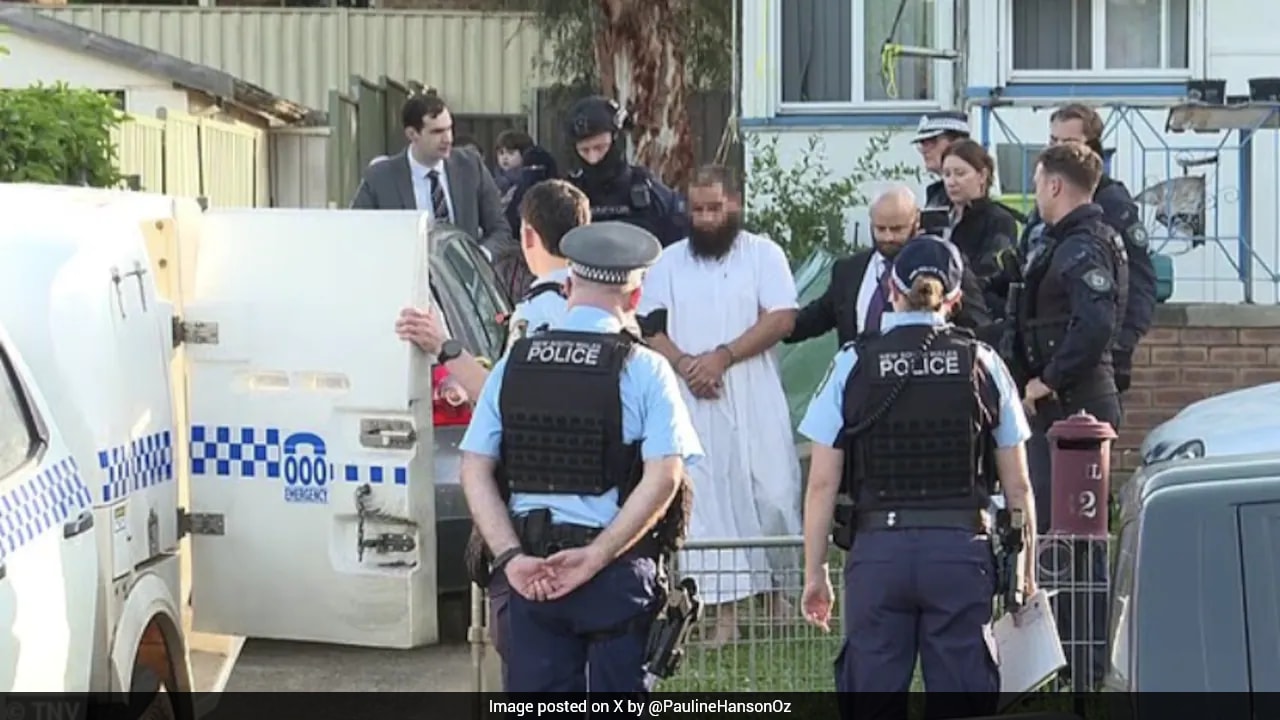
Every time Australian counter-terrorism police kick down a suburban door and haul out a radicalized loner with a half-baked car bomb schematic, the media treats it like we just dodged another 9/11.
They plaster the headlines with words like "ISIS-inspired" and "catastrophic plot." Politicians step up to the podium, puff out their chests, and demand another billion dollars for surveillance tech. The public breathes a sigh of relief, convinced the system is working.
Here is the uncomfortable truth nobody in the security establishment wants to say out loud: we are celebrating the interception of amateur hour while the actual architecture of modern extremism evolves completely out of sight.
When a man gets arrested in Australia for an ISIS-related car bomb plot, it isn't proof that global jihadist networks are mounting a sophisticated resurgence in the Southern Hemisphere. It is proof of the exact opposite. It shows how desperate, decentralized, and operationally bankrupt the old terror franchises have become—and how dangerously outdated our counter-terrorism playbook remains.
The Anatomy of a Modern "Plot"
Let’s look at the mechanics of how these arrests actually happen, stripped of the breathless press releases from the Australian Federal Police (AFP) and ASIO.
In the early 2000s, a car bomb plot meant something very specific. It meant trained operatives, supply chains for military-grade explosives like C-4 or Semtex, safe houses, encrypted courier networks, and central command structures directing traffic from overseas. You needed logistics. You needed money. You needed discipline.
Today? A "car bomb plot" usually involves a socially isolated young man sitting in a bedroom in Western Sydney or outer Melbourne, downloading a 15-year-old PDF of Inspire magazine or scraping bomb-making instructions off an unmoderated Telegram channel. He tries to buy hardware-store precursors—fertilizer, acetone, hydrogen peroxide—which immediately trips automated flags at the point of sale or draws the attention of an undercover operative who has been chatting with him online for six months.
By the time the tactical response group breaches the front door, the suspect rarely has a functional detonator, let alone a viable vehicle-borne improvised explosive device (VBIED).
Yet, the media coverage treats a guy with a notebook full of chemical ratios and a rented Toyota Corolla as if he were Carlos the Jackal.
I have spent years analyzing threat assessments and watching security agencies allocate resources. I have seen governments burn hundreds of millions of dollars building digital dragnet systems designed to catch the ghosts of 2014, while completely missing how radicalization actually functions in the mid-2020s. When we inflate low-capability, high-intent loners into existential threats, we do the terrorists' propaganda work for them. ISIS doesn't need to succeed anymore; they just need us to panic every time an unstable fanboy downloads their logo.
The Lazy Consensus of "ISIS-Inspired"
The biggest intellectual shortcut in modern journalism is slapping the label "ISIS-related" onto an arrest and calling it a day.
What does "ISIS-related" even mean anymore? Let’s define our terms precisely, because security officials love blurring the lines to justify budgets.
- ISIS-Directed: Operatives are recruited, trained, funded, and given specific targets by the core leadership of the Islamic State (whether in Iraq, Syria, or through regional affiliates like ISIS-Khorasan).
- ISIS-Enabled: A suspect makes direct digital contact with a remote handler abroad who provides step-by-step operational guidance, bomb-making troubleshooting, and psychological coaching.
- ISIS-Inspired: A troubled individual adopts the aesthetic, flags, and slogans of ISIS to give their personal grievances, mental health spirals, or violent fantasies a grand ideological wrapper.
Almost every domestic terror arrest in Australia over the last several years falls squarely into the third bucket, occasionally brushing against the second.
Calling a self-radicalized loner an "ISIS operative" is like calling a guy who watches The Godfather ten times and robs a liquor store a "made man in the Sicilian Mafia." There is no operational pipeline. There is no command-and-control structure. There is just an algorithm feeding violent content to an isolated brain until that brain snaps.
By treating these arrests as geopolitical events rather than severe social and psychological breakdowns, we fundamentally misdiagnose the disease. You cannot bomb an algorithm. You cannot arrest your way out of an epidemic of male isolation and digital radicalization.
The Surveillance Trap and the Myth of Total Prevention
When these arrests hit the news cycle, the public naturally asks: "How do we stop this from happening in the first place?"
That is the wrong question. Asking how to achieve zero risk in a free society is an invitation for authoritarian overreach that still fails to stop the threat.
Every time a plot is foiled, the knee-jerk reaction in Canberra is to expand metadata retention laws, weaken end-to-end encryption, and widen the net of preventative detention orders. Australia already possesses some of the most aggressive counter-terrorism legislation in the Western world—laws that allow intelligence agencies to compel tech companies to build backdoors and permit the detention of suspects before a crime is even committed.
Here is the paradox that security hawks ignore: the wider you cast the surveillance net, the harder it becomes to find the needle.
When you collect every text message, search query, and location ping of 26 million citizens, you don't create omniscience; you create noise. Intelligence analysts drown in false positives. The resources required to monitor ten thousand "persons of interest" who are merely venting online inevitably pull human intelligence officers away from the three or four individuals who actually pose an imminent physical threat.
Furthermore, over-policing specific communities creates the exact alienation that radicalizers exploit. When young men feel treated as pre-criminals by the state, the narrative that "the West is at war with you" stops sounding like extremist propaganda and starts feeling like lived reality.
What the Experts Actually Know (And Politicians Ignore)
If you sit down with serious counter-terrorism scholars—people like Bruce Hoffman, Marc Sageman, or the researchers at the Program on Extremism—you hear a remarkably consistent story that rarely makes it onto the evening news.
Marc Sageman’s "bunch of guys" theory demonstrated decades ago that radicalization isn't primarily driven by top-down ideological indoctrination; it is driven by peer groups, social bonds, and the search for significance. Today, those peer groups just happen to live on Discord servers and encrypted messaging apps rather than in physical basements.
More recently, threat assessment experts have pointed out the rise of "salad bar extremism."
Modern attackers rarely adhere to a strict, coherent theological or political manifesto. You look at the hard drives of individuals arrested in Australia, the US, and Europe over the last five years, and you find a bizarre cocktail of grievances. A suspect might have ISIS nasheeds (chants) saved in one folder, white supremacist accelerationist manifestos in another, school shooter lore in a third, and incel forum posts in a fourth.
They aren't soldiers in a holy war. They are grievance collectors looking for the most lethal, high-profile vehicle to express their rage against a society they feel rejected by. ISIS simply offers the most recognizable brand name for mass-casualty violence.
When the media frames an arrest purely through the lens of "ISIS terror activity," they ignore the glaringly obvious overlap between extremist violence and domestic mass-casualty events. We treat a guy building a pipe bomb for ISIS as a national security crisis, and a guy building a pipe bomb because he hates his coworkers as a criminal anomaly, even when their psychological profiles, online footprints, and procurement methods are virtually identical.
The Real Threat Isn't a Car Bomb
If you want to know what actually keeps sober-minded intelligence directors awake at night, it isn't an amateur trying to mix fertilizer and diesel fuel in a suburban garage.
Car bombs are hard. The chemistry is volatile. Most amateur bomb-makers either blow off their own fingers during the mixing phase, buy dud ingredients that fail to detonate, or get caught because buying fifty gallons of hydrogen peroxide raises every red flag in the retail supply chain.
The real threat in Australia—and across the West—is low-tech, zero-footprint violence executed by individuals who never enter an online chatroom.
Think about the mechanics of a knife attack, a vehicle ramming with an everyday SUV, or an arson attack.
- There is no procurement trail. Everyone owns a car and kitchen knives.
- There is no digital conspiracy. If a suspect consumes extremist propaganda passively without ever posting, liking, or messaging a handler, no undercover operative can infiltrate their circle because there is no circle to infiltrate.
- There is no preparation timeline. The window between the decision to attack and the execution of the attack can be less than twenty minutes.
Counter-terrorism agencies are brilliantly equipped to stop complex, multi-person plots that require weeks of logistics and communication. They are fundamentally incapable of stopping a lone actor who wakes up on a Tuesday, grabs a blade, and walks into a shopping center without ever telling a soul.
By obsessing over high-profile arrests involving dramatic words like "car bomb," we lull the public into believing that counter-terrorism is a game of chess where the good guys are winning. In reality, the threats we can catch are the clumsy ones. The threats that succeed are the ones that require zero preparation.
The Uncomfortable Downsides of De-escalation
Now, let’s be intellectually honest. Taking a contrarian stance against security theater carries real risks, and pretending otherwise would be reckless.
If intelligence agencies dial back aggressive early-intervention tactics—like undercover stings and preventative arrests—someone will eventually slip through the cracks. In counter-terrorism, you can disrupt ninety-nine plots, and nobody remembers your name; you miss one, and it defines a generation. That political reality forces agencies like ASIO and the AFP to operate with a hair-trigger threshold for intervention. If a guy is talking about car bombs online and buying suspicious items, you cannot wait until he is parked outside a train station to verify whether his chemistry actually works. You have to take him off the board immediately.
The problem isn't that the police arrested the man in Australia. If he was actively plotting violence, arresting him was the exact right call.
The problem is everything that happens after the handcuffs click shut: the breathless media sensationalism, the political opportunism, and the strategic blindness that follows.
How to Fix a Broken Counter-Terrorism Mindset
If we actually want to reduce the frequency of these plots rather than just celebrating the arrests, we have to stop treating terrorism as a purely military or intelligence problem and start treating it as a behavioral and structural one.
Strip Away the Brand Name in Public Reporting
When a suspect is arrested, law enforcement and media outlets need to stop amplifying the terrorist organization's brand. Every time a headline screams "ISIS Plot," it validates the suspect's delusion of grandeur and serves as a recruitment ad for the next isolated teenager looking for notoriety. Report the criminal charges—conspiracy to commit murder, possession of explosive precursors—and deny them the ideological prestige they crave.Shift Funding from Mass Surveillance to Threat Assessment Teams
Stop pouring billions into bulk data collection that invades everyone's privacy while yielding diminishing returns. Reallocate that capital into local, multidisciplinary Behavioral Threat Assessment and Management (BTAM) teams. When teachers, social workers, family members, and local police have a clear, non-punitive pathway to flag a young man spiraling into isolation and violent fixation before he crosses the criminal threshold, you prevent the plot entirely instead of waiting to arrest him at the finish line.Break the Algorithmic Radicalization Pipeline
Tech platforms are no longer neutral town squares; they are radicalization engines optimized for outrage and extremism. We don't need backdoors into private encrypted chats to solve this. We need brutal, enforceable transparency on recommendation algorithms. If a platform's public-facing algorithm takes a user who clicked on a geopolitical news video and feeds them extremist propaganda within four clicks, the platform should face massive financial liability for algorithmic amplification.Measure Success by Disengagement, Not Arrests
A counter-terrorism strategy that measures its success by the number of arrests it makes is a strategy that requires a steady supply of terrorists to justify its existence. True success is boring. True success looks like de-radicalization programs, mental health interventions, and community integration initiatives that quietly pull young men out of the pipeline before they ever buy a single precursor chemical.
Stop Applauding the Fire Department While Ignoring the Arsonist
The next time you see a breaking news alert about a foiled terror plot in Sydney, Melbourne, or Brisbane, pause before you applaud.
Look past the tactical gear, the mugshots, and the dramatic references to international terror networks. What you are almost certainly looking at is a deeply broken, isolated individual who was handed a digital match by an algorithm and a playbook by a dying extremist brand.
Arresting him puts out the immediate fire. It does nothing to stop the next one from being lit. Until we stop mistaking amateur theater for a coordinated invasion, we will keep paying billions for security theater while the real threat grows quietly in the dark.


