Barack Obama built an entire political brand on being the coolest guy in the room. For years, while Donald Trump threw haymakers on social media and turned campaign rallies into roast sessions, Obama stayed above the fray. He delivered soaring speeches about democratic norms, the rule of law, and the better angels of our nature.
That restraint is gone.
When Obama steps onto a stage and mocks Trump directly—going after his crowd sizes, his grievances, and his personal insecurities—it grabs headlines instantly. Late-night hosts love it. Democratic donors open their checkbooks. Voters who have spent years feeling frustrated by polite Democratic pushback suddenly cheer like they're watching a heavyweight title fight.
Here's the catch. Stepping into the mud with Donald Trump rarely leaves anyone clean.
If you've watched American politics closely over the last decade, you know that Trump doesn't just tolerate personal attacks. He feeds on them. Every time Obama trades his trademark professorial cool for sharp, personal mockery, he takes a calculated risk that could backfire just as easily as it rallies his own base.
How Obama Changed His Playbook
Let's look at the timeline. Back in 2016, Michelle Obama gave the Democratic Party its defining motto at the convention in Philadelphia: "When they go low, we go high." Barack Obama followed that script almost to the letter during his final months in office and throughout Trump's presidency. Even when Trump pushed the false birther conspiracy for years or tried to dismantle the Affordable Care Act, Obama mostly responded with high-minded warnings about institutional decay.
Fast forward to the 2024 campaign trail, and the tone shifted completely.
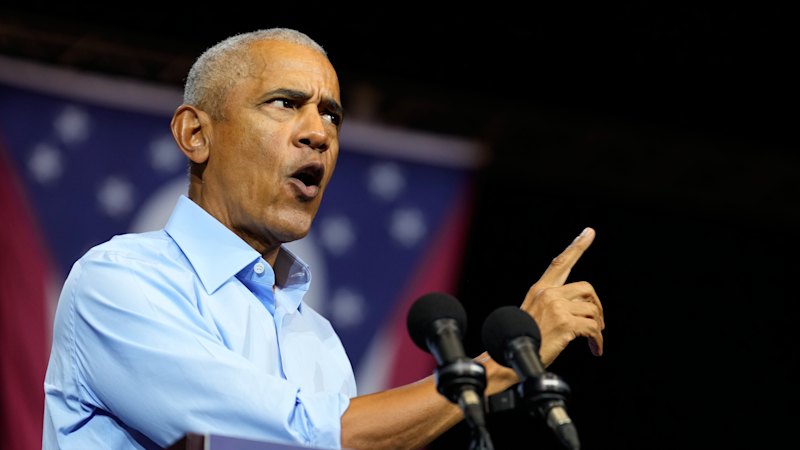
At the Democratic National Convention in Chicago in August 2024, Obama stood before a roaring crowd and mocked Trump's obsession with crowd sizes. He didn't even need to say the punchline out loud. He held his hands apart, brought them closer together with a deadpan look, and let the audience fill in the blank. A few weeks later in Pittsburgh and Detroit, he went even harder, calling Trump a "78-year-old billionaire who has not stopped whining about his problems" and comparing his rambling speeches to a crazy uncle at Thanksgiving.
Why the sudden change? Simple math.
Democratic strategists realized that high-minded lectures about constitutional norms weren't breaking through to undecided voters. You can't fact-check a vibe, and you can't beat a populist showman with a policy white paper. Obama and his team saw that ridicule—specifically aimed at Trump's ego rather than his voters—was the one thing that reliably knocked Trump off his talking points.
Why Mocking Trump Actually Works
Before we talk about the danger, let's be honest about why this tactic is so tempting. It works. At least in the short term.
Most politicians attack Trump by calling him a threat to democracy, a dictator-in-waiting, or an existential danger to the country. Paradoxically, those attacks often make Trump look stronger to his supporters. If the political establishment says you're an unstoppable threat, you look powerful.
Mockery does the exact opposite. It makes him look small.
When Obama jokes about Trump selling gold sneakers and Trump-branded Bibles while claiming to fight for working-class families, he punctures the strongman image. He reframes Trump not as a dangerous titan, but as a needy, self-obsessed salesman.
There's also a media reality at play here. A speech about semiconductor manufacturing gets forty seconds on the evening news. A viral clip of a former president making a crude visual joke about his successor's insecurities gets forty million views on TikTok, X, and Instagram before midnight. In an attention economy, Obama knows that a sharp personal jab is the fastest way to dominate a news cycle and steal oxygen from Trump's own rallies.
And for Democrats who felt their leaders were bringing a butter knife to a gunfight? Watching Obama throw a clean, stinging punch felt like pure relief.
The Trap Hidden Inside the Punchline
So why is this such a massive gamble? Because you cannot out-Trump Donald Trump.
The moment Obama gets personal, he abandons his greatest political superpower: contrast.
For nearly twenty years, Obama's appeal rested on the idea that he represented stability, dignity, and adult supervision in a chaotic political environment. Millions of moderate, independent, and suburban voters didn't necessarily agree with every liberal policy Obama passed, yet they respected how he carried the office. They liked that he didn't act like a reality TV star.
When Obama mocks Trump's physical mannerisms, his age, or his rambling speeches, he flattens that contrast. Suddenly, the race doesn't look like a choice between statesmanship and chaos. It looks like two politicians trading insults in a schoolyard.
I've seen this play out in focus groups time and again. Hardcore partisans love the red meat, sure. Independent voters in swing states like Pennsylvania, Michigan, and Wisconsin react very differently. Many of them are exhausted by political nastiness. When they see Obama—the guy who used to preach unity—getting down in the dirt, they don't think, Wow, Obama really nailed him. They think, They're all the same.
That cynicism is rocket fuel for Trump. Trump doesn't need swing voters to love him; he just needs them to believe that the entire political class is equally petty and broken.
Feeding the Grievance Machine
There's another layer to this that gets overlooked. Every personal attack from Barack Obama hands Trump a gift he couldn't buy with a hundred million dollars in ad spending.
Trump's entire political movement runs on grievance. His core pitch to millions of working-class Americans is simple: The elites look down on you, they laugh at you, and I'm the only one standing between them and you.
Nobody embodies the educated, coastal, institutional elite in the minds of MAGA voters more than Barack Obama.
When Obama mocks Trump's rallies or jokes about his grievances, Trump's team immediately clips that footage and blasts it to conservative media. Within hours, the narrative flips. It's no longer about Trump's erratic behavior. It's framed as an Ivy League former president sneering at a guy who fights for regular people—and by extension, sneering at the millions of people who show up to those rallies.
Remember Hillary Clinton's "basket of deplorables" comment in 2016? Or Mitt Romney's "47 percent" remark in 2012? Voters have hair-trigger sensitivity to anything that smells like condescension from a wealthy politician. Obama is usually smart enough to aim his jokes strictly at Trump, not Trump's supporters. Still, the line between mocking the leader and mocking the crowd is razor-thin. One sloppy phrasing, one out-of-context soundbite, and Obama accidentally revitalizes Trump's turnout machine.
What History Tells Us About Fighting Populists
American political history is littered with establishment figures who tried to beat populists at their own game—and lost badly.
Look back at the 2016 Republican primaries. Marco Rubio was widely considered one of the sharpest, most disciplined communicators in the GOP. For months, he stuck to policy and optimistic messaging while Trump steamrolled the field with nicknames like "Little Marco." Finally, in February 2016, Rubio snapped. He started mocking Trump's spray tan, his spelling errors, and—famously—the size of his hands.
It was a disaster. Rubio admitted afterward that he was deeply embarrassed by it. The attacks didn't hurt Trump at all; they just destroyed Rubio's own brand as the reasonable, forward-looking alternative.
Or look at how media figures and comedians spent years mocking Trump's hair, his weight, and his speech patterns. Did it stop him from winning the presidency in 2016? No. Did it stop him from expanding his coalition in 2024? Not even close.
Personal ridicule works best when it exposes a vulnerability the public hasn't already priced in. With Trump, his narcissism, his rambling tangents, and his obsession with crowds aren't hidden secrets. Voters already know who he is. Pointing it out with a clever joke might earn applause from people who already dislike him, while doing almost nothing to persuade anyone on the fence.
The Difference Between Sharp Critique and Cheap Shots
Does this mean Democrats have to go back to polite, boring speeches that nobody watches? Not at all. There's a huge difference between landing a substantive, hard-hitting critique and trading personal insults.
Think about the moments when Obama has actually landed lasting blows on Trump without hurting his own standing. It's rarely the jokes about Trump's quirks. It's when Obama connects Trump's character directly to the lives of ordinary voters.
For example, when Obama points out that Trump inherited hundreds of millions of dollars from his father and still managed to bankrupt casinos, he isn't just making fun of Trump's ego. He's attacking Trump's core qualification as a businessman who can fix the economy. When he highlights how Trump blocked a bipartisan border security bill just so he could keep complaining about immigration on the campaign trail, that's a devastating argument because it shows Trump putting his own ambition ahead of solving a real problem.
Compare that to a hand-gesture joke about crowd sizes. One moves swing voters; the other just generates cable news chatter for twenty-four hours.
Watching How This Plays Out Next
If you want to understand where American political rhetoric is headed, stop watching the cable news panels and pay attention to how voters actually react when high-profile leaders drop their guard.
Next time you see a viral clip of a former president or senior politician taking a personal shot at an opponent, run it through a quick mental filter before sharing it or celebrating it. Ask yourself three questions:
- Does this connect to an actual issue voters care about? If the joke is purely about appearance, age, or personal insecurities, it's entertainment, not persuasion.
- Who does this benefit in a 10-second out-of-context clip? If the soundbite can easily be flipped into proof that elites are arrogant or out of touch, it's probably helping the target more than the speaker.
- Does it preserve contrast? The strongest political attacks remind voters why the speaker is better than the opponent, not why they're both willing to wrestle in the mud.
Barack Obama is one of the most gifted political communicators of the modern era, and he knows better than anyone how much weight his words carry. Stepping into the ring to mock Donald Trump personally might feel satisfying in the moment, especially when the stakes feel existential. Yet the very thing that made Obama a generational political figure was his refusal to let opponents dictate the terms of the fight. Once you start playing by Donald Trump's rules, you've already given him home-field advantage.