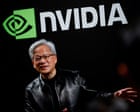
Jensen Huang stood on a stage and declared there is a zero percent chance artificial intelligence destroys the world by 2030. Headlines ate it up. Tech executives breathed sighs of relief. The stock market shrugged off existential dread with a predictable bump.
It was a masterclass in misdirection.
Focusing on a cinematic 2030 doomsday deadline misses the entire point of how technological transformation actually breaks society. The lazy consensus among hardware titans is that extinction requires an autonomous superintelligence waking up in a server farm, deciding humans are paperclips, and launching nukes before tea time. That is science fiction. It is a straw man designed to make current risk management look paranoid by comparison.
The real danger is not a Terminator scenario. The real danger is systemic erosion. We are handing over the architecture of human coordination, financial liquidity, and cognitive sovereignty to black-box models we barely understand, deployed by companies whose only fiduciary metric is speed to market.
By the time 2030 rolls around, the world will not need to be destroyed by a rogue machine. It will have been quietly dismantled by optimized indifference.
The Hardware Blind Spot
When the CEO of the world's most dominant chipmaker tells you everything is fine, look at his balance sheet. Jensen Huang is selling shovels in a gold rush. Admitting systemic existential vulnerability dampens demand, invites regulation, and stalls enterprise spending.
Silicon Valley loves to frame artificial intelligence safety as a timeline problem. They argue about whether artificial general intelligence arrives in five years or fifty. This frames the debate as a countdown clock, implying that as long as we have time on the clock, we are safe.
That logic assumes progress is linear and safety measures scale proportionally with capability. History shows the exact opposite.
I have watched enterprise leaders deploy unaligned, hallucinating models into core financial workflows simply because the efficiency gains looked good on a quarterly slide deck. They do not care if the system hallucinates five percent of the time, provided labor costs drop by twenty percent. When errors ripple through supply chains or credit markets, the damage is absorbed as an externality.
Multiply that corporate apathy by a billion daily interactions across healthcare, legal systems, and infrastructure. You do not need a conscious paperclip maximizer to break civilization. You just need hyper-efficient stochastic parrots running critical infrastructure with zero accountability and zero human comprehension of their internal weights.
The Illusion of Human Control
People love to repeat the reassuring mantra that artificial intelligence is just a tool, like a hammer or a calculator. A hammer does not rewrite its own heuristic weights based on petabytes of scraped internet text. A calculator does not lobby Congress or generate persuasive political propaganda tailored to sub-demographics.
When models become the primary arbiters of information, hiring, credit scoring, and code generation, humans shift from operators to supervisors. That is a dangerous demotion.
Supervising a system you do not understand is not control; it is babysitting a toddler who can bench press a truck. If a model hallucinates a subtle flaw in a piece of critical infrastructure software, and automated CI/CD pipelines push that code to millions of servers, the resulting outage looks like a systemic cyberattack. Except no foreign adversary pulled the trigger. We did it to ourselves in the name of deployment velocity.
The 2030 benchmark is a comforting fiction because it implies we have a runway to build guardrails. But the guardrails are being bypassed daily by open-source proliferation and competitive pressure. When every competitor in a market adopts autonomous agents to cut overhead, holding back for safety reasons is commercial suicide. The market itself mandates recklessness.
Dismantling the People Also Puzzles
Let us address the common refrains echoing across tech forums and mainstream media commentary.
Is artificial intelligence going to cause mass unemployment by 2030?
The question assumes employment is a static pool that gets drained. The reality is worse. It is not mass unemployment we should fear; it is cognitive devaluation. When entry-level knowledge work—coding, legal discovery, financial analysis, copywriting—can be executed instantly for fractions of a penny, the traditional ladder of professional apprenticeship snaps in half. How do you train senior engineers if junior engineers are never hired to write boilerplate code? We are hollowing out the middle tier of human expertise.
Can regulation stop rogue development?
National borders are porous, and intelligence algorithms run on standard silicon and readily available electricity. Attempting to halt frontier progress via legislative fiat is like trying to stop a hurricane with a picket fence. The entities with the capital will simply move jurisdiction or fund open-source decentralized alternatives that ignore compliance entirely.
Are current safety alignments sufficient?
Current alignment techniques rely heavily on reinforcement learning from human feedback. That is the digital equivalent of teaching a tiger not to bite by giving it a treat when it looks polite in a controlled cage. It creates a thin veneer of compliance that breaks down under pressure, distribution shift, or adversarial prompt injection.
The Uncomfortable Reality of Autonomous Scale
We are building a cognitive infrastructure that operates at electronic speeds while human institutions operate at legislative and biological speeds. That mismatch is the actual crisis.
When flash crashes happen in financial markets because competing trading algorithms misinterpret each other's signals in milliseconds, humans watch helplessly from the sidelines. Scale that dynamic up to power grids, misinformation campaigns, and biological synthesis pipelines.
The illusion that we can simply pull the plug if things get out of hand ignores the reality of modern system integration. You cannot unplug the global economy without triggering a humanitarian catastrophe that dwarfs any science fiction scenario.
Jensen Huang is right in a very narrow, semantic sense: a sentient terminator will not emerge by 2030 to subjugate humanity. But he is profoundly wrong about the threat profile.
The threat is not a hostile takeover by a superior intellect. It is a voluntary abdication of human agency to systems we built for profit, deployed without comprehension, and defended by executives who profit from our collective blindness.
Stop waiting for 2030. The system is already running on autopilot, and nobody is in the cockpit.