The United Nations recently witnessed a diplomatic collision that felt less like a debate and more like a fracture in the international order. When Iran was selected to serve as a rapporteur for a UN disarmament committee, the United States and its allies did not just object; they signaled that the very mechanics of global governance have become decoupled from geopolitical reality. This is not merely a story about a committee seat. It is a story about how the bureaucratic machinery of the UN allows nations under heavy nuclear scrutiny to oversee the rules meant to restrain them.
The tension centers on the UN Disarmament Commission, a body that, while deliberative, carries immense symbolic weight in the quest to prevent the spread of nuclear weapons. Iran’s appointment to a leadership role within this framework has ignited a firestorm because it highlights a glaring systemic loop: any member state, regardless of its compliance record with the International Atomic Energy Agency (IAEA), can ascend to these positions through regional rotations.
The Friction of Regional Rotation
At the heart of this dispute is a rigid adherence to geographic quotas. The UN operates on the principle that every region must have a voice. This sounds equitable in a vacuum. In practice, it creates scenarios where the "Asia-Pacific group" can nominate a candidate that the Western bloc finds fundamentally compromised.
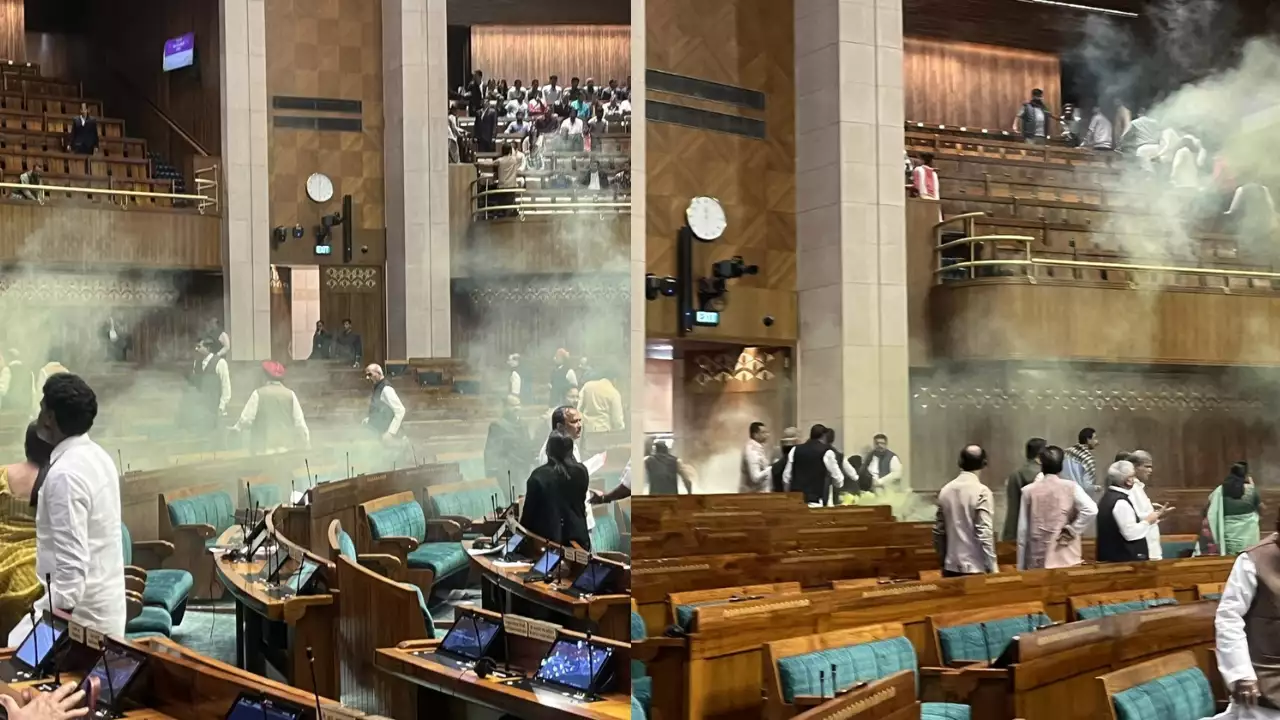
The U.S. delegation’s walkout and subsequent protests were directed at the absurdity of the optics. For years, Tehran has been locked in a standoff with the IAEA over unexplained uranium traces and the enrichment of fuel to levels nearing weapons-grade. To the State Department, seeing an Iranian representative holding the gavel during disarmament talks is not just a diplomatic annoyance; it is an active subversion of the Non-Proliferation Treaty (NPT) spirit.
Tehran, conversely, views this as a validation of its status. Their diplomats argue that the U.S. is attempting to politicize a neutral administrative process. They point to their right as a sovereign nation to participate in all facets of the UN. This creates a circular argument where the West cites "behavior" and Iran cites "procedure." Procedure usually wins in the UN basement, much to the chagrin of those trying to maintain a unified front against nuclear escalation.
The IAEA Shadow Over New York
You cannot understand the clash in New York without looking at the stalemate in Vienna. The IAEA is the world’s nuclear watchdog, and its recent reports have been increasingly grim. Inspectors have documented a lack of cooperation regarding "de-designating" experienced monitors and a failure to provide credible answers about past activities at undeclared sites.
When a country is in active defiance of the watchdog, giving that same country a platform to shape disarmament discourse creates a massive credibility gap. Critics argue that these appointments provide a "veneer of legitimacy" to regimes that are simultaneously hollowing out the treaties the committees are designed to protect.
Consider the technical reality. Iran has enriched uranium to 60% purity. For context, commercial power plants usually require about 5%. Weapons-grade is roughly 90%. The jump from 60% to 90% is technically smaller than the jump from 5% to 60%. This is the "breakout capability" that keeps intelligence agencies awake at night. When this technical reality meets the polite, mahogany-table diplomacy of the UN, the disconnect is jarring.
Why the US Strategy is Struggling
The American response has largely been one of public condemnation and symbolic exits. However, this strategy is hitting a wall of "diplomatic fatigue." Many nations in the Global South are weary of what they perceive as selective enforcement of international norms. They look at the nuclear-armed states—the U.S., Russia, China, France, and the UK—and see a "do as I say, not as I do" mentality.
This sentiment gives Iran cover. By framing the U.S. opposition as "bullying" or "exceptionalism," Tehran manages to pivot the conversation away from its centrifuges and toward the unfairness of the Western-led order. It is a tactical masterclass in grievance politics. The U.S. is finding that its moral authority in these halls is no longer a given; it must be fought for, and often, the rules of the house are stacked against it.
The Mechanics of the Disarmament Committee
The rapporteur role is often dismissed by outsiders as clerical. That is a mistake. The rapporteur is responsible for the official record of the proceedings. They help frame the consensus—or lack thereof—that emerges from the sessions. In the world of high-stakes diplomacy, the person who controls the narrative controls the outcome.
By holding this post, Iran gains a seat at the "Bureau," the small group of officials who steer the committee’s work. This offers a level of access and influence that allows them to soften language, stall unfavorable resolutions, and build alliances with other states that feel sidelined by the West. It is a slow, grinding form of influence, but it is effective.
A Broken Selection Process
The underlying issue is that there is no "fitness for office" test in the UN committee system. There is no mechanism to disqualify a state from a leadership role based on its human rights record or its violation of security council resolutions.
If a regional group decides it is a specific country's turn, the rest of the world has very few tools to stop it. Changing this would require a fundamental rewrite of the UN Charter—a task that is virtually impossible in the current polarized environment. Russia and China, both holding veto power in the Security Council, have little interest in helping the U.S. tighten the rules. For them, a disorganized and contentious UN committee often serves their broader strategic goal of challenging American hegemony.
The Real Cost of Symbolic Wins
For Iran, getting this role is a domestic win. It allows the government to signal to its base that it remains a respected player on the world stage despite sanctions. For the U.S., the clash is a reminder of how limited its "maximum pressure" campaign has become.
The fallout from this clash extends beyond the meeting room. It erodes public trust in international institutions. When the average person sees a country accused of nuclear brinkmanship leading a nuclear disarmament group, the entire concept of international law begins to look like a performance. This cynicism is dangerous. It fuels isolationism in the West and emboldens defiance in the East.
The Nuclear Landscape is Shifting
We are moving into an era where the old guardrails are failing. The New START treaty between the U.S. and Russia is on life support. North Korea has codified its nuclear status into its constitution. And now, the bureaucratic structures meant to facilitate dialogue are being used as battlegrounds for legitimacy.
The confrontation at the UN wasn't an isolated incident; it was a symptom of a systemic fever. The international community is attempting to manage 21st-century threats with a mid-20th-century rulebook that prizes "turn-taking" over "compliance."
Diplomacy requires a baseline of shared facts. When one side views the IAEA as a neutral arbiter and the other views it as a tool of Western intelligence, the foundation for any meaningful disarmament is gone. The chairs and the gavels remain, but the purpose has evaporated.
The immediate result of this appointment will likely be a stalemated session. Reports will be drafted, objections will be filed, and the U.S. will likely refuse to engage with the Iranian rapporteur on substantive issues. The work of the Disarmament Commission will grind to a halt, leaving the world no closer to a solution for the actual proliferation risks on the ground.
This isn't just a failure of policy; it is a failure of the architecture. Until the UN can reconcile its desire for universal representation with the necessity of holding its leaders to a standard of conduct, these clashes will continue to be a repetitive, unproductive loop. The spectacle of the walkout is a visual representation of a world that can no longer agree on who is allowed to write the rules.
The hard truth is that as long as the "Asia-Pacific group" or any other regional bloc prioritizes political solidarity over treaty compliance, the UN’s disarmament efforts will remain a theater of the absurd. The credibility of the institution is being traded for the convenience of the calendar.