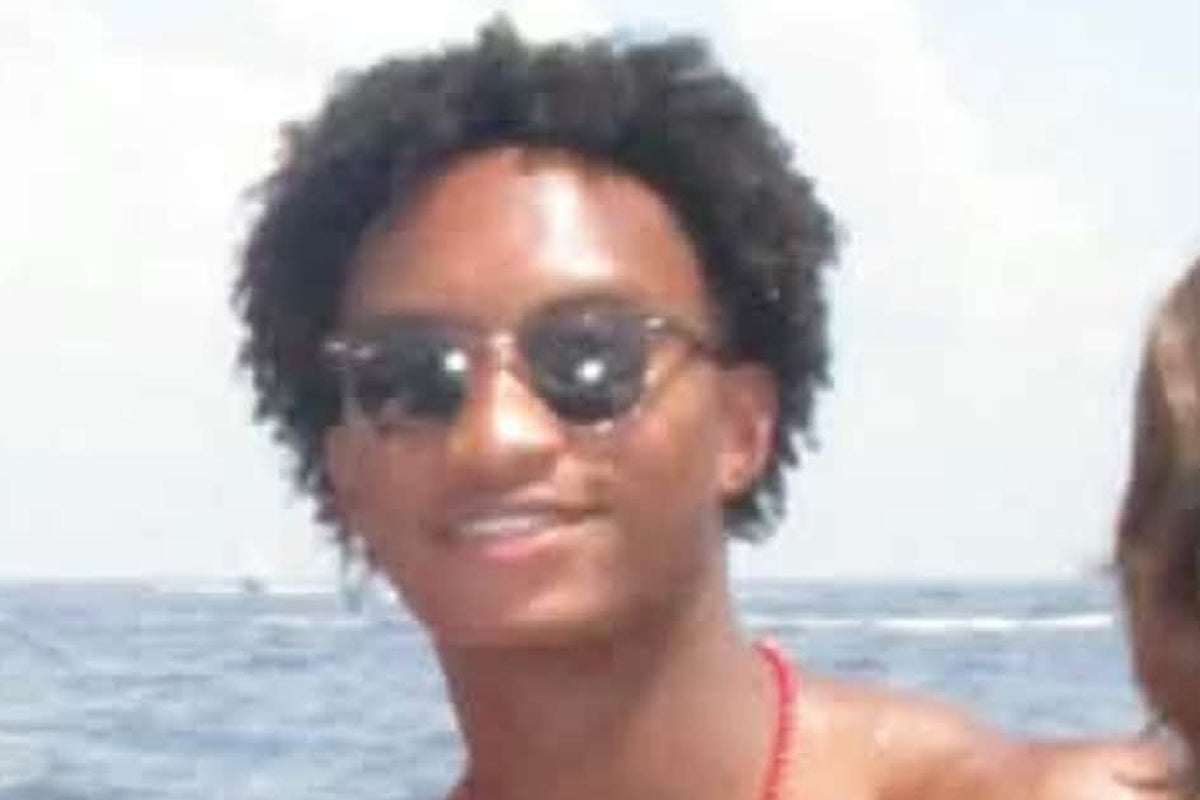
An independent autopsy into the death of 18-year-old Nolan Wells just came back with an "undetermined" cause and manner of death. If anyone was hoping the new forensic findings would bring swift closure to a tragedy that has captivated the nation, they were mistaken. Instead, the preliminary results unveiled by civil rights attorney Ben Crump at the NAACP National Convention in Chicago have only deepened the mystery surrounding what happened on Horn Island on the Fourth of July.
Wells, a promising college football player at Southwest Mississippi Community College, took a boat trip to the barrier island off Mississippi's coast with three friends. His friends returned to the mainland that evening. Nolan didn't. Two days later, on July 6, his body was discovered floating face down in the water near the shore.
The initial response from local authorities left many people scratching their heads. Jackson County Sheriff John Ledbetter noted early on that foul play wasn't suspected, suggesting Wells may have chosen to remain behind on the island. But that explanation never sat right with his family or the community. Now, the independent autopsy report by Dr. Roger Mitchell, funded by former NFL quarterback Colin Kaepernick, proves that ruling anything out right now is entirely premature.
Why the Second Autopsy Came Back Undetermined
Forensic investigations depend heavily on timing and physical evidence. When Dr. Mitchell received Wells' body for the second examination in Washington, D.C., he faced major obstacles right out of the gate.
First, the body was severely decomposed after spending days in the summer heat and undergoing an initial autopsy by the Mississippi State Medical Examiner's Office. Second, standard forensic procedures during a primary autopsy involve removing internal organs and neck structures. Because state officials retained those structures for their own pending tests, the independent pathologist had no way to inspect the neck for hidden trauma or evaluate whether water actually entered Wells' lungs.
Without those vital components, Dr. Mitchell couldn't definitively point to drowning, nor could he rule out non-accidental factors.
He did, however, note one critical finding that has raised eyebrows. The report identified a focal area of red discoloration in the soft tissue at the back of Wells' skull, specifically in the occipital region.
While discoloration can happen naturally due to blood settling after death or normal decomposition, it can also indicate blunt force trauma. Because there were no visible external skull fractures or skin lacerations, the pathologist labeled the red area as inconclusive, explicitly stating that further examination of the state's initial findings is necessary.
Key Independent Autopsy Findings:
- Cause of Death: Undetermined (Pending further investigation)
- Manner of Death: Undetermined
- Fractures or Deep Tissue Injuries: None identified
- Noteworthy Observation: Red discoloration in soft tissue at back of skull
- Missing Evidence: Neck structures and internal organs retained by state
Gaps in the Timeline and Unanswered Questions
What makes this case so agonizing for the Wells family isn't just the forensic ambiguity—it's the massive gaps in the timeline leading up to his disappearance.
Horn Island is a remote strip of land with no facilities, no shelters, and limited cell service. On July 4, hundreds of holiday revelers gathered on the beach. Nolan was the only Black teenager in his immediate group of friends, a detail that has drawn national attention and heightened scrutiny given Mississippi's history.
His friends claimed that Nolan decided to stay on the island to hang out with a girl he met that day, assuming he'd catch a ride back with someone else. They also stated his phone was left behind on the boat to protect it from water damage.
His mother, Christine Wonsley, isn't buying that story. She pointed out that Nolan's phone and house keys were taken back to the mainland without him, something entirely out of character for her son. Family members also cross-referenced location data between Snapchat and the Life360 app, finding glaring inconsistencies that don't match the timeline provided by the friends.
Witnesses have stepped forward with conflicting accounts. While law enforcement initially stated Wells chose to stay behind voluntarily, other witnesses reported that Nolan planned to leave on the boat with his group.
United Cajun Navy search volunteers who recovered his body noted he was fully clothed when found in an area known for treacherous rip currents and swirling washing-machine waters. How does a fully clothed young man end up in deep, dangerous water without his phone, separated from his group, while his belongings return home without him? That is the question investigators still haven't answered.
State Delays and National Attention
The Mississippi State Medical Examiner's Office has yet to release its official autopsy report, claiming it is waiting on toxicology results. That delay has fueled widespread public frustration and rampant speculation across social media.
Civil rights leaders have stepped in to demand transparency. The Rev. Al Sharpton spoke at Wells' memorial service in Ocean Springs, criticizing local law enforcement for making early statements implying no crime occurred before completing a thorough investigation. High-profile figures including Sharpton, media mogul Tyler Perry, and former NFL star Terrell Owens have collectively offered a $125,000 reward for information leading to an arrest and conviction if foul play was involved. Perry also covered the costs for Wells' funeral services.
When law enforcement rushes to dismiss foul play before toxicology and full forensic reports are back, it destroys public trust. Transparency isn't optional in a death investigation—it's the bare minimum required for justice.
Where the Investigation Goes From Here
The independent autopsy hasn't closed the case, but it successfully shifted the narrative. It stopped official channels from quietly sweeping the case aside as a simple accidental drowning.
Moving forward, several concrete steps must happen:
- State Transparency: The Mississippi State Medical Examiner must release the full primary autopsy report and toxicology findings to the family's independent experts.
- Forensic Comparison: Pathologists must analyze the retained neck tissues and internal organs to determine whether mechanical asphyxiation, strangulation, or drowning occurred.
- Timeline Verification: Investigators need to re-examine digital footprints, Life360 location data, and cell tower pings from every individual on that boat.
- Witness Interviews: Federal oversight may be necessary to re-interview all partygoers who were on the northwestern end of Horn Island on July 4.
Nolan Wells was an 18-year-old athlete with a bright future, a loving family, and plans to build a life. His family deserves clear, unvarnished facts rather than assumptions and incomplete timelines. The independent autopsy made one thing abundantly clear: this investigation is far from over.


