The sirens in Tel Aviv do not merely sound. They vibrate in the marrow of your bones, a low, mechanical wail that strips away the illusions of modern life in a matter of seconds. For those living under the arc of the Middle East’s volatile skies, April 2024 did not arrive with the gentle promise of spring. It arrived with the smell of ozone, the glare of anti-aircraft fire, and the collective gasp of millions of people holding their breath at the exact same time.
Picture a crowded, dimly lit bomb shelter in Jerusalem. It smells of damp concrete, old blankets, and the sharp, metallic tang of adrenaline. A mother grips her phone so tightly her knuckles turn a ghostly white. On the screen, a live feed shows dozens of tiny, glowing red dots crawling across a digital map, moving inexorably from east to west. Drones. Cruise missiles. Ballistic payloads.
For decades, the shadow war between Iran and Israel was waged in the dark. It was a conflict of whispers, cyberattacks, assassinated scientists, and deniable sabotages. It was played out through proxies in the hills of Lebanon and the deserts of Syria.
Then, the shadows vanished.
When Iran launched hundreds of drones and missiles directly from its own soil toward Israel, the geopolitical chessboard shattered. This was no longer a cold war. It was a direct, state-on-state confrontation, a perilous escalation that brought the world to the absolute precipice of a regional conflagration.
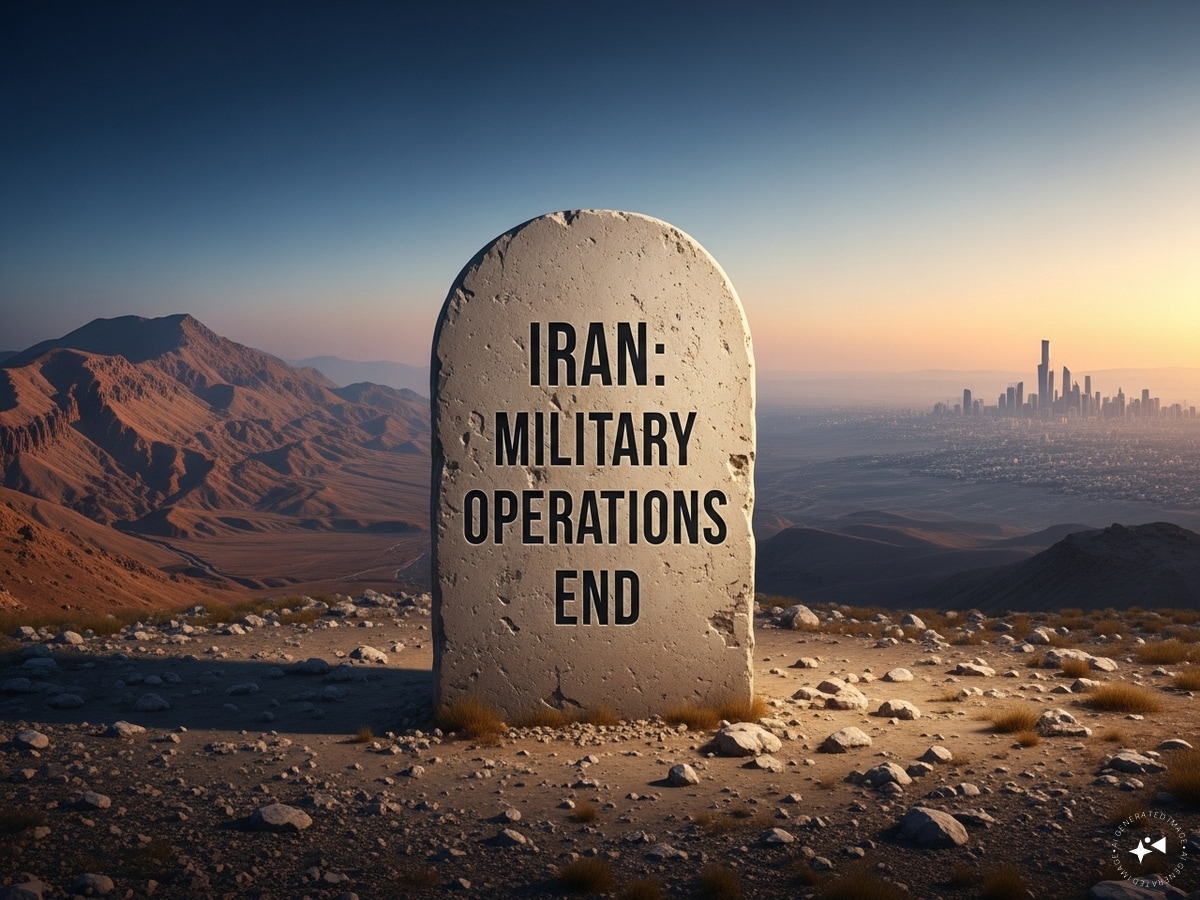
Yet, just as the world braced for the impact of total war, the tone shifted. The Iranian mission to the United Nations released a statement that felt jarringly definitive: "The matter can be deemed concluded."
It was a declaration that military operations had ended. But in the theater of high-stakes global politics, what does an end truly mean when the landscape has been fundamentally altered?
The Anatomy of an Unprecedented Night
To understand the weight of that Iranian declaration, we have to look at the sheer scale of what hung in the balance. This was not a symbolic gesture. It was a massive, coordinated strike involving more than 300 projectiles.
For the average citizen on the ground, the math of geopolitics is simple: it is the number of seconds you have to reach safety.
Imagine being an air traffic controller in Amman, or a civilian radar operator in Baghdad, watching the airspace suddenly fill with lethal metal. The sky, usually a conduit for commerce and travel, became a shooting gallery. The defense of Israel that night required a multi-billion-dollar orchestration of technology, involving not just Israel’s Iron Dome and Arrow systems, but the air forces of the United States, the United Kingdom, and regional partners who found themselves in the surreal position of intercepting missiles over their own territories.
Consider the sheer psychological weight of that night. The Iranian state argued the strike was a legitimate exercise in self-defense, a direct retaliation for the bombing of their diplomatic compound in Damascus weeks earlier, which killed senior officers of the Islamic Revolutionary Guard Corps. In international law, embassies are sovereign territory. To Tehran, the Damascus strike was a line crossed in blood.
So, they struck back. They pulled back the curtain, showed their teeth, and then, almost immediately, signaled that they were stepping back from the ledge.
But the real problem lies elsewhere. You cannot easily un-ring a bell of this magnitude. By launching a direct attack, Iran established a new normal. The unspoken rules that had governed the conflict for forty years were torn up in a single evening.
The Calculus of the Pivot
Why declare an end so quickly? Why launch an attack of epic proportions only to call it off before the smoke had even cleared?
The answer lies in the delicate, agonizing calculus of deterrence.
Governments are not monolithic entities; they are run by human beings who are acutely aware of their own vulnerabilities. Tehran needed a spectacle. They needed to satisfy a domestic audience and regional allies who were demanding vengeance for the Damascus embassy bombing. They needed to prove they could penetrate the most sophisticated air defense network on earth.
Once those missiles cleared the launchpads, the point had been made. To continue the assault would invite an existential response. It would force the United States out of the role of protector and into the role of active combatant.
So, the declaration of an "end" was a calculated diplomatic off-ramp. It was an attempt to control the narrative, to frame the attack as a closed loop. We were hit, we hit back, now the ledger is balanced.
But history tells us that ledgers in the Middle East are never balanced so cleanly.
Think of a high-stakes poker game where one player suddenly shoves all their chips into the center, forces everyone to look them in the eye, and then quietly pulls the chips back before the cards are even flipped. It is a show of willingness. A demonstration of capability.
The Echoes in the Quiet
When the announcement came that the military operations were over, the collective sigh of relief across the globe was audible. Oil markets, which had been fluctuating wildly on the fear of a closed Strait of Hormuz, stabilized slightly. Diplomats in Washington, London, and Paris rubbed their bloodshot eyes and began drafting statements urging restraint.
But for the people living in the crosshairs, the quiet that followed was not peaceful. It was agonizing.
True security is not the absence of a missile in the air; it is the confidence that one will not be launched tomorrow. When Iran declared the matter concluded, they were speaking to the UN Security Council. They were not speaking to the family in Haifa sleeping in their clothes, ready to run at a moment's notice. They were not speaking to the citizens of Isfahan, who woke up wondering if the counter-strike was already en route.
Consider what happens next when a conflict reaches this level of intimacy. The deterrence model shifts from defensive to preemptive. If Israel knows that Iran is willing to launch ballistic missiles from its own soil, the pressure to eliminate those launchpads before they are used becomes immense. The threshold for what constitutes an immediate threat drops significantly.
This is the hidden cost of the crisis. The psychological architecture of the region has been permanently damaged. The baseline of stability has been dragged downward.
The Human Ledger
We often talk about these events in the cold, clinical language of international relations. We talk about "strategic depth," "kinetic options," and "proportionality."
But go back to that bomb shelter.
Look at the kids who are learning to identify the difference between the boom of an interception and the crunch of an impact. Look at the elderly who remember different wars, different shelters, and different promises of peace that evaporated into the desert air.
The Iranian declaration that the operation had ended was a geopolitical pause button, not a stop button. It was a realization by both sides, and the global powers surrounding them, that they had looked directly into the abyss of a major regional war and realized neither was truly ready to jump. Not yet.
The missiles have stopped falling for now, and the drones have crashed or been cleared from the radar screens. The politicians will continue to debate who won the night, who showed strength, and who blinked first.
But as the morning sun rises over the ancient stone of Jerusalem and the bustling streets of Tehran, the sky looks different than it did before. It looks heavier. The clouds carry the memory of fire, and the silence that hangs over the cities is no longer the silence of peace. It is the fragile, trembling quiet of a fuse that has been lit, extinguished at the last possible second, and left in the dark to cool.


