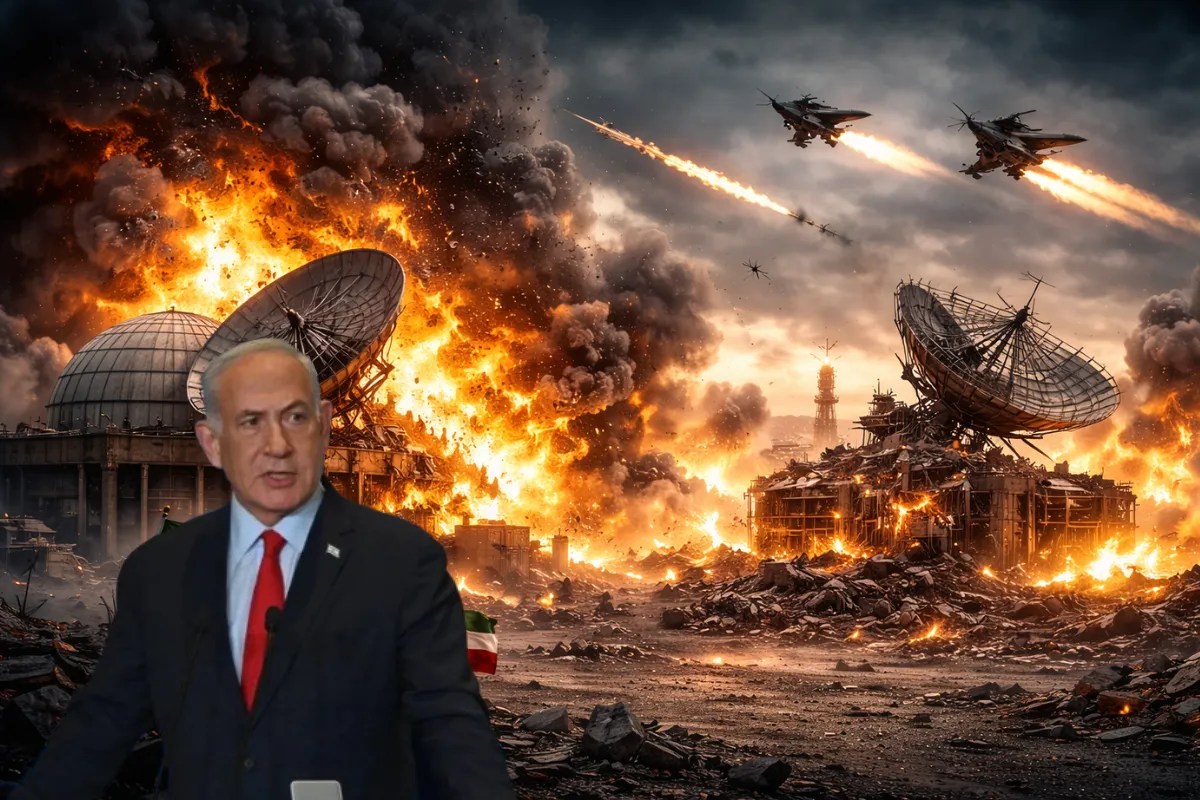
The air in Shahroud is usually thick with the scent of dry earth and the low hum of a city that knows its place in the world. It is a place of transit, a desert crossroads where the stars feel close enough to touch. But on a Tuesday that began like any other, the stars were eclipsed by a different kind of light. It wasn't the soft glow of a celestial body. It was the sharp, clinical precision of a message sent from hundreds of miles away.
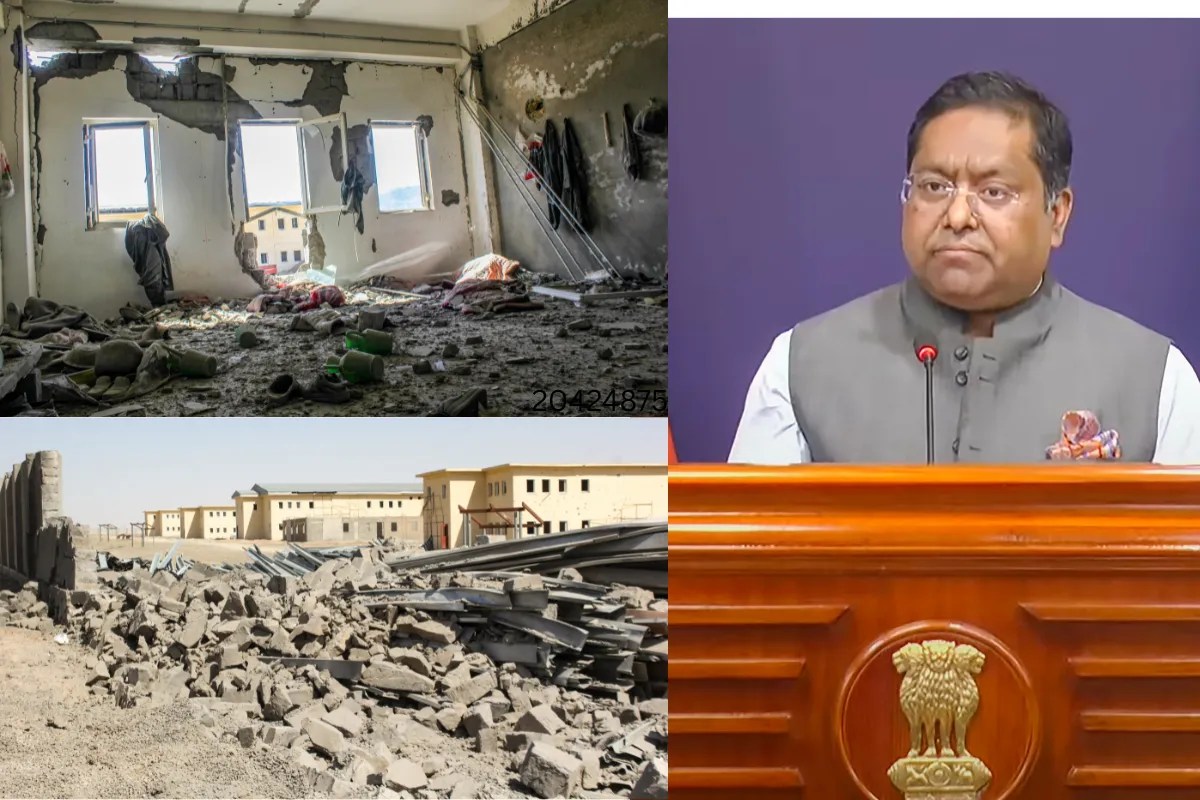
When the news broke that Israel had targeted an Iranian air defense factory and a space research center, the headlines did what headlines always do. They counted the casualties. They mapped the coordinates. They spoke of "strategic significance" and "regional escalation." But headlines are cold. They don't capture the sudden, bone-shaking vibration in the floorboards of a home nearby. They don't describe the look on a technician’s face when the screens go black, not because of a power surge, but because the very hardware has ceased to exist.
To understand what happened, we have to look past the smoke. This wasn't just a physical strike. It was a surgical removal of a specific kind of future.
The Architecture of a Shield
Imagine building a house in a neighborhood where the wind never stops blowing. You spend years, billions of rials, and the collective intellect of your brightest minds to build a wall that can withstand the gale. You call this wall the S-300. You supplement it with homegrown innovations. You tell yourself that as long as the wall stands, the family inside is safe.
Then, in a single night, someone proves the wall is made of glass.
The strikes focused on the Shahroud Space Center and facilities linked to the production of solid-fuel missiles. In the world of high-stakes defense, solid fuel is the holy grail. Unlike liquid fuel, which is volatile and requires a lengthy, visible preparation process—giving satellites plenty of time to snap photos and planners plenty of time to react—solid fuel is ready. It is "press and play." It allows a nation to hide its teeth until the very moment it chooses to bite.
By targeting the mixers and the casting buildings where this fuel is birthed, the strike didn't just break a machine. It broke a timeline. It shoved a burgeoning superpower back several years, forcing them to stand in the desert with empty hands and a lot of questions.
The Human Cost of High Tech
Think of a man we will call Reza. He is a hypothetical engineer, a composite of the thousands of highly educated Iranians who spend their lives in these windowless rooms. Reza didn't join the space program to start a war. He joined because he wanted to see an Iranian flag on a satellite. He spent a decade studying the physics of propulsion, the delicate dance of chemicals that allows a cylinder of metal to escape gravity.
When the strike hit, Reza’s life’s work became a liability. The "space research" he conducted was, in the eyes of the world, a thin veil for ballistic muscle-flexing. This is the tragedy of modern geopolitics: the line between reaching for the stars and reaching for a trigger is nonexistent.
The facilities in Parchin and Khojir are not just dots on a map. They are workplaces. There are cafeterias there. There are parking lots. There are people who went to work that morning thinking about their daughter’s piano lesson and ended the day staring at a crater. The "invisible stakes" are found here, in the realization that no matter how much tech you pile up, the human element is always the most fragile part of the equation.
The Silence After the Blast
There is a specific kind of silence that follows a modern air strike. It isn't the absence of sound, but the presence of a new reality.
For Iran, the silence is deafening because it reveals a gap in the armor. The S-300 surface-to-air missile systems, the very pride of their defensive perimeter, were reportedly neutralized. This is the equivalent of a world-class boxer realizing his arms are suddenly two inches too short to reach his opponent. It changes the psychology of the fight.
When your air defense factory is "blown up," as the blunt translations put it, the message isn't just about the bricks and mortar. The message is: We can see you. We can touch you. And your shield is an illusion.
This wasn't a carpet bombing. It wasn't the messy, sprawling carnage of the 20th century. This was the terrifyingly quiet efficiency of the 21st. The drones and missiles used in these operations don't just fly; they navigate. They identify specific vents, specific cooling towers, specific corners of a laboratory. They are designed to destroy the capability while leaving the surrounding neighborhood intact, a chilling display of "restraint" that is often more intimidating than total war.
The Ghost in the Machine
We often talk about these conflicts as if they are games of chess. We move a piece to Shahroud; they move a piece to the Strait of Hormuz. But chess pieces don't bleed, and chess pieces don't have to explain to a population why the sky is no longer a safe place.
The technical reality is that Iran’s solid-fuel missile production relies on specialized industrial mixers—planetary mixers—often imported from countries like China. These aren't things you can buy on a whim. They are massive, sensitive, and highly regulated. Destroying them creates a bottleneck that cannot be bypassed with simple grit or determination. You need the machine. And the machine is gone.
This leads to a profound sense of vulnerability. If the factory that makes the shield is destroyed, how do you protect the factory that makes the next shield? It is a recursive nightmare.
Consider the sheer complexity of an integrated air defense system. It is a symphony of radar, radio waves, interceptors, and human command.
$$E = mc^2$$
The energy released in these strikes is one thing, but the kinetic energy of a geopolitical shift is quite another. When the radar goes dark, the entire nation feels a collective shiver. The "space research center" wasn't just building rockets; it was building a narrative of self-sufficiency. That narrative now has a hole in it the size of a missile casing.
A World Without Margins
We live in a time where the margin for error has vanished. In the past, a strike of this magnitude might have taken weeks to coordinate and months to understand. Today, it happens in the span of a few heartbeats, and the world watches the thermal imagery in near real-time.
The "human-centric" truth of this event is that everyone involved—from the pilots in the cockpits to the engineers in the bunkers—is trapped in a cycle of escalating precision. We have become so good at hitting what we aim at that we have forgotten how to miss. And in the world of international relations, "missing" is sometimes the only thing that keeps the peace.
As the dust settles over the facilities at Shahroud, the physical debris will eventually be cleared. New concrete will be poured. New mixers will be sought through back-channel deals and darkened ports. But the psychological landscape has shifted.
The residents of these cities now look at the sky differently. They look at the stars not as distant lights, but as potential vantage points for a hunter they cannot see. The "space research" continues, but the dream of a peaceful sky feels further away than ever.
The real casualty wasn't just a factory or a lab. It was the quiet confidence of a Tuesday morning. The realization that in the modern age, the walls we build are only as strong as the shadows they cast, and somewhere, someone has found a way to turn off the light.
The desert is quiet again, but it is the silence of a held breath.