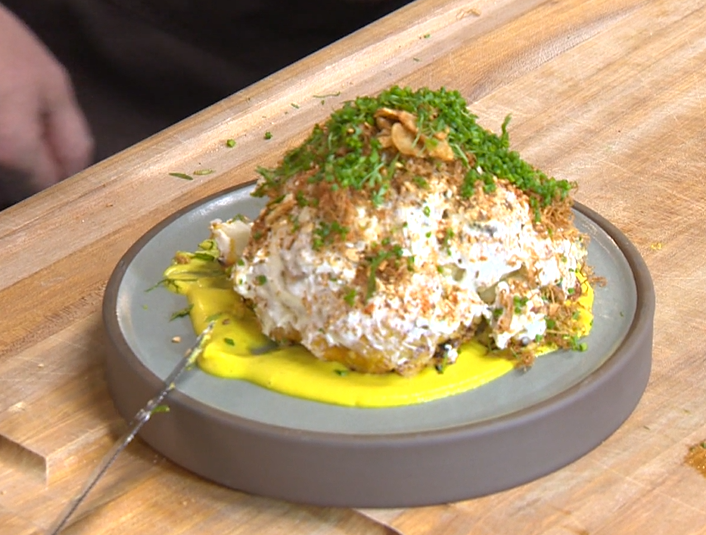
The kitchen was quiet except for the low, rhythmic hum of the refrigerator and the frantic ticking of a wall clock that seemed determined to mock my exhaustion. It was 7:14 PM on a Tuesday. The kind of Tuesday that feels less like a day of the week and more like an endurance test. My shoes were still by the door, heavy with the grit of a commute that had stretched twice as long as promised. On the counter sat a single, pale, unceremonious head of whole cauliflower.
Beside it rested a jar of curry powder, a can of coconut milk, and a handful of yellow turmeric roots that stained my thumb orange the second I touched them.
There was no grand vision when I started. Just hunger, desperation, and an stubborn refusal to order yet another round of lukewarm takeout. Most people look at a whole roasted cauliflower and see a clever vegan substitute, a trendy centerpiece for a dinner party hosted by someone who owns linen napkins. But standing there in the dim kitchen light, stripped of all culinary pretension, I saw an anchor.
Consider what happens when you treat vegetables not as side-car accessories to a slab of meat, but as the main event.
For years, modern cooking culture has treated plants like second-class citizens on the plate. We steam them into submission, drowning them in butter or cheese sauce just to make them palatable, as if apologizing for their existence. We boil them until their vitamins leak into gray water and their cellular walls collapse into mush. It is a crime against agriculture.
The whole roasted cauliflower demands a different relationship. It asks for patience.
I stripped away the outer leaves—not all of them, just the bruised and ragged ones—leaving a tight, cream-colored dome that looked remarkably like a brain carved out of ivory. I rinsed it under cold water, watching the droplets race down its intricate, fractal geometry. Nature is mathematical genius disguised as food. Every tiny floret mirrors the macro-structure of the whole, a repeating pattern that goes on down to the cellular level.
Then came the dry. Moisture is the eternal enemy of the Maillard reaction. If you want that gorgeous, deeply savory, mahogany crust, you have to treat the surface like dry parchment. I patted it down with a frayed dish towel, muttering under my breath.
Cooking is rarely about the destination. It is the friction of the process.
I set the oven to 400 degrees Fahrenheit. While it climbed toward heat, I turned my attention to the sauce. This was where the yellow cauliflower curry sauce came into play, a vibrant, golden concoction meant to bridge the gap between earthy comfort and aromatic heat.
Let me be entirely honest with you: the first time I tried to make a curry sauce from scratch, I burned the garlic. It turned black, bitter, and acrid, filling the apartment with a suffocating smog that forced me to open every window in February. I stood there coughing, waving a magazine at the smoke detector, ready to throw the whole mess in the dumpster. Failure in the kitchen is intensely personal. It feels like a minor indictment of your competence as a human being.
I took a breath. I started over.
Good cooking, like most things worth doing, requires you to respect the variables. Heat plus fat equals flavor, but only if you respect the smoke point.
This time, I took a heavy-bottomed skillet and melted a generous spoonful of coconut oil. The oil shimmered, catching the overhead light like liquid glass. Into that warmth went diced yellow onions, sweating down until they turned translucent and sweet, smelling like toasted sugar. I added minced ginger and garlic, stirring them just until their raw edge softened into fragrance.
Then, the spices.
Yellow curry powder is a complex democracy. Turmeric brings the blazing yellow pigment and an earthy bitterness; cumin adds a deep, smoky warmth; coriander lends a citrusy lift; and a pinch of cayenne provides the quiet hum of heat that lingers at the back of the throat long after you swallow. When those dry powders hit the hot oil, the kitchen transformed. The scent did not just fill the room; it rewrote the atmosphere. The heavy, stagnant exhaustion of the workday evaporated, replaced by something ancient and restorative.
I poured in full-fat coconut milk. The white cream hit the yellow spices, swirling into a brilliant, golden-orange emulsion that bubbled lazily at the edges. A squeeze of fresh lime juice cut through the richness, balancing the fat with bright acidity.
The cauliflower sat waiting on a parchment-lined baking sheet, brushed generously with olive oil and seasoned with coarse sea salt. I didn't just sprinkle the salt; I rubbed it into the crevices, ensuring every single floret had skin in the game.
Into the oven it went.
For the next forty-five minutes, I didn't check email. I didn't scroll through the endless, jittery feed of global crises on my phone. I sat at the kitchen table with a glass of tap water, listening to the muffled roar of the oven fan and watching the shadows lengthen across the floorboards.
There is a profound psychological safety in repetitive physical labor. Chopping, stirring, waiting. Your brain, frayed by digital fragmentation, finally gets permission to reassemble itself.
When the timer finally buzzed, the kitchen was warm and smelled like a spice market in mid-summer.
I opened the oven door. A wave of heat rolled over my face. The cauliflower had transformed. The pale, innocent dome was now bronzed, blistered, and deeply caramelized at the edges, the tips of the florets tipped with a dark, nutty char. It looked less like a vegetable and more like a treasure unearthed from an archaeological dig.
I transferred it carefully to a wide, shallow ceramic bowl, its base resting steady.
Then came the final act. I poured the steaming yellow curry sauce directly over the crown. The golden river cascaded down the intricate valleys, filling every crevice, pooling in the moat around the base, soaking into the tender, roasted core. I finished it with a handful of fresh cilantro leaves, their green vibrancy cutting through the sea of gold.
We ate it with a large serving spoon, standing around the counter because sitting down at the table felt entirely too formal for something so primal.
The contrast was staggering. The exterior of the cauliflower offered a slight resistance before giving way to a meltingly tender interior that absorbed the rich, spiced coconut sauce like a sponge. It wasn't meat, and it didn't pretend to be meat. It was something better: a vegetable that had finally been allowed to reach its absolute, unapologetic potential.
The clock on the wall kept ticking, but time felt entirely irrelevant. The kitchen was warm, the plates were empty, and the night outside was just a little bit quieter than it had been before.