The fluorescent lights in the Khost provincial hospital didn’t flicker before they died. They simply vanished, replaced by a pressure in the ears that only those who have survived a blast wave can truly describe. It is a vacuum. A momentary theft of the very air in the room. Then, the sound arrives—a roar so profound it feels less like noise and more like a physical weight crushing the chest.
In the moments before the strike, the corridors were filled with the mundane sounds of survival. The rhythmic hiss of a ventilator. The soft shuffling of plastic sandals on linoleum. The hushed, urgent whispers of a mother praying over a feverish child. These are the sounds of a sanctuary. In a landscape defined by decades of shifting frontlines, a hospital is supposed to be the one place where the geometry of war does not apply.
Then the sky fell.
The Arithmetic of Agony
Reports filtering out of the border region suggest a devastation that numbers struggle to contain. Four hundred lives. To a bureaucrat in a distant capital, 400 is a statistic, a data point to be leveraged in a press release or a diplomatic cable. To the people on the ground, 400 is a hole in the world.
Imagine a man named Omar. He is not a soldier. He is a mechanic who spent his life savings to bring his brother to this specific ward because he believed the rumors of its superior equipment. When the first missile struck the western wing, Omar was fetching water. He returned to find the wing had become a jagged teeth-mark in the earth. The "superior equipment" was now twisted scrap metal, indistinguishable from the remains of the people it was meant to save.
This is the reality of the accusations leveled by Kabul against Islamabad. The Afghan government claims Pakistani aircraft crossed the blurred, mountainous line of the Durand Line to deliver this carnage. Pakistan remains silent or issues the standard denials of "counter-terrorism operations" targeting militants hidden in the shadows. But shadows do not bleed. Patients do.
The Invisible Border
The border between Afghanistan and Pakistan is not a wall. It is a fever dream of jagged peaks and ancient footpaths where sovereignty has always been a suggestion rather than a rule. For years, the tension has simmered, a slow-boiling pot of accusations regarding cross-border shelling and the harboring of insurgents.
But this strike represents a departure from the "usual" skirmishes. Targeting a medical facility—if the evidence holds—is a transgression that vibrates on a different frequency. It breaks the unspoken contract of conflict. When a hospital becomes a target, the message isn't just "we are fighting your soldiers." The message is "nowhere is safe."
The technical term is collateral damage. It is a sterile, cold phrase designed to scrub the blood off the floor. It suggests that the death of a grandmother in a recovery room was a mathematical error, a rounding mistake in a larger, more important equation of national security.
The Anatomy of a Strike
Modern munitions are terrifyingly precise. We are told they can be guided through a specific window from thousands of feet in the air. This precision makes the "mistake" narrative harder to swallow. If the technology is so good, then the target was chosen. If the target was chosen, then the 400 people inside were weighed against a tactical objective and found wanting.
Consider the logistics of such an event.
- The flight path must be cleared.
- The coordinates must be locked.
- The thumb must press the button.
Each of those steps involves a human being. A human being who has a family, who perhaps has sat in a waiting room similar to the one they are about to incinerate. The disconnect required to carry out such an act is the true ghost in the machine. It is a psychological shielding that allows a pilot to see a building not as a place of healing, but as a grid coordinate.
The Echo in the Wards
The immediate aftermath of a high-casualty event is not loud. It is eerily quiet. The dust, pulverized concrete, and insulation hang in the air like a thick, gray fog, muffling the screams. Rescuers work by the light of cellphones, their beams cutting through the haze to find things they will never be able to unsee.
They find a nurse whose hands are still clutched around a syringe. They find children who were supposed to be discharged the next morning. These are the "400" that the headlines talk about. They are not militants. They are the collateral of a geopolitical chess match played by men in air-conditioned rooms who will never have to wash the gray dust of a pulverized hospital out of their hair.
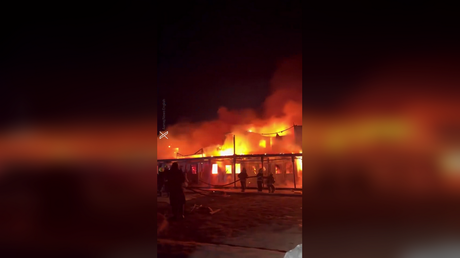
The accusations from Kabul are white-hot. They speak of a violation of territorial integrity, a war crime of staggering proportions. The video evidence mentioned in initial reports shows a landscape of fire and twisted rebar, a vision of hell brought to earth.
Why the World Looks Away
There is a fatigue that sets in when certain names appear in the news. Khost. Kabul. Waziristan. The collective consciousness of the West often treats these places as permanent theaters of tragedy, as if the soil itself is cursed. This apathy is the greatest ally of those who pull the triggers. When the world expects violence from a region, it stops being shocked by it.
But the death of a patient in a hospital bed in Khost is exactly the same as the death of a patient in London, New York, or Tokyo. The grief is identical. The vacuum left in the family is just as vast.
The political fallout will likely follow a predictable script. There will be an emergency meeting. There will be "deep concern" expressed by international bodies. There might even be an investigation that lasts three years and produces a report that no one reads. Meanwhile, the survivors in Khost will be left to bury their dead in the rocky soil, wondering when the sky will decide to fall again.
The Cost of Silence
Pakistan’s silence or deflection is a calculated move. In the language of power, admitting a mistake is a weakness, and admitting a deliberate strike is a confession. So, they wait. They wait for the news cycle to churn. They wait for a celebrity scandal or a domestic crisis to push the 400 dead of Khost off the front page.
It usually works.
But for the man who was fetching water while his brother was erased, the news cycle never ends. He lives in the "after." His world is now divided into two eras: before the flash, and everything that comes now. He doesn't care about the Durand Line. He doesn't care about counter-insurgency strategies or the shifting alliances of the Taliban and the Pakistani military. He cares about the fact that he brought his brother to a place of healing, and that place became a tomb.
The strike on the Khost hospital isn't just a news story. It is a mirror. It reflects a world where the most vulnerable people are the most expendable, where "security" is bought with the lives of those who have none, and where the most sophisticated weapons on earth are still being used to solve the oldest, crudest grudges.
As the sun rises over the jagged peaks the next morning, the smoke still curls from the ruins. The smell of ozone and burnt plastic lingers. A lone doctor, his white coat stained a dark, rust-colored brown, stands in the courtyard holding a shattered vial of medicine. He looks at the rubble, then at the sky, waiting for a sound that isn't there.
The silence is the loudest thing of all.