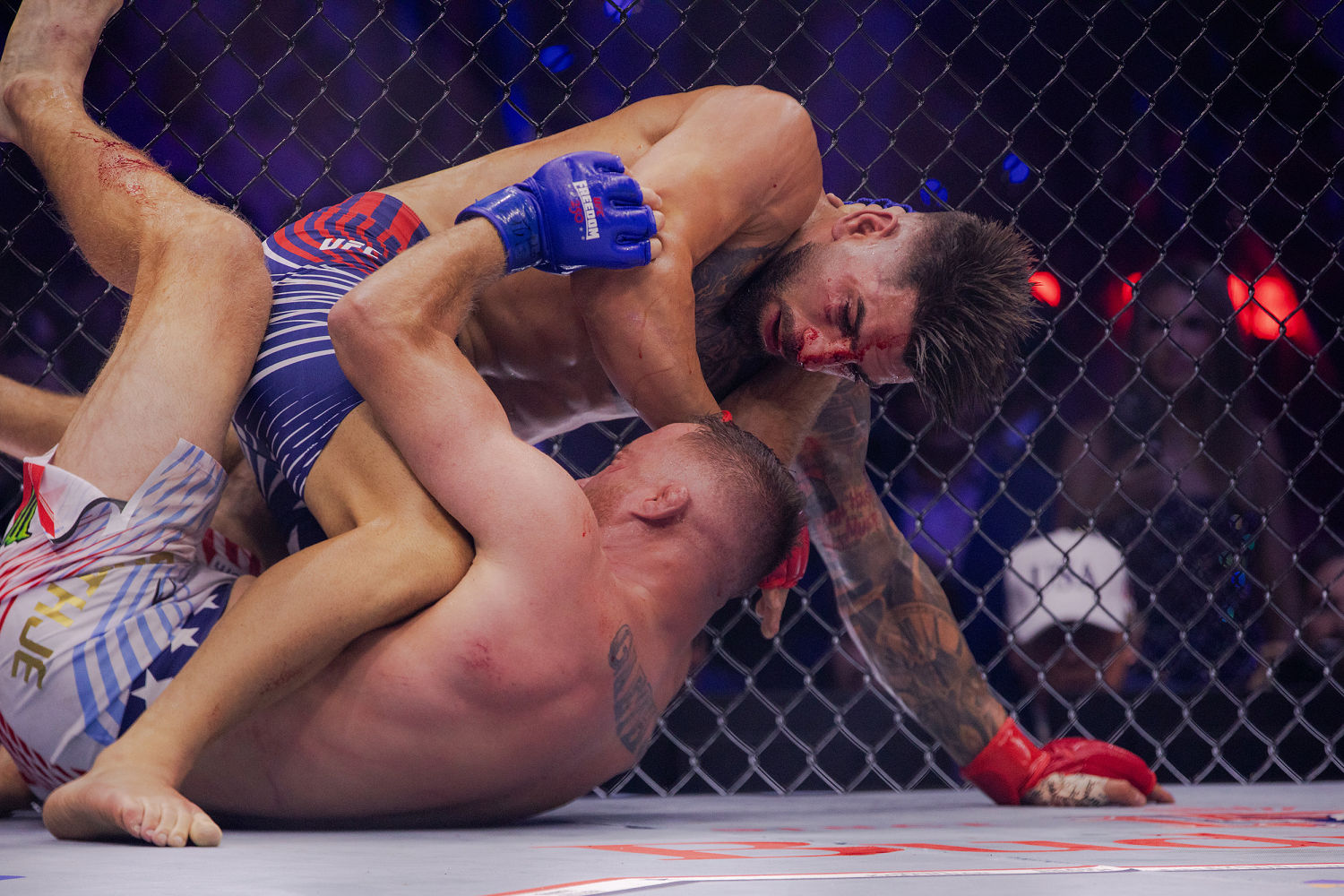
The air inside the arena did not smell like sports. It smelled like aviation fuel, expensive cologne, and stale beer.
Ten thousand people had already taken their seats when the low rumble started outside. It wasn't the bass from the sound system. It was the synchronized roar of military jet engines tearing through the night sky directly above the roof. Inside, the metal rafters vibrated. The crowd didn't just cheer; they erupted in a collective, primal surge of adrenaline. This wasn't just a fight card anymore. It was a cultural lightning rod.
To understand what happened inside UFC Freedom 250, you have to look past the official pay-per-view statistics and the shiny championship belts. You have to look at the faces in the third row, drenched in sweat and illuminated by the harsh neon glow of the Jumbotron.
MMA used to be a sport of subcultures, hidden away on late-night cable and dismissed by the mainstream media as human cockfighting. Not anymore. Tonight, the octagon was the exact center of the American zeitgeist.
The Gravity of the Front Row
The energy shifted long before the main card began. It happened the moment the secret service detail moved into position around the VIP entrance.
When Donald Trump walked into the arena, flanked by Dana White and a rotating phalanx of rock stars, influencers, and tech billionaires, the stadium became something entirely different from a sporting venue. It transformed into a political rally wrapped in a gladiatorial spectacle. The noise was deafening. It was a physical wall of sound that hit your chest and stayed there.
Consider the perspective of a casual fan—let's call him Marcus, a twenty-four-year-old who saved up for three months to buy a nosebleed ticket. Marcus didn't come to vote. He came to see a lightweight title defense. But as he looked down at the floor seats, seeing former presidents shaking hands with internet celebrities while military flyovers shook the glass windows, Marcus realized the fight in the cage was only half the show. The real spectacle was the crowd itself.
The UFC has masterfully tapped into a specific, modern craving: the desire for unedited, raw reality in an increasingly curated world. In the octagon, you cannot fake a left hook. You cannot spin a knockout. That brutal authenticity draws a certain type of crowd, creating an environment where political theater and physical violence blend into a seamless brand of entertainment.
Blood on the Canvas
The lights dimmed. The theatricality faded, replaced by the stark, unforgiving reality of the sport.
When the first bell rang for the main card, the political chants died down, replaced by the rhythmic, sickening sound of leather hitting skin. Skin splitting open.
In the third fight of the night, a featherweight contender caught a knee directly to the orbital bone. The sound echoed all the way to the back rows—a sharp, wet crack. Within seconds, the canvas was painted with bright crimson streaks.
This is where the casual observer often recoils. It is easy to watch a fight on a television screen while eating pizza in a quiet living room. It is entirely different to be close enough to see the sweat and blood spray off a fighter’s head when they get hit with a counter-right. You smell the iron in the air. You hear the desperate, ragged breathing of two human beings pushing their bodies to the absolute brink of collapse.
The stakes in that cage are invisible but massive. A fighter isn't just risking a loss on their record; they are risking their long-term health, their financial future, and their identity. Every time they step onto that canvas, they trade a piece of their youth for a shot at immortality. The crowd reacts to that sacrifice with a mixture of awe and bloodlust. It is a terrifyingly beautiful thing to witness.
The Anatomy of the Main Event
By the time the main event walked out, the arena was suffocatingly hot. The air conditioning was no match for the heat generated by twenty thousand screaming bodies.
The champion walked to the cage with a calm, almost meditative slow stride. The challenger practically sprinted, a ball of chaotic energy ready to explode. The contrast was stark. It was textbook psychological warfare played out on a massive stage.
The fight itself was a five-round war of attrition. It wasn't a clean, technical display of martial arts. It was a grueling, ugly, beautiful mess. By round four, both men were exhausted, their faces swollen beyond recognition, leaning on each other in the clinches just to stay upright.
During the championship rounds, the arena fell strangely silent for a brief moment. The music had stopped. The celebrities were standing on their chairs. Everyone was watching two men refuse to quit. It was a display of human will that transcended sports. When the final buzzer sounded, both fighters collapsed onto the bloody canvas, not in anger, but in mutual, total exhaustion. They had given everything they had to give, and the crowd gave it right back to them.
The lights eventually came up, the cleaning crews began sweeping up the thousands of crushed plastic cups, and the VIPs vanished into the night behind tinted windows and police escorts. But the energy remained trapped in the empty arena. UFC Freedom 250 wasn't just a collection of fights or a political photo op. It was a mirror held up to a loud, chaotic, and fiercely divided culture, proving that nothing brings people together quite like the shared experience of watching two people fight for their lives.


GR_SOL_TOP__FCO_X_200_ML.jpg)