The air in Vienna during the first week of August 2024 was heavy, thick with the kind of humidity that clings to cotton t-shirts and makes the cobblestones feel slick. For tens of thousands of young women, this wasn’t just a summer heatwave. It was the season of sequins. They had spent months hunched over dining room tables, their fingers raw from threading thousands of tiny plastic beads onto elastic strings.
Friendship bracelets. A currency of connection.
Imagine one of these fans—let’s call her Sophie. She had flown from London, her suitcase a rattling chest of glitter and hand-sewn fringe. To Sophie, the Ernst Happel Stadium wasn't just a concrete bowl; it was a sanctuary where the outside world, with its jagged edges and relentless noise, finally went quiet. She believed, as most did, that a pop concert was the safest place on earth because it was built on joy.
She was wrong.
While Sophie checked into her hotel, a 19-year-old man in the nearby town of Ternitz was finishing a different kind of preparation. He wasn't threading beads. He was checking the stability of liquid explosives. He had recently pledged his soul to a digital ghost, a radicalized ideology that views a stadium full of singing girls not as people, but as a target.
The Architecture of a Nightmare
The news broke like a sudden, violent crack of thunder in a clear sky. Three sold-out shows. Canceled.
The initial reaction from the public was a mixture of confusion and irritation. Logistics are messy. But as the Austrian interior ministry began to peel back the layers of the investigation, the irritation turned into a cold, paralyzing dread. This wasn't a permit issue or a technical glitch.
The plot was surgical. The suspect, an Austrian citizen with North Macedonian roots, had successfully secured a job with a technical company that was scheduled to provide services at the stadium during the concerts. He wasn't planning to attack from the periphery. He was planning to be inside the machine.
He had spent weeks consuming propaganda, his world narrowing until the only thing left was the desire to kill and be killed. He had stolen chemical substances from his workplace. He had built a device. He had a machete sharpened and ready in his car. His goal was simple: to take as many lives as possible outside the stadium gates, where the "Swifties" who couldn't get tickets—the ones just there to hear the muffled music from the parking lot—would be gathered in their thousands.
Security officials described it as a "concrete threat." In the language of counter-terrorism, "concrete" means the fuse is already lit.
The Guilty Plea and the Anatomy of Radicalization
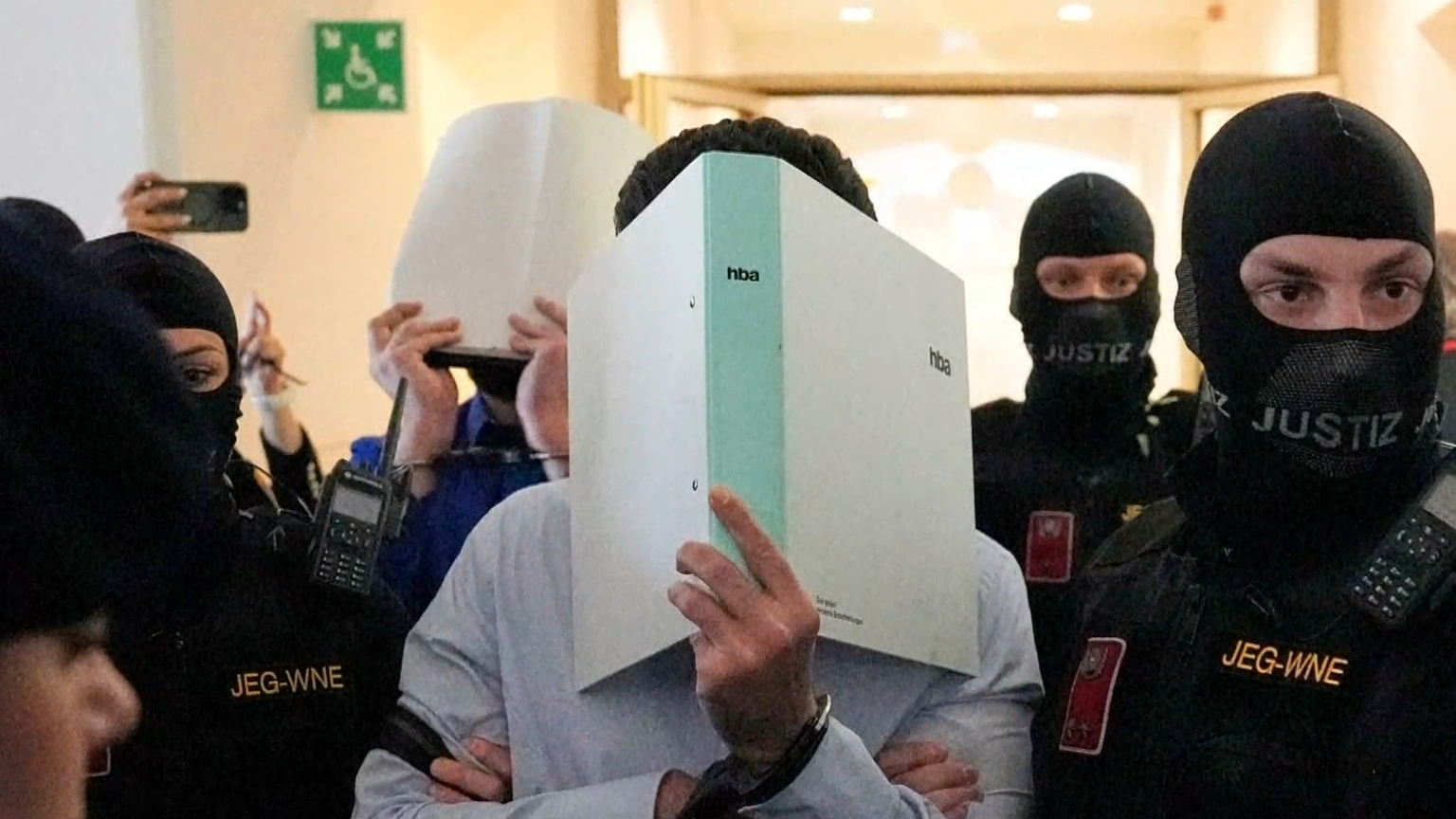
Months later, in a courtroom that felt worlds away from the neon lights of a stage, that same 19-year-old stood up. He admitted to it all. He pleaded guilty to being a member of a terrorist organization and to the planned mass murder.
Watching the proceedings, one is struck by the banality of the evil on display. He didn't look like a monster from a movie. He looked like a kid who had fallen down a digital rabbit hole and never found the ladder back out.
The psychology here is a dark mirror of the fandom he sought to destroy. Both the fans and the radicalized youth seek a sense of belonging, a grand narrative to be part of. But where one group finds community in lyrics about heartbreak and resilience, the other finds it in the grim aesthetics of destruction.
He had changed his appearance. He had grown the beard that served as a visual signal of his new allegiance. He had deleted his social media accounts, attempting to vanish into the shadows before the final act. But the digital trail remained. Authorities found a wealth of IS (Islamic State) material on his devices. He had been "sworn in" via a messenger app, a modern-day ritual that turns a lonely teenager in a small Austrian town into a foot soldier for a global shadow.
The Invisible Stakes of a Canceled Song
We often talk about the financial impact of such events—the millions of dollars lost in ticket refunds, hotel cancellations, and lost tourism revenue. Those numbers are staggering, certainly. But the true cost is measured in the erosion of public trust.
When a girl like Sophie is told she cannot gather with her peers because someone wants to blow her up, something breaks. It is an assault on the very idea of the "third place"—those spaces outside of home and work where we find our tribe.
The decision to cancel the Vienna dates was made by Barracuda Music, the organizers, after consultation with government officials. It was a move that likely saved hundreds of lives, yet it was met with a haunting silence from the artist's camp for weeks. This silence wasn't a lack of care; it was a security protocol. To speak was to acknowledge the power of the threat.
When the singer finally did speak, after the European leg of the tour concluded in London, she described the cancellation as "devastating." She explained that her priority was the safety of the fans. It was a reminder that in 2024, a pop star is not just an entertainer; they are a high-value target in a geopolitical war they never asked to join.
A New Reality for the Arena
The Vienna plot changed the way we look at the horizon. It forced a reckoning with the vulnerability of "soft targets."
Security at major events has shifted from checking bags for contraband to sophisticated cyber-surveillance and undercover infiltration. The fact that the suspect had gained employment at the venue highlights a terrifying loophole: the internal threat. Background checks are only as good as the data they pull from, and radicalization can happen faster than a database can update.
Consider the ripple effect. Every stadium tour now carries an invisible surcharge of anxiety. Every parent dropping their teenager off at the gate lingers just a few seconds longer, watching the crowd with eyes that are slightly more narrowed, slightly more fearful.
The suspect's guilty plea provides a sense of legal closure, but it offers little in the way of emotional resolution. He faces a significant prison sentence, but the ideology that fueled him remains accessible to any other lost soul with an internet connection and a grievance.
The Resilience of the Beaded String
But there is a second half to this story, one that didn't happen in a courtroom or a police station.
On the days the concerts were supposed to happen, something strange occurred in the streets of Vienna. The fans didn't hide in their hotel rooms. They didn't pack their bags and flee. Instead, they took to the streets.
They gathered on Corneliusgasse, a small street whose name sounds like one of the singer’s lyrics. They hung friendship bracelets on the branches of trees until the leaves were hidden by colorful plastic. They sang. They filled the air with the very music that the plot had tried to silence.
It was a quiet, glitter-covered act of defiance.
They proved that while a physical stadium can be closed, the community it represents is decentralized and indestructible. You can stop the speakers from humming, but you cannot stop twenty thousand voices from hitting the high note together in a public square.
The 19-year-old in the dock thought he was destroying a target. He didn't realize he was attacking a culture that knows how to heal itself.
The music didn't stop. It just moved outside.
As the sun set over Vienna on what should have been the final night of the tour, the trees on Corneliusgasse swayed under the weight of thousands of beaded promises. The threat was real, the danger was documented, and the guilt was admitted. Yet, the enduring image of that week isn't a mugshot or a confiscated chemical drum. It is a sea of young people, standing in the heat, refusing to let the shadows dictate the rhythm of their lives.
They are still threading beads.
The machete was sharp, but the song was louder.