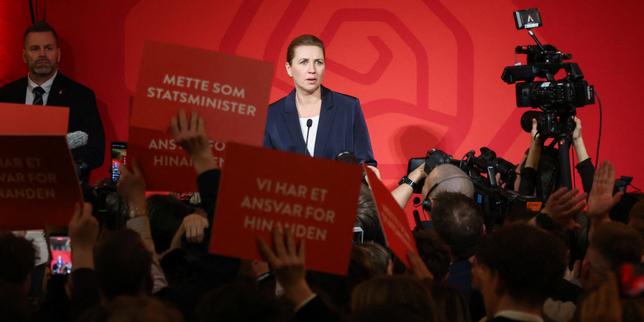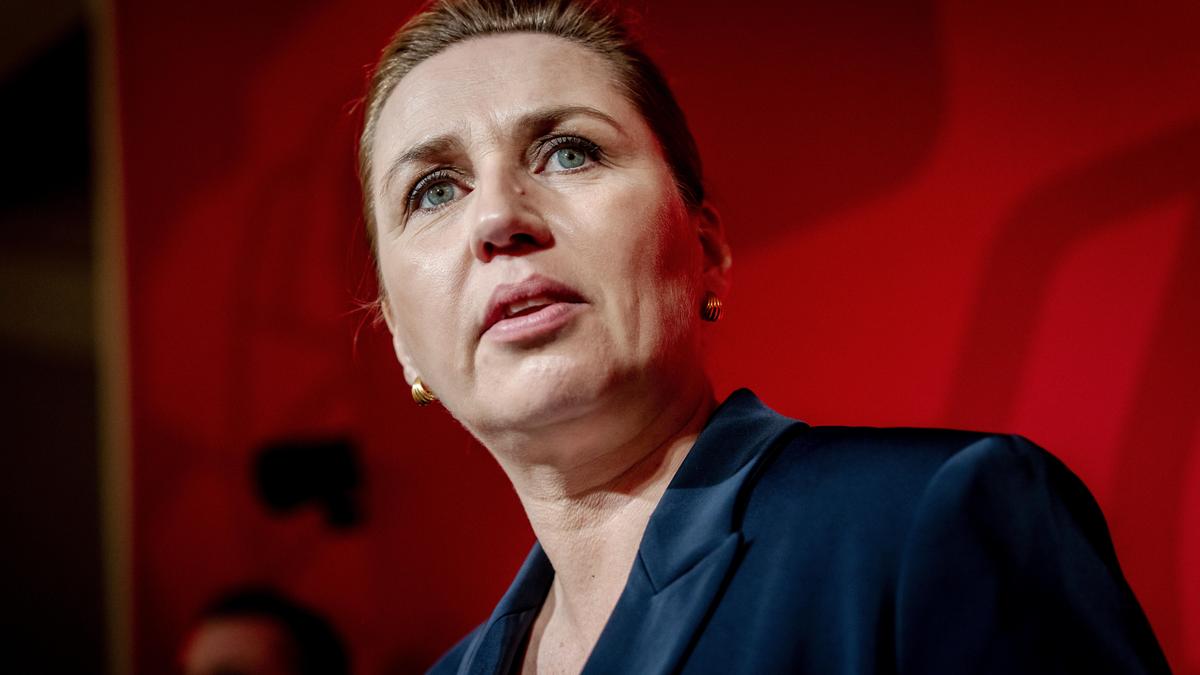
The rain in Copenhagen doesn’t just fall; it leans. On election night, it pushed against the heavy oak doors of Christiansborg Palace, where the air inside was thick with the smell of damp wool and overpriced coffee. Mette Frederiksen stood in the center of a gilded room, her face illuminated by the harsh, artificial glow of television monitors displaying a map of Denmark that refused to turn a solid color.
For months, the pundits spoke of mandates. They whispered about polling margins and demographic shifts in Jutland. But as the clock ticked past midnight, those abstractions dissolved. What remained was a mathematical ghost.
The result was a tie that felt like a fracture.
To understand why a Danish election matters to someone sitting thousands of miles away, you have to look past the spreadsheets. Denmark is often held up as the world’s laboratory for "the good life"—a place where the social contract is written in stone. But tonight, the pen had run out of ink. The numbers were so perfectly split between the left-leaning "Red Block" and the right-leaning "Blue Block" that the country effectively hit a pause button it didn't know it possessed.
The Architect in the Middle
Enter Lars Løkke Rasmussen. If this story were a play, Lars would be the character standing in the wings, holding the only key to the stage door. A former Prime Minister himself, he had formed a new party, the Moderates, specifically to blow up the binary choice of Danish politics.
He didn't want to be a king. He wanted to be the kingmaker.
Imagine a bridge that refuses to touch either bank of the river. That was Lars. By capturing a handful of seats exactly in the center, he ensured that neither the incumbent Prime Minister nor her rivals could reach the magic number of 90 seats required to lead.
The strategy was brilliant. It was also agonizing.
While the cameras captured the cheers of small victories, the reality was a vacuum. Politics is usually a game of momentum, a series of rapid-fire decisions fueled by the adrenaline of a win. Instead, Denmark entered a state of profound stillness.
The Cost of a Clean Slate
There is a specific kind of anxiety that settles over a nation when no one is in charge. It isn't the chaotic fear of a coup or the loud anger of a protest. It is a quiet, domestic worry. It’s the small business owner in Odense wondering if the promised energy tax credits will vanish. It’s the nurse in Aarhus looking at a staffing crisis and realizing there is no minister with the authority to sign a new contract.
This is the invisible stake of an inconclusive election. We talk about "prime minister's futures" as if they are career paths in a corporate office. They aren't. They are the anchors for public certainty.
Frederiksen had governed with a firm, sometimes polarizing hand through the pandemic. She was the "Mortal Mette," a leader who leaned into the image of a pragmatic protector. But on this night, her pragmatism met a wall of sheer math. She won the most votes, yes. But in the intricate gears of a multi-party democracy, winning the most votes is like having the most ingredients but no stove.
The "Blue Block," led by Jakob Ellemann-Jensen, found themselves in a mirrored prison. They had successfully clawed back ground, tapping into frustrations over centralized power and the controversial culling of the nation's mink population years prior. They had the momentum of a comeback, yet they remained stuck in the lobby of power, unable to badge in.
The Midnight Calculus
Why does this happen? Why does a stable, educated, and wealthy nation suddenly find itself unable to pick a direction?
The answer lies in the erosion of the "big tent." For decades, European politics was a battle between two giants. You were either for the workers or for the owners. But the world got complicated. Climate change, immigration, and the soaring cost of a loaf of bread have fractured those old identities.
Now, voters don't join tents. They buy specialized umbrellas.
In Denmark, this resulted in a parliament that looks less like a governing body and more like a mosaic of grievances and niche dreams. There are parties for the staunch greens, parties for the rural skeptics, and parties for those who simply want things to be the way they were in 1995.
When these fragments are tossed into the ballot box, they don't always settle into a pattern. Sometimes, they just pile up.
Consider the human toll on the candidates themselves. We see them as talking heads, but by 3:00 AM, the makeup is cracking. The adrenaline that sustained them through six weeks of debates on freezing street corners has curdled into raw exhaustion. They are forced to walk out onto stages and deliver "victory" speeches that feel like eulogies, or "concession" speeches that are actually veiled threats.
The Silence After the Shouting
The morning after the election, Copenhagen woke up to the same leaning rain. The posters were still zip-tied to the lampposts, faces of smiling politicians looking slightly more haggard under the grey sky.
The headlines called it "inconclusive." A sterile word.
What it actually was, was a challenge. It was a demand from the voters for the politicians to do the one thing they hate most: disappear into a room and stay there until they find a way to like each other.
In a world that loves the drama of a knockout blow, Denmark produced a draw. It was a reminder that democracy isn't always a soaring anthem. Often, it is a low, difficult hum. It is the sound of people who fundamentally disagree being forced to share a small, rainy piece of land.
The Prime Minister didn't lose her job that night, but she lost her path. Her future became a series of "ifs." If Lars agrees to this. If the Greens accept that. If the right-wing doesn't walk out.
The lights stayed on in the palace for weeks. They stayed on because the work of a tie is much harder than the work of a win. A win is a mandate. A tie is a puzzle where the pieces keep changing shape.
One week later, the posters started coming down. The faces were cut away from the poles, tossed into the back of trucks to be recycled. Life in the cafes returned to conversations about the weather and the price of butter. But underneath the normalcy, the machinery of the state was still grinding, metal on metal, trying to find a gear that would catch.
The voters had spoken, but they had spoken in a whisper so quiet that the leaders had to press their ears to the ground to hear it. And what they heard wasn't a name or a party.
It was a request to be governed by someone who understood that, in the end, no one gets everything they want.
The rain eventually stopped, leaving the cobblestones of Amalienborg Square slick and reflective. In the dark water, you could see the upside-down image of the parliament buildings—shimmering, distorted, and waiting for someone to finally take the lead.
Would you like me to research the specific coalition agreements that were eventually formed in the wake of this deadlock?