The coffee in the thermos had gone cold hours ago, tasting faintly of tin and metallic resignation. Outside the perimeter fence, the fog rolled off the fields in heavy, sluggish waves, swallowing the amber security lights one by one until the world shrank to the radius of a shivering patrol car.
Then came the sound.
It was not the cinematic roar of a blockbuster explosion, the kind that rattles windowpanes and sets off car alarms in a neat, orderly chain. It was heavier. A subterranean thump that vibrated straight through the soles of the boots, followed immediately by a sharp, metallic clang that died too quickly in the damp air. Then, the silence rushed back in, thicker and heavier than before.
Somewhere in the darkness near the thermal power plant in eastern Germany, the invisible architecture of daily life had just been violently interrupted.
We rarely think about the hum. That steady, low-frequency heartbeat of modern existence that lives behind the drywall, beneath the streets, and humming inside massive industrial complexes on the edge of town. We flip a switch, and light spills into the room. We turn a dial, and warmth floods the radiator. It feels elemental, like gravity or weather, something as permanent as the earth itself.
Until someone tries to break it.
By morning, the quiet perimeter was choked with emergency vehicles, their blue strobes slicing through the lingering mist in frantic rhythms. Federal prosecutors did not need to shout to make their gravity felt. The word was already out, passed in low murmurs among investigators wearing heavy wool coats against the autumn chill. Terrorism.
Consider what happens next in a society built on delicate dependencies.
An explosion near a critical energy node is never just about scorched metal or twisted rebar. It is a calculated strike against the nervous system of a nation. In eastern Germany, where industrial history runs deep and the current political landscape remains brittle and fragmented, the immediate physical damage was localized. But the shockwave traveled instantly through the digital switchboards of security agencies in Berlin, setting off alarm bells that transcend local policing.
When federal counterterrorism units take over an investigation, the air in the room changes. The assumption of random vandalism—a stray firecracker, a disgruntled employee, a botched theft of copper wire—evaporates. Investigators look for patterns, blueprints, encrypted chat logs, and the cold, professional signature of sabotage.
I remember standing near a similar industrial site years ago during a routine inspection, watching engineers track the flicker of a single digital monitor. They explained it with a quiet reverence that stayed with me. They called it the margin. Modern power grids do not run on brute force alone; they run on razor-thin margins of balance, constant real-time adjustments between supply and demand, voltage and frequency. A coordinated attack aims to exploit that fragility. It seeks to turn the system's own scale against itself, letting the dominoes fall once the first one is tipped.
The German authorities understood this instantly. The Federal Public Prosecutor General stepped in because the threat profile crossed the line from local crime into national security. This was not merely an attack on a brick-and-mortar facility; it was an assault on public confidence.
Fear is a volatile fuel. When an explosion rattles a thermal plant, the immediate casualty is physical, but the lingering poison is psychological. People begin to look at their wall outlets differently. They wonder if the heat will stay on through the freezing winter months. They ask how vulnerable the quiet fields outside their towns really are.
This is the hidden cost of modern sabotage. The perpetrators rarely need to plunge a whole continent into darkness to achieve their goals. The mere threat that they could—the lingering shadow of a blast in the eastern mist—does half their work for them, fraying social cohesion and forcing governments to divert billions into fortifying the very infrastructure we once took for granted.
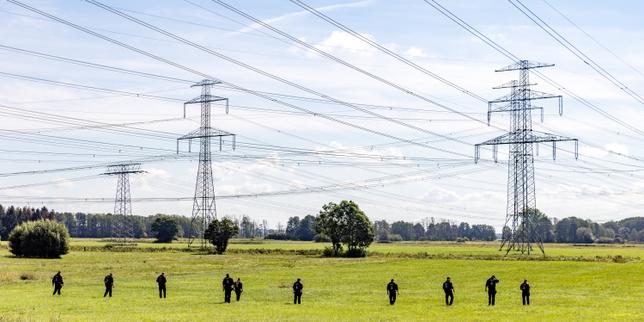
As the forensic teams combed through the scorched earth near the facility, collecting fragments of metal and testing soil samples for chemical traces, the rest of the country simply went to work. Trains ran. Coffee pots brewed. Children walked to school in the damp morning air.
That resilience is our quietest armor.
The investigators will trace the wires, decrypt the devices, and eventually find whoever lit the fuse in the dark. They will unmask the ideology or the grievance that drove someone to target the warmth of a stranger's home. But long after the crater is filled and the security fences are reinforced, the low hum of the grid will return to its steady rhythm, carrying us forward against the dark.



