The sea at midnight does not look like water. It looks like black velvet stretched tight over the ribs of the world, heavy, silent, and indifferent.
Until it splits.
Imagine standing on the salt-crusted deck of a destroyer, the hum of the gas turbine engines vibrating straight up through the soles of your boots. You are thousands of miles away from a kitchen table where someone is pouring coffee, watching the digital clock flip to 4:14 AM. You are staring into a radar screen that looks like a bowl of alphabet soup, waiting for the blip that changes everything.
This is not a movie set. This is the thin, fragile seam where geopolitics meets the physical agony of a shockwave.
When a missile drops out of the dark sky and kisses the steel hide of a United States Navy warship, the universe collapses into a single, terrifying second. For the crew aboard that vessel, the abstraction of foreign policy evaporates. There are no diplomatic cables. There are no committee hearings in air-conditioned rooms in Washington. There is only the scream of general quarters, the amber glow of emergency floodlights, and the smell of scorched wiring mixing with the salt spray.
The missile strike that triggered the subsequent U.S. response against Iranian tankers was not born in a vacuum. It was the volatile culmination of decades of friction, of small provocations building up like static electricity on a woolen sweater until someone finally reaches out and touches the doorknob.
Consider the mathematics of escalation. It operates like an avalanche on a sun-warmed slope. A single pebble breaks loose high above the tree line. It bounces. It hits another stone. Suddenly, millions of tons of packed snow and granite are roaring downward, and nobody—absolutely nobody—has the leverage to grab the air and stop it.
When the news cycle reports that U.S. forces struck Iranian tankers in retaliation for an assault on a naval warship, the headlines flatten the human cost into tidy percentages and geopolitical summaries. They treat the ocean like a chessboard. They treat steel hulls as disposable tokens.
But behind every blip on that radar screen is a nineteen-year-old kid from Ohio who enlisted to pay for college, gripping a bulkhead so hard his knuckles have gone translucent white. Behind every retaliatory order signed in the dead of night is a chain of command wrestling with the oldest, darkest question of statecraft: How many steps do you take backward before you are standing at the edge of a cliff?
The official statements are always bloodless. They talk about proportional responses, freedom of navigation, and deterrence doctrines. These words are necessary. They are the shields that politicians use to keep the chaos at bay. But they obscure the tactile reality of war at sea.
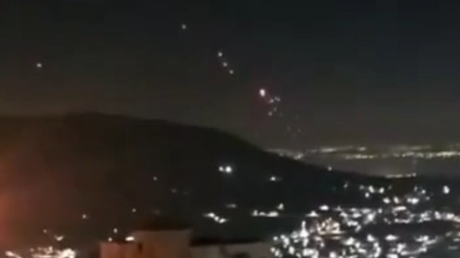
A warship is a floating city of aluminum, copper, and human vulnerability. When a hostile projectile zeroes in on its target, the margin between survival and catastrophe is often measured in milliseconds. The automated defense systems, marvels of modern engineering, react faster than human thought. They spit streams of glowing ordinance into the night, a metallic canopy of fire designed to intercept death before it finds a home.
Sometimes, they fail. Or nearly fail.
And when a warship is struck, the response is not a choice made out of anger or political theater. It is a reflex wired into the survival instincts of a global superpower. If you do not answer a blow, you invite the next one. That is the grim, unyielding calculus of maritime defense.
So the orders went out. The response was calibrated to send a message written in fire and steel across the shipping lanes of the Middle East. Iranian tankers, long suspected of serving as the invisible arteries for proxy operations and illicit supplies, became the focal point of a kinetic reply.
We must pause here and acknowledge the invisible architecture of our daily lives. Most of us wake up, pour our cereal, check our phones, and drive to work across a planet that feels stable, predictable, and safe. We forget that this entire modern existence rests on a fragile, invisible raft of security maintained by people we will never meet, operating in places we cannot pronounce, under conditions that would break most minds.
Every barrel of oil that moves through the Strait of Hormuz, every container ship loaded with electronics and textiles, every gallon of gasoline that powers our commutes—all of it floats on water watched over by gray-hulled warships and threatened by asymmetric shadows. When the Persian Gulf becomes a combat zone, the ripple effects do not stay in the water. They bleed into gas prices, into market anxieties, into the quiet, nagging dread that sits at the back of the collective consciousness.
War is never localized anymore. It is an echo chamber.
As the smoke cleared over the dark water following the strikes, the immediate tactical objective was achieved. The threat was met. The deterrent line was redrawn in blood and burned fuel.
Yet, standing on that imaginary deck, looking out over the velvet blackness, the true terror of the moment isn't the explosion that just happened. It's the silence that follows. It's the waiting for the bounce.
History teaches us that nations rarely step back from the brink because they suddenly grow wise. They step back because they look down, see the abyss, and realize the ground beneath their boots is crumbling.
The tankers burn out at sea, leaving oily smears on the surface of the Persian Gulf like charcoal sketches on a ruined canvas. Back home, the morning news anchors move on to weather and sports. But out there, the water keeps moving, dark and deep, waiting for the next spark to fall.