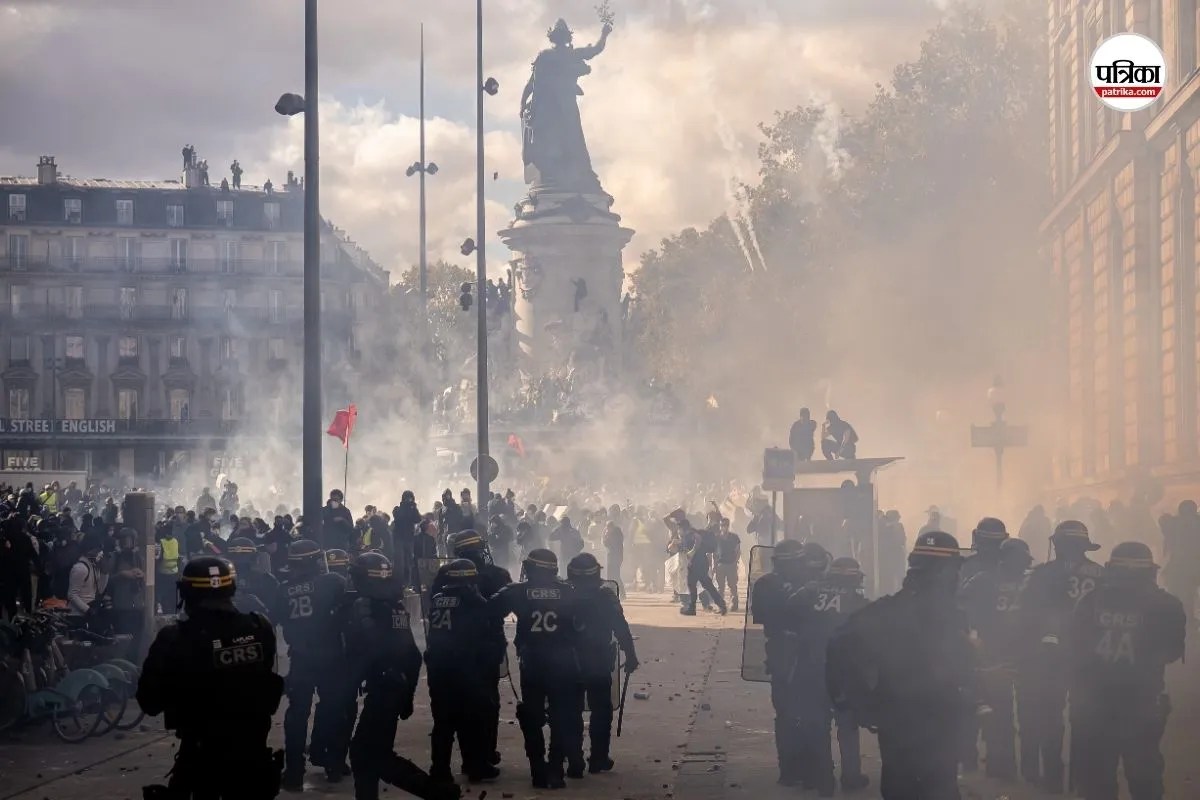
The air tasted like ash and cheap tobacco long before the sirens started.
Stand on the corner of any boulevard in Paris when the tension begins to curdle, and you can feel it in the soles of your feet first. It is a low, vibrating thrum. It is the sound of thousands of voices colliding against centuries of old stone, echoing through canyons of wrought-iron balconies and shuttered windows. To an outsider watching a glowing rectangular screen thousands of miles away, the headlines read like a simple ledger of destruction: historic city hall burned, shops looted, President Emmanuel Macron drawing a hard line between legitimate grievances and criminal chaos.
Numbers. Pixels. Statistics.
But numbers do not capture the smell of melting plastic mixed with the scent of fresh baguettes left behind on wooden baker's counters. They do not capture the peculiar silence that falls over a neighborhood right after a cobblestone is hurled through a double-paned glass window.
Consider what happens when a society breaks its own mirror.
For weeks, the murmurs had grown louder in the bakeries, the Metro stations, the crowded neighborhood bistros where espresso is served boiling hot and drunk standing up. The debate was never really about a single policy or a single moment in time. It was about the heavy, sinking realization that the social contract holding a modern republic together was beginning to fray at the edges like an old wool coat caught on a rusted gate.
When the call to protest went out, it carried the weight of tradition. Striking is as French as the baguette or the striped jersey; it is a national ritual, a way of reminding those in power that sovereignty belongs to the people, not just to the glittering halls of government offices. People poured into the streets. They carried signs, chanted slogans that bounced off the Haussmann facades, and marched with a collective determination that felt almost rhythmic.
Then, the night shifted.
Revolutions and riots rarely announce their turning points. They slip through the cracks when daylight fades. A small fraction of the crowd—younger, masked, fueled by a potent cocktail of economic despair and pure adrenaline—split away from the main body of marchers. The energy turned sharp. Edgy. Dangerous.
The historic city hall stood as a monument to civic pride, its stone walls bearing witness to generations of municipal history. To the rioters who targeted it, it wasn't just a building; it was an abstract symbol of authority that felt entirely deaf to their daily struggles. They didn't see the archives inside or the centuries of democratic labor etched into the architecture. They saw a target.
Fire is a greedy thing. Once it catches on old wooden beams and historic archives, it moves with terrifying speed.
Standing behind a barricade of overturned metal trash cans, watching the orange glow lick the midnight sky, a veteran local shopkeeper named Henri—whose family had run a small apothecary on the same corner for three decades—watched his life's work evaporate into the wind. His windows were smashed, his shelves cleared not out of political necessity, but out of the lawless chaos that always seems to hijack legitimate public anger.
"They aren't fighting for us," Henri murmured, wiping soot from his eyes with a trembling hand, the sound of shattering glass ringing out two blocks away. "They are burning the house down because they think it will keep them warm, forgetting we all live inside it."
That is the tragic paradox of urban unrest. The grievances that drive people into the streets are often rooted in very real, very painful truths. The rising cost of living, the stagnant wages, the profound anxiety about the future—these are not fabrications. They are the daily realities for millions of citizens who feel invisible to the technocrats running the state. President Macron walked a razor-thin tightrope in his public response, acknowledging that the public anger was built on understandable foundations while vowing that the state would never negotiate with lawlessness.
You cannot compromise with a burning building. Yet, you also cannot put out the fire by simply wishing away the heat that fueled it.
Look closer at the shop windows emptied by opportunists rather than activists. Look at the charred ruins of municipal records that can never be replaced. Every single broken pane of glass represents a failure of dialogue, a catastrophic breakdown in the ability of a society to listen to its own heartbeat.
When the sun finally clawed its way over the Parisian rooftops the next morning, the city looked like a battlefield after the artillery had fallen silent. Street sweepers moved through the gray dawn, shoveling up broken glass and wet ash. The smell of smoke lingered in the doorways.
The political speeches would come later. The committees would convene, the pundits would dissect every phrase, and the cycle of tension would wait quietly beneath the surface for its next spark.
History does not repeat itself neatly. It rhymes in the key of smoke and stone. And until we learn to listen to the quiet whispers before they turn into shouts, we are doomed to keep watching the old halls burn.


