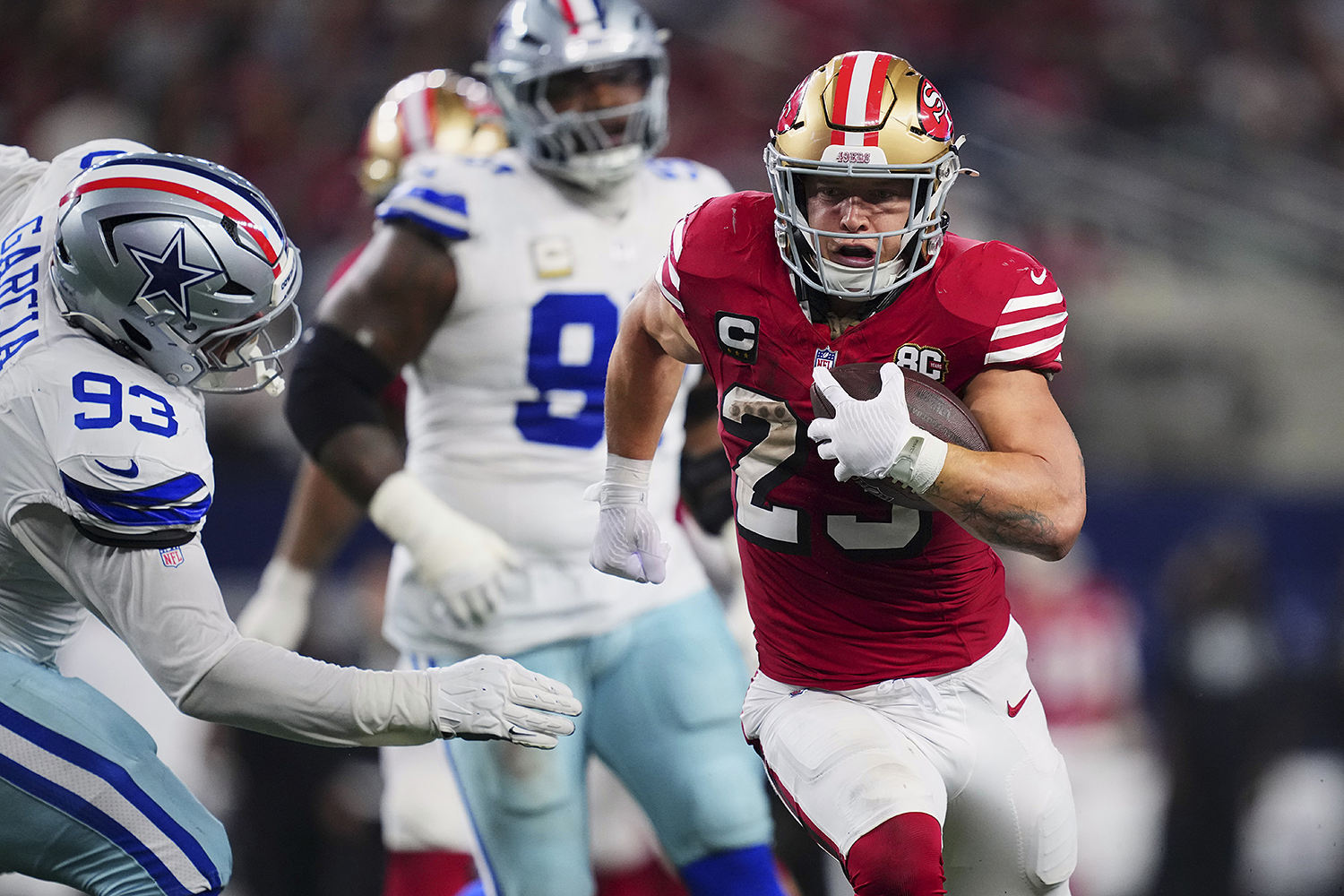
Week 10 in the National Football League always serves as the league’s annual truth serum. By mid-November, early-season illusions evaporate under the weight of injury attrition, film study, and cold-weather realities, and the marquee matchups featuring San Francisco, Dallas, Kansas City, and Cincinnati offered a stark reminder of how razor-thin the margin for error truly is at the top of the standings. While surface-level recaps celebrate final scores and highlight-reel touchdowns, the real story of Week 10 lies in schematic adjustments, situational discipline, and how elite coaching staffs exploit microscopic weaknesses when the season hits its physical peak.
The NFL does not reward talent in a vacuum. It rewards durability, adaptability, and execution on third down.
Across the league, front offices spend hundreds of millions of dollars assembling rosters built to survive a grueling seventeen-game gauntlet, yet games consistently hinge on a handful of snaps in the red zone or a single blown coverage in the fourth quarter. Looking closely at how the 49ers dismantled Dallas, alongside the authoritative performances turned in by the Chiefs and the Bengals, reveals a clear divide between organizations built for January football and those merely surviving October.
The Anatomy of a Statement Win in Santa Clara and Arlington
When San Francisco and Dallas collide, the television networks sell nostalgia, star power, and historic rivalry. Inside the film rooms, however, this matchup has long been a referendum on physicality at the line of scrimmage and offensive efficiency under pressure. The 49ers’ ability to stun the Cowboys was not the product of lucky bounces or fluke turnovers; it was a methodical exercise in forcing an opponent out of its preferred identity.
Dallas thrives when playing from ahead. Their defensive architecture is designed to pin its ears back, unleash edge rushers on predictable passing downs, and bait opposing quarterbacks into forcing throws into tight windows. San Francisco neutralized that entire formula before it could breathe. By leaning heavily on pre-snap motion, condensed formations, and misdirection in the run game, the 49ers forced Dallas’s linebackers to hesitate for a fraction of a second on every snap. In the modern NFL, a half-step of hesitation against an outside-zone blocking scheme is the difference between a two-yard gain and an explosive run into the secondary.
Exploiting Aggressive Defenses with Patience
Watch the tape of any Kyle Shanahan offense operating at peak efficiency, and one detail jumps off the screen immediately. Every play looks identical for the first 1.5 seconds after the snap. Whether it is an inside zone handoff, a bootleg pass, or a screen to the flat, the offensive line fires off the ball with the exact same angle and violence.
Against an aggressive defense like Dallas, that visual deception acts like a sedative on the pass rush. Defensive ends cannot simply sprint upfield around the arc when they have to honor the threat of a cutback lane opening behind them. Once those edge defenders slow their feet to read the mesh point between quarterback and running back, the passing pocket stabilizes. Suddenly, routes that require two-and-a-half seconds to develop downfield come open against linebackers who have been sucked toward the line of scrimmage by play-action fakes.
Dallas, meanwhile, fell into the exact trap that has plagued them in high-leverage matchups for years. Falling behind on the scoreboard forced their offense into one-dimensional drop-back passing situations. Without a credible threat on the ground to keep San Francisco’s defensive front honest, the Cowboys’ offensive line was left on an island against wave after wave of fresh pass rushers. When an offense becomes predictable in Week 10, even the most gifted quarterback in the league spends the afternoon throwing off his back foot.
The Hidden Cost of Self-Inflicted Wounds
Beyond the schematics, the divergence between these two franchises showed up in the unglamorous details of complimentary football. San Francisco won the hidden yardage battle on special teams, avoided drive-killing pre-snap penalties in opponent territory, and converted short-yardage situations with ruthless consistency.
Dallas did the opposite. A holding call on second-and-short turns a manageable third-and-two into a third-and-twelve. A missed tackle in the open field extends an opponent's drive by four minutes, draining energy from a defense that already spent too much time on the grass. Over sixty minutes, those small lapses compound into an insurmountable deficit. People love to blame quarterbacks or head coaches when a marquee team stumbles, yet the autopsy almost always points back to lost leverage in the trenches and a failure to execute basic assignments when fatigue sets in.
How Kansas City Controls the Tempo Without Blinking
While San Francisco made noise with brute force and schematic precision, Kansas City demonstrated why they remain the gold standard for situational mastery in professional football. Impressing in Week 10 looks different for a dynasty than it does for a challenger. The Chiefs rarely need to win style points anymore; instead, they strangle opponents with clock management, defensive versatility, and an uncanny ability to manufacture third-down conversions when the stadium noise reaches its peak.
For years, the book on beating Kansas City was simple in theory and nearly impossible in practice: keep their offense on the sideline, rush four defenders without blitzing, and play two-high safety shells to eliminate deep throws down the seams. What makes this iteration of the Chiefs so maddening for opposing defensive coordinators is how completely they have adapted to that blueprint.
The Evolution of Situational Mastery
Instead of forcing vertical shots into double coverage, Kansas City has embraced death by a thousand cuts. They take what the defense concedes—quick outs, shallow crossers, angle routes out of the backfield—and turn five-yard completions into eight-yard gains through relentless yards-after-catch effort. It requires immense psychological discipline for a superstar quarterback and a Hall of Fame play-caller to resist the temptation of the home-run ball for three consecutive quarters.
That patience pays off late in games. By the time the fourth quarter arrives, opposing defensive linemen have logged fifty or sixty snaps chasing screens and scrambling drills. Their pass rush loses its twitch. Linebackers start creeping up a yard closer to the line of scrimmage to take away the underneath throws. That is the exact moment Kansas City strikes over the top.
Equally impressive is how the Chiefs’ defense complements that methodical offensive approach. Under Steve Spagnuolo, Kansas City disguises coverages better than almost any unit in football. They show blitz at the line of scrimmage, bail out into zone coverage at the snap, and then send a cornerback off the blind side on the very next play. Opposing quarterbacks cannot trust their pre-snap reads, forcing them to hold the ball an extra beat—and in the NFL, holding the ball for three seconds instead of two-and-a-half is a death sentence.
Cincinnati Reclaims Its Edge in the AFC Arms Race
If Kansas City represents controlled dominance, Cincinnati’s Week 10 performance served as a reminder of how terrifying a desperate, healthy, and rhythm-driven offense can be when its timing clicks. The Bengals have made a habit in recent seasons of starting sluggishly in September before transforming into a juggernaut as the calendar flips toward winter. Watching them dismantle their Week 10 opponent felt like watching a familiar script play out once again.
The catalyst for Cincinnati’s resurgence always starts with protection and pocket integrity. Early in the season, when offensive lines are still building cohesion and quarterbacks are shaking off offseason rust, timing-based passing attacks tend to sputter. Receivers get bumped off their routes, interior pressure forces the quarterback off his spot, and third downs become an uphill climb. By mid-November, those timing mechanisms sharpen.
Why Rhythm Offenses Peak When the Weather Turns
There is a widespread myth that pass-heavy offenses struggle once temperatures drop and wind picks up in the second half of the season. In reality, cold weather hurts undisciplined defenses far more than it hurts precision passing games.
Defensive backs have to react to where a receiver is going, which becomes significantly harder on slick turf or in brisk crosswinds. Meanwhile, a quarterback and wide receiver who have logged thousands of practice reps together know exactly where the football will land before the receiver even breaks out of his stem. Cincinnati operates on that exact wavelength. Their boundary receivers win contested catches through leverage and body positioning rather than pure track speed, making their passing game remarkably weather-proof.
More importantly, Cincinnati’s coaching staff showed a willingness in Week 10 to lean on quick-game concepts that neutralize elite pass rushers. By getting the ball out of the quarterback’s hands in under 2.2 seconds, the Bengals rendered opposing edge rushers irrelevant. You cannot sack a quarterback if the ball is already flying past the line of scrimmage before you clear the offensive tackle’s outside shoulder. That efficiency keeps the offense ahead of the chains, opens up manageable second-down run calls, and wears down defensive fronts over four quarters.
The Structural Divide Separating Contenders from Pretenders
Step back from the individual box scores of Week 10, and a broader pattern emerges across the NFL landscape. Every November, fans and analysts get fooled by teams with flashy records built against soft early-season schedules or fueled by unsustainable turnover luck. Football has a ruthless way of correcting statistical anomalies over a seventeen-game sample size.
Consider what actually predicts January success versus what merely looks good on Sunday afternoon highlight shows:
| Metric / Trait | Sustainable Contenders (SF, KC, CIN) | Vulnerable Pretenders |
|---|---|---|
| Third-Down Offense | Converts via scheme, spacing, and short-yardage power | Relies on hero-ball scrambles and contested deep shots |
| Pass Rush Efficiency | Generates pressure with four rushers and disguised stunts | Must blitz heavily to create disruption, leaving corners exposed |
| Red-Zone Execution | Scores touchdowns through balanced run-pass threats | Settles for field goals when field shrinks vertically |
| Turnover Profile | Protects the football; forces mistakes via coverage disguise | Lives off deflected passes and fumble recoveries |
| In-Game Adjustments | Counters opponent's first-half script by the third quarter | Repeats failing concepts and hopes talent bails them out |
To illustrate how thin the margin actually is, take a hypothetical example of two teams sitting at 6-3 entering Week 10. Team A has a +12 turnover differential, having recovered eight of ten fumbles forced on defense, while ranking 22nd in yards per play. Team B has a -1 turnover differential due to two tipped-ball interceptions, yet ranks top-five in success rate on early downs and red-zone touchdown percentage. Casual observers crown Team A as a dark-horse Super Bowl threat. Veteran evaluators bet the house on Team B, because fumble recoveries bounce randomly, whereas down-to-down efficiency travels everywhere.
San Francisco, Kansas City, and Cincinnati all belong firmly in that second category. Their Week 10 wins were built on repeatable processes—winning the line of scrimmage, controlling situational down-and-distance, and forcing opponents to play left-handed.
What Front Offices and Bettors Actually Look at After Week 10
Inside NFL scouting departments and professional sportsbooks, Week 10 marks the point where power ratings detach completely from win-loss records. A team’s record tells you what happened in September when rosters were healthy and film on new coordinators was scarce. Tape from mid-November tells you who can survive attrition.
Injuries are not an excuse in pro football; they are a constant variable that exposes roster depth. Every team loses starters by Week 10. The difference between organizations like Kansas City or San Francisco and everyone else is how seamlessly their second-string offensive linemen, rotational defensive tackles, and backup nickel corners step into live bullets without forcing the coaching staff to dumb down the playbook.
When a starting left tackle goes down for a poorly constructed roster, the entire offense shrinks. Suddenly, a tight end has to stay in to chip on every passing down, removing a primary receiving threat from the progression and allowing the defense to double-team the top wideout. When a contender suffers that same injury, they adjust protection slides, utilize quick-motion screens to slow down the rush, and keep attacking all three levels of the field.
The Illusion of Momentum
Media coverage loves the narrative of momentum—the idea that a big Week 10 win automatically propels a team into a winning streak. Ask any veteran player or longtime defensive coordinator, and they will tell you momentum lasts until the first whistle of the following Sunday.
What actually carries over from Week 10 into Week 11 and beyond is the blueprint you put on tape for future opponents. When San Francisco exposes a flaw in Dallas’s run fits, every remaining team on the Cowboys’ schedule studies that exact clip on Monday morning. When Cincinnati demonstrates how to attack a specific zone coverage with flood concepts, defensive coordinators across the AFC immediately install counters on Wednesday.
This is why standing still in the NFL is equivalent to moving backward. Winning in Week 10 is only valuable if a coaching staff uses that victory to evolve its tendencies before the league catches up. The best staffs self-scout ruthlessly after a blowout win, asking themselves what plays worked only because of element of surprise and what concepts will still hold up when the opponent knows they are coming.
The Brutal Reality of the December Gauntlet
The calendar does not offer mercy once Thanksgiving approaches. Between Week 10 and the end of the regular season, divisional rivalries tighten, playoff seeding battles turn every fourth quarter into a street fight, and physical soreness becomes a permanent baseline for every player on the active roster.
Teams that rely on finesse, favorable officiating, or explosive plays to mask glaring structural flaws inevitably get exposed when the field shrinks and defensive intensity spikes. You cannot fake physicality at the point of attack when both teams know a run is coming on third-and-one. You cannot hide a liability in the secondary when opposing quarterbacks have ten weeks of film showing exactly where the weak link lines up.
San Francisco’s statement against Dallas, Kansas City’s clinical precision, and Cincinnati’s offensive surge all pointed toward the same fundamental truth about professional football. Talent gets you into the conversation in September, hype carries you through October, and only ruthless, disciplined execution survives November.