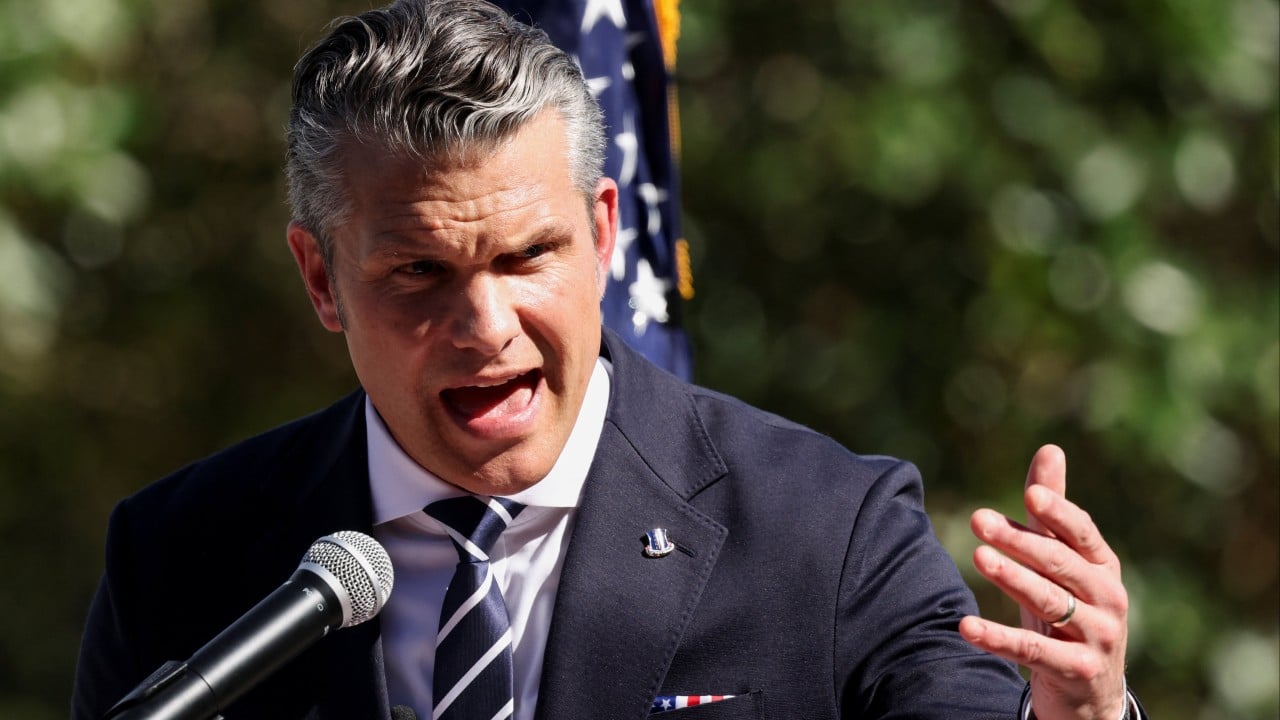
Everyone in Washington is popping champagne over the latest Pentagon press release. Defense Secretary Pete Hegseth flies into Caracas, shakes a few hands, signs a memorandum of understanding to re-establish military-to-military ties, and suddenly the foreign policy establishment is calling it a historic diplomatic breakthrough.
They are completely missing the point.
According to mainstream coverage of the visit, the prevailing consensus is that restoring defense channels between the United States and Venezuela represents a triumphant return of American influence in the Western Hemisphere. Analysts are framing it as a masterclass in pragmatic deterrence—a way to box out Russian, Chinese, and Iranian intelligence networks operating in South America while stabilizing regional migration flows.
That narrative is pure wishful thinking. When you strip away the diplomatic pageantry and look at the actual mechanics of security cooperation, this deal isn't an assertion of American dominance. It is a quiet admission that a decade of maximum-pressure sanctions, diplomatic isolation, and regime-change posturing failed entirely. Worse, it hands Caracas the exact institutional legitimacy it has craved for twenty years without extracting a single structural concession in return.
The Illusion of "Re-Establishing Ties"
To understand why this agreement is fundamentally flawed, you have to understand what "military ties" actually mean in practice.
In Pentagon parlance, re-establishing military ties usually starts with low-level confidence-building measures: counter-narcotics information sharing, maritime search-and-rescue protocols, disaster relief coordination, and officer exchange programs. On paper, these initiatives look harmless, even beneficial. Who could possibly argue against stopping drug trafficking or coordinating hurricane relief?
I have spent years analyzing defense cooperation agreements across Latin America, and I have watched Washington make this exact mistake repeatedly. When the United States enters into security agreements with entrenched, authoritarian-leaning militaries, the U.S. views the partnership as transactional and issue-specific. The host nation views it as political validation.
For the Venezuelan high command—the Fuerza Armada Nacional Bolivariana (FANB)—standing next to the U.S. Secretary of Defense isn't about interdicting cocaine shipments in the Caribbean. It is about signaling to domestic opposition, regional neighbors, and rival global powers that the United States has officially abandoned its support for democratic transition in Caracas.
By legitimizing the military apparatus that keeps the current power structure intact, the Pentagon isn't reforming the Venezuelan armed forces. It is underwriting their permanence.
The Lazy Consensus on Great Power Competition
The primary argument pushed by defenders of the Hegseth visit relies on the doctrine of Great Power Competition. The logic goes like this: if the United States refuses to engage with Caracas, Russia will continue landing nuclear-capable bombers at Maiquetía, China will keep building satellite tracking stations, and Iran will expand its drone manufacturing footprint in the region. Therefore, Washington must hold its nose and re-engage to deny adversaries a foothold in America's backyard.
This is a textbook misunderstanding of how asymmetric alliances work.
Caracas did not invite Moscow, Beijing, and Tehran into Venezuela because Washington wasn't returning their phone calls. They invited them in because those powers offer regime-survival guarantees with zero human rights conditions attached.
Consider how this plays out in reality:
- Russia provides air defense maintenance, cyber capabilities, and Wagner-style security contractors whose sole purpose is protecting the executive branch from internal coups.
- China provides surveillance infrastructure and financial lifelines tied to crude oil extraction, indifferent to how Caracas governs its citizens.
- Iran supplies asymmetric naval assets and energy sector workarounds designed specifically to evade Western financial systems.
Will a U.S. Coast Guard joint training exercise or a Pentagon counter-narcotics liaison office convince Caracas to evict Russian intelligence officers or tear down Chinese telecommunications hardware? Of course not.
Instead, Caracas will play the exact same double game that authoritarian regimes from Central Asia to the Horn of Africa have perfected over the last thirty years. They will pocket the prestige and logistical perks of U.S. military engagement while keeping their strategic lifelines to Moscow and Beijing completely intact. Washington isn't replacing its adversaries in Venezuela; it is simply joining the crowd and bidding up the price of Caracas's cooperation.
What Everyone Gets Wrong About Counter-Narcotics Cooperation
Another major selling point of the Hegseth agreement is the promise of renewed counter-narcotics collaboration. For years, U.S. Southern Command (SOUTHCOM) has argued that the lack of direct communication with Venezuelan air and maritime forces created a massive blind spot in the Caribbean transit zone, allowing transnational criminal organizations to move hundreds of metric tons of illicit product unimpeded.
That operational frustration is real. When radar tracks disappear into Venezuelan airspace and U.S. assets cannot coordinate handoffs, interdiction rates drop.
However, treating the Venezuelan military as a viable partner in counter-narcotics ignores decades of documented institutional reality. Numerous U.S. Department of Justice indictments, Treasury sanctions, and United Nations reports have detailed how elements within the Venezuelan security apparatus aren't merely failing to stop illicit trafficking—they are actively integrated into the logistics networks.
Imagine a scenario where the Pentagon shares real-time intelligence, radar telemetry, and patrol schedules with a counterpart whose internal command structure profits from the very routes you are trying to shut down. You aren't disrupting the network. You are providing the network with an early-warning system.
True counter-narcotics effectiveness requires independent judicial institutions, vetted investigative units, and strict end-use monitoring. None of those exist in Venezuela today. Re-opening intelligence-sharing pipelines before dismantling the underlying patronage networks is like giving the fox the blueprints to the henhouse because you're tired of counting missing chickens.
The Structural Flaw in Washington's Playbook
To see the deeper issue, we have to look at the institutional incentives inside Washington itself.
The Department of Defense operates on a fundamentally different clock than the State Department. Combatant commanders—whether at SOUTHCOM or elsewhere—are graded on immediate, measurable metrics: crisis de-escalation, migrant interdiction numbers, joint exercises conducted, and lines of communication kept open. From a purely military perspective, talking to an adversary is always preferable to flying blind.
Politicians, meanwhile, love a splashy deliverable. A high-profile trip by the Secretary of Defense generates headlines, projects decisiveness, and allows the administration to claim it is "solving" the migration and border crisis at its source by stabilizing a key transit and origin country.
Here is the problem with that approach:
- It decouples security from governance. When the U.S. normalizes military relations without requiring verifiable political reforms, it tells every other strongman in the region that democratic backsliding carries no long-term cost—if you hold out long enough, Washington will eventually get tired and come to the table.
- It sidelines regional allies. Countries like Colombia, Brazil, and Guyana—which have borne the brunt of Venezuela's economic collapse, refugee outflows, and territorial aggression—suddenly find themselves watching Washington cut bilateral deals over their heads. Just ask officials in Georgetown, who spent the last few years facing down Venezuelan military threats over the oil-rich Essequibo region, how comfortable they feel watching the Pentagon embrace the very generals who orchestrated that brinkmanship.
- It destroys future deterrence. Credibility in international relations is built on following through on stated red lines. Washington spent years declaring that the Venezuelan military leadership was illegitimate and corrupt. Reversing that posture overnight without a change in behavior from Caracas proves that American red lines are written in disappearing ink.
The Counter-Argument: Why Proponents Think They Are Right
To be completely fair, the architects of this deal aren't blind to these risks. Their counter-argument is rooted in cold-blooded realism, and it deserves to be addressed directly.
Proponents argue that the "maximum pressure" campaign of the late 2010s and early 2020s was an unmitigated disaster. It impoverished ordinary Venezuelans, triggered the largest refugee crisis in the history of the Western Hemisphere—sending millions of migrants north toward the U.S. southern border—and failed to dislodge the regime by a single inch. According to this school of thought, continuing a failed policy out of ideological stubbornness is the definition of insanity.
They contend that the only way to influence behavior inside Caracas is to build personal relationships with the pragmatists inside the Venezuelan officer corps. By offering carrots—training, spare parts, professional respect—Washington hopes to create a wedge between hardline ideologues and career military officers who might eventually favor a negotiated political opening.
That theory sounds sophisticated in a think-tank seminar room in Dupont Circle. In practice, it has a dismal track record.
Look at Pakistan during the War on Terror. Look at Egypt over the last forty years. Look at dozens of Cold War client states. When the United States pours resources and prestige into a politicized military establishment hoping to cultivate "moderates," those moderates rarely reform the system. Instead, they use American backing to consolidate their own power against domestic rivals while slow-walking every reform Washington asks for.
There is a massive difference between maintaining discreet, back-channel deconfliction lines to prevent accidental clashes at sea and staging a high-profile ministerial visit to sign formal cooperation agreements. You don't need a press conference and a signed pact to keep aircraft from colliding over the Caribbean.
How Real Leverage Actually Works
If Washington genuinely wanted to change the strategic calculus in Caracas without resorting to military intervention or returning to blind isolation, it would stop treating the Venezuelan military as a conventional partner and start treating the situation like the asymmetric negotiation it actually is.
Real strategy requires sequence, conditionality, and brutal honesty about incentives:
- Keep deconfliction strictly technical and invisible. Maintain lower-level, operational hotlines between maritime and aviation commands solely to prevent miscalculation. Give Caracas zero public relations victories. No high-level visits, no flag ceremonies, no joint communiqués.
- Tie every operational concession to verifiable domestic benchmarks. If Caracas wants access to regional security forums or relief from targeted individual sanctions, require concrete, irreversible steps first—such as the release of political prisoners, independent international monitoring of border regions, and verifiable expulsion of foreign intelligence operatives.
- Empower the periphery, not the center. Instead of trying to buy off the Venezuelan high command, double down on defense integration, intelligence sharing, and economic security guarantees with democratic neighbors like Guyana, Trinidad and Tobago, and Colombia. When Caracas sees that its neighbors are locked into an unbreakable regional security architecture, its ability to project chaos drops to zero.
Diplomacy is supposed to be the art of letting the other guy have your way. Right now, Washington is bending over backward to give Caracas everything it wants—legitimacy, recognition, and relief from isolation—in exchange for vague promises of cooperation that the Venezuelan military has neither the capacity nor the incentive to keep.
Stop calling a strategic retreat a diplomatic victory.