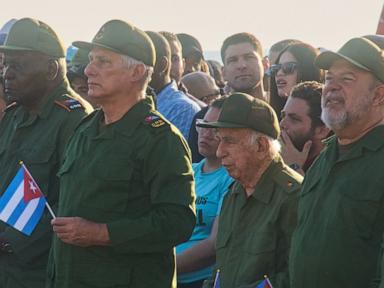
Washington just dropped the hammer on Havana again. The US Treasury Department placed Cuban President Miguel Díaz-Canel Bermúdez on its Specially Designated Nationals list. They didn't stop with him. They targeted his inner circle, including his wife Lis Cuesta Peraza and his stepson Manuel Anido Cuesta. Even the Castro family bloodline got hit through Alejandro Castro Espín. This moves the needle far beyond old visa restrictions. It freezes US assets and locks these individuals out of the American financial network.
Donald Trump says he just wants Cuba to be a nicely run country. Skeptics see something different. They see an administration trying to squeeze a historic adversary into total submission. For a closer look into this area, we recommend: this related article.
But let's be real about what's happening here. Slapping direct sanctions on a sitting head of state is a massive diplomatic escalation, yet it rarely delivers the intended results. Washington thinks economic pain forces political change. Decades of Cuban history prove the exact opposite.
The Illusion of Financial Choking
The biggest flaw in this strategy lies in how the Cuban leadership manages money. The Treasury Department asset freeze sounds devastating on paper. If you're an international businessman, it is. For the top brass in Havana? Not so much. For additional context on this development, comprehensive coverage is available at Al Jazeera.
Nobody seriously believes Díaz-Canel keeps millions of dollars sitting in a Wells Fargo account in Miami. The financial links between Cuba's communist leadership and the US banking grid are basically nonexistent. These individuals don't buy real estate in Manhattan. They don't spend their vacations shopping on Rodeo Drive.
Instead, the Cuban state utilizes complex, deeply entrenched global networks to move capital. They route transactions through countries that choose to ignore Washington's dictates. China, Russia, and various offshore jurisdictions give them plenty of room to breathe.
When Secretary of State Marco Rubio states that these measures target people who direct or fund the regime, he ignores a basic truth. The Cuban government operates on total institutional control, not personal checkbooks. Freezing the personal assets of the president's stepson might look good on a political scorecard in South Florida, but it won't deplete the state treasury.
Crushing the Citizens Instead of the Regime
The true impact of this economic blockade doesn't land on the palace walls. It hits the streets of Havana, Santiago, and Camagüey. Cuba is already wrestling with an brutal economic crisis. Power outages last for days. Food shortages are a part of daily life. The country lacks basic medicine, fuel, and capital.
Washington's energy blockade has already choked off oil shipments to the island. Combining that with new sanctions on institutions like the Ministry of the Revolutionary Armed Forces and tourism entities like Amistur Cuba hits the broader economy hard. Tourism and military-run enterprises form the backbone of the island's revenue. When you choke off those sectors, you aren't just starving the generals. You're cutting off the supply chain for everyday goods.
US Sanctions Target Structure:
├── Executive Leadership (Díaz-Canel, Family) -> Political Symbolism
├── Castro Dynasty Orbit (Alejandro Castro Espín) -> Legacy Disruption
└── Economic Entities (MINFAR, Amistur, Mining) -> Real-World Hardship
History shows that extreme economic hardship rarely breeds successful democratic revolutions. It usually breaks the spirit of the population or forces a massive migration crisis. When people spend eight hours a day hunting for eggs and cooking oil, they don't have the time or energy to organize complex political movements. They focus on survival. Or they build a raft.
The Backfire of the External Threat
Every single time the US ramps up the pressure, the Cuban Communist Party pulls out its favorite playbook. They blame Washington for every single internal failure.
Did the electrical grid fail again? It's the blockade. Are the grocery stores empty? Blame the American imperialists.
Díaz-Canel immediately jumped on X to call the new measures political blindness. The Cuban foreign ministry weaponized the announcement, claiming the restrictions lay the groundwork for potential US military aggression. China's foreign ministry quickly echoed this sentiment, blasting Washington's bullying behavior.
By making the conflict highly personal and targeting the head of state directly, the US gave the Cuban regime a massive propaganda victory. It allows Díaz-Canel to frame himself as a nationalist hero standing up to a foreign bully. It rallies the hardliners. It silences internal critics who want economic reform but refuse to look like they're siding with Washington.
The administration wants to force negotiations. CIA Director John Ratcliffe even traveled to Havana recently to offer economic engagement in exchange for fundamental political shifts. But you can't expect a government to sit down at the bargaining table when you've just indicted their former leader, Raúl Castro, and frozen the bank accounts of the current president's family. It creates a defensive crouch, not a diplomatic opening.
What Happens Now
If you want to track where this situation goes next, stop looking at the press releases from the Treasury Department and watch these specific areas instead.
First, keep a close eye on Havana's security agreements. When the US isolates Cuba, the island looks for big friends with deep pockets. Watch for increased Russian naval visits, renewed Chinese intelligence cooperation, and alternative oil supply lines from friendly nations.
Second, monitor the migration numbers. Increased economic pain in Cuba directly correlates with surges at the US southern border. If these sanctions accelerate the island's economic decay, the resulting migration spike will hit American shores within months.
Third, look at the survival of Cuba's private sector. Small entrepreneurs need access to foreign currency and international banking to buy supplies. Heavily restrictive US policies often scare away global banks entirely, killing off the independent businesses that represent the best hope for organic domestic reform.
Washington keeps using the same old tools, expecting a different outcome. Squeezing Díaz-Canel might win points in domestic politics, but it won't change the flag flying over Havana.