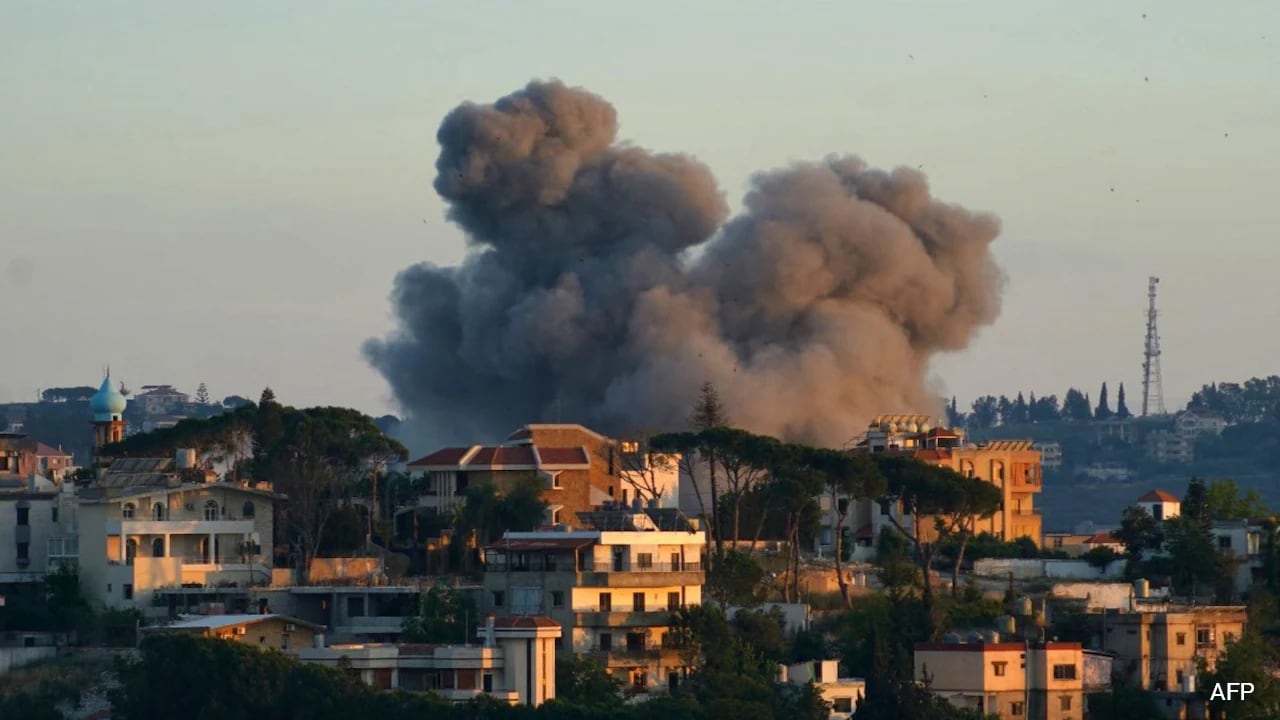
The ink isn't even dry on the Washington-Tehran peace memorandum, and the Middle East is already threatening to slide right back into total chaos. If you thought the recent US-Iran diplomatic breakthrough was going to magically bring peace to the region, you haven't been paying attention to Lebanon.
Just days before a formal signing ceremony in Switzerland, Iran's top military command just drew a massive line in the sand. The Khatam al-Anbiya Central Headquarters openly warned Israel to expect a "harsh response" from Iranian armed forces if operations in southern Lebanon don't stop immediately.
This isn't just standard rhetorical saber-rattling. It exposes a fatal flaw in the diplomatic framework orchestrated by US President Donald Trump. Washington and Tehran might think they settled their differences, but Israel and Hezbollah clearly didn't get the memo.
The 84 Violations Cracking the Peace Deal
The core of the issue is a massive disagreement over what this ceasefire actually covers. Iran insists the newly brokered memorandum of understanding requires a complete halt to all Israeli offensives against Hezbollah. Israel and the US say otherwise.
Tehran's military command claims the Israel Defense Forces violated the active ceasefire 84 times in just a 48-hour window. These aren't minor border skirmishes either. Israeli strikes in the Nabatiyeh district recently killed at least four people, and a heavy raid in Beirut's Dahieh suburb took out Ali al-Hajj, a senior Hezbollah commander.
Look at the ground reality in southern Lebanon right now.
- Over 3,800 people have died since the conflict reignited on March 2.
- More than one million Lebanese civilians are displaced.
- The IDF has pushed deeper than 10 kilometers into Lebanese territory, destroying border infrastructure.
While President Trump recently criticized Israeli Prime Minister Benjamin Netanyahu's handling of what he called a "minor war" in Lebanon, Netanyahu's government isn't backing down. Israeli officials explicitly stated that their troops will stay deployed in occupied areas of southern Lebanon, Syria, and Gaza "at all costs." Their position is clear: the US-Iran agreement does not bind Israel.
Why Tehran Cannot Afford to Back Out
You might wonder why Iran is risking a fresh conflict right after negotiating its way out of a devastating war with the US and Israel that saw the assassination of its Supreme Leader back in February.
It comes down to regional survival. Hezbollah is Iran's most critical strategic asset on the Mediterranean. If Israel completely dismantles Hezbollah's command structure north of the Litani River, Iran loses its primary deterrent against Jerusalem.
Iranian officials have stated behind the scenes that halting Israeli operations in Lebanon is a mandatory pillar of the broader regional peace plan. They want a total withdrawal of Israeli forces from Lebanese soil. But with the IDF preparing plans to maintain a permanent ground occupation in parts of the south even after the broader western conflict wraps up, Iran feels backed into a corner.
If Israel continues hitting targets in Beirut and southern Lebanon, Iran will have to choose between two terrible options. They can stand by and watch their chief proxy get hollowed out, or they can launch another wave of ballistic missiles like they did earlier this month, risking a total collapse of the Friday signing ceremony.
What Happens on Friday
US Secretary of War Pete Hegseth claims the preliminary memorandum between the US and Iran is still on track for Friday. The US wants Iran's nuclear material removed, destroyed, or downblended under strict international oversight. In exchange, the US is ready to lift the crushing naval blockade and reopen the vital Strait of Hormuz.
But it's a house of cards. You can't separate the US-Iran track from the Israel-Hezbollah track. If Hezbollah keeps launching drones into northern Israel, Israel will keep flattening neighborhoods in Beirut. And if Israel keeps flattening neighborhoods in Beirut, Iran's military will eventually act on its threat of a harsh response.
Don't expect the tensions in Lebanon to cool down just because politicians are meeting in Switzerland. To protect your global asset allocations or navigate international supply chains over the coming weeks, keep your eyes entirely off the diplomatic press releases and watch the border towns of southern Lebanon instead. If the artillery fire there doesn't stop by Friday morning, the Swiss peace summit won't be worth the paper the deal is printed on.