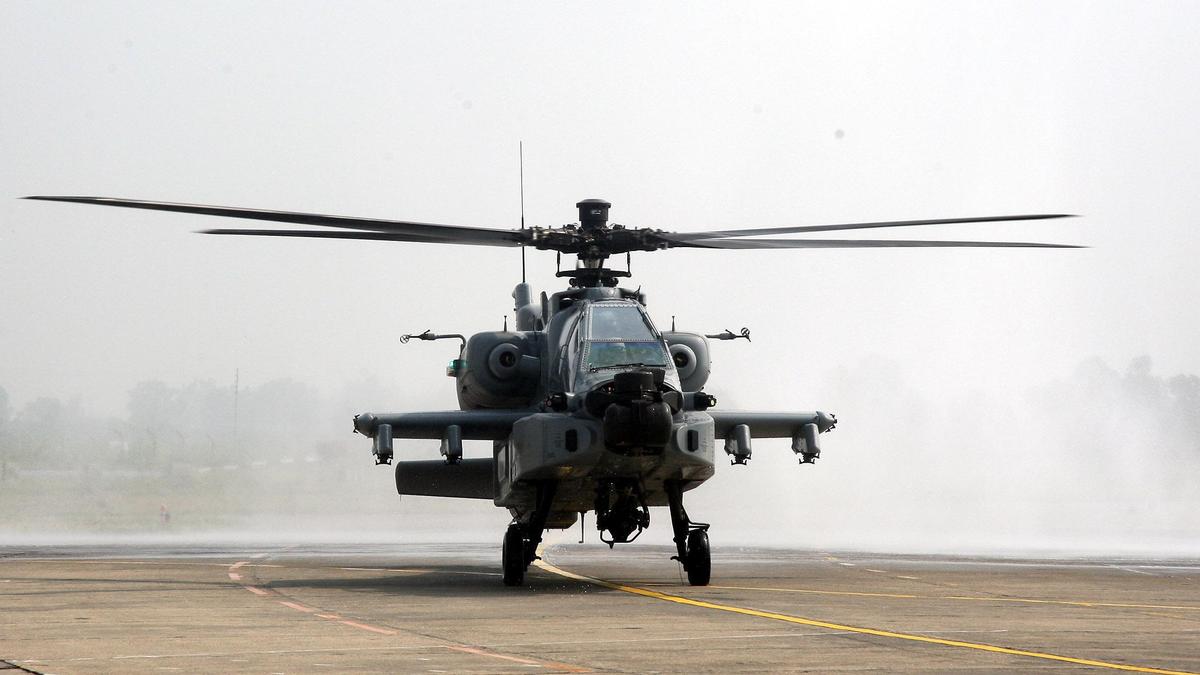
Buying advanced weapons is the easy part. Keeping them running in a high-altitude border conflict is where the real nightmare begins.
The US State Department just cleared a pair of major foreign military sales to India totaling $428.2 million. On paper, it sounds like standard bureaucratic paper-shuffling. The Bureau of Political-Military Affairs sent notifications to Congress approving $198.2 million in sustainment services for India’s AH-64E Apache attack helicopters and another $230 million for its M777A2 ultra-light howitzers.
But if you look past the raw numbers, this isn't just a routine supply chain top-up. It's a calculated strategic move that signals exactly where the geopolitical wind is blowing in South Asia.
The Logistics of Keeping Weapons Alive
When a military buys hardware like the Apache or the M777, they're essentially buying a massive, ongoing bill for spare parts. India operates these exact systems in some of the most unforgiving environments on Earth, including the freezing, low-oxygen peaks of the Himalayas along the Line of Actual Control. High altitudes and extreme cold wreck machinery. Engines strain, seals crack, and metals fatigue faster than anywhere else.
Without deep, guaranteed technical support, these multi-million dollar platforms quickly turn into expensive paperweights.
The $230 million package for the M777A2 howitzers, handled by BAE Systems out of the UK, is heavily focused on long-term survival. We aren't just talking about extra artillery barrels. The deal covers things like depot capability, repair-and-return services, and field service representatives. Essentially, it embeds technical expertise directly into the Indian military's logistics loop.
The Apache package follows the same philosophy. Boeing and Lockheed Martin are the primary contractors for this $198.2 million chunk. It ensures that the specialized radar, targeting systems, and heavy-lift components of the AH-64E fleet remain functional.
Reading Between the Geopolitical Lines
Washington's official statement notes that the sales will strengthen the US-Indian strategic relationship without altering the basic military balance in the region. That’s standard diplomatic boilerplate. The reality is far more pointed.
India has actively tried to diversify its defense imports to reduce its historical dependence on Russian military hardware. That shift hasn't been smooth, nor is it complete, but deals like this highlight how tightly New Delhi is weaving itself into the American defense ecosystem. When your front-line attack helicopters and mountain artillery rely entirely on American supply lines, you're locked into a long-term marriage of convenience.
Interestingly, India actually scaled back its initial ambitions for a massive fleet of 39 Apaches down to 28. The per-unit cost was simply too high. New Delhi chose to pivot some of its focus toward cheaper, homegrown platforms and unmanned systems. This makes the sustainment of the existing 28 Apaches even more critical. Since they have fewer of them, every single airframe needs to be combat-ready at a moment's notice.
The Real Winner Is Interoperability
If you're wondering what this means for everyday regional security, think about joint operations. The US and Indian militaries have ramped up their joint exercises over the last decade. Operating identical hardware with standardized maintenance protocols makes it incredibly easy for both nations to share intelligence, training techniques, and tactical doctrines.
If a crisis hits the Indo-Pacific or South Asia, India’s ability to smoothly absorb these support packages means its forces can stay in the fight longer without waiting for emergency technical assistance from halfway across the world.
The next step for these deals is a mandatory review by the US Congress. Given the broad bipartisan agreement in Washington on countering regional aggression and building up India as a major defense partner, expect the approvals to cruise through without significant friction.
For India, the immediate task is integrating these technical services into their forward bases. If you want to watch how this plays out, don't look at the corporate press releases. Watch the readiness rates of the artillery units stationed in Ladakh and the attack squadrons in the eastern sector. That’s where the true value of this $428 million layout will be measured.