Medical breakthroughs don't happen in sterile, quiet rooms. They happen in chaotic, high-stakes environments where every second counts. On July 2, 2026, the World Health Organization confirmed that the first patient has been enrolled in a critical clinical trial in the Democratic Republic of the Congo. The goal? To find a treatment for the Bundibugyo strain of Ebola, a rare and ruthless variant currently tearing through the country's northeastern provinces.
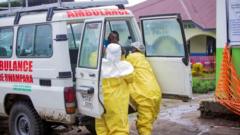
This isn't a routine medical study. It's a high-wire act taking place in one of the most volatile regions on earth. Just days ago, an Ebola treatment center in Ituri province was attacked, leaving two people dead and forcing panicked patients to flee into the night. If you want to understand why this trial is a massive deal—and why the logistics are a nightmare—you need to look at what's actually happening on the ground.
The Secret Battle Against a Milder, Deadlier Strain
Most people think of Ebola as a virus that causes instant, catastrophic bleeding. That's true for the Zaire strain, which historically grabbed global headlines. The Bundibugyo strain behaves differently, and honestly, that's what makes it so terrifying.
Clinicians in the DRC note that up to 90% of patients in this current outbreak aren't experiencing extensive bleeding. Instead, the symptoms mimic malaria or standard tropical fevers. Because it looks ordinary, the virus spread undetected for months. People didn't realize they had Ebola until it was too late.
Right now, the numbers are grim:
- Over 1,400 confirmed cases.
- 438 confirmed deaths.
- A case fatality rate hovering above 31%.
There are absolutely no approved vaccines or specific treatments for this strain. Until now, the only option was supportive care, basically keeping patients hydrated and praying their immune systems could fight it off.
The new trial, named the PARTNERS study, is trying to change that. It's a collaborative effort led by the DRC's National Institute for Biomedical Research, Oxford University, and the Institute of Tropical Medicine in Belgium. They are throwing two distinct drugs at the virus to see what sticks.
Repurposing Old Weapons for a New Fight
The trial is evaluating two therapeutics: a monoclonal antibody cocktail called MBP134 and an antiviral drug you've probably heard of, remdesivir.
MBP134, developed by Mapp Biopharmaceutical, is designed as a pan-Ebola therapeutic. It targets the structural vulnerabilities of the virus. Remdesivir, manufactured by Gilead Sciences, is famous for its use in hospitalized COVID-19 patients, though it was originally engineered years ago to fight hepatitis C.
The trial splits patients into four distinct groups to compare what works best:
- Group one receives MBP134 alone.
- Group two receives remdesivir alone.
- Group three receives a combination of both drugs.
- Group four acts as the control, receiving the standard high-quality supportive care.
Medical experts love combination therapies because viruses are smart. They mutate to survive. By attacking the Bundibugyo strain from two different angles—blocking its entry with antibodies and stopping its replication with an antiviral—scientists hope to crush the virus before it can adapt.
But executing this protocol is a logistical nightmare.
Violence and Mistrust Are the Real Hurdles
You can have the best medicine in the world, but it means nothing if you can't reach the patient. The WHO is keeping the exact location of the primary treatment facility in Ituri secret. Why? Because health workers are actively being hunted.
The recent attack on the Ituri treatment center wasn't random violence. It stems from deep-rooted community mistrust surrounding traditional burial practices. When someone dies of Ebola, their body is highly infectious. Safe, dignified burials must be performed by trained teams in full protective gear. To local communities, seeing outsiders take away their loved ones in hazmat suits feels disrespectful and terrifying. This friction turns into anger, and that anger turns into arson and violence.
This atmosphere of fear makes contact tracing incredibly difficult. Right now, responders are tracking about four out of five contacts for every confirmed case. That sounds decent, but with an average of 38 new cases popping up daily, a 20% gap in contact tracing means the virus is consistently staying two steps ahead.
What Needs to Happen Next
This trial isn't going to finish in a couple of weeks. Dr. Vasee Moorthy from the WHO indicated that it will take months, likely stretching into 2027, and will require tracking more than 1,000 patients to get definitive answers.
If you are following global health or working in international development, watching how this trial unfolds provides the ultimate blueprint for crisis response. Here is what needs to happen immediately to give this trial a fighting chance:
- Prioritize Local Mediators: Public health agencies must stop relying solely on top-down mandates. Local elders, religious leaders, and trusted community figures need to be integrated into the response to explain the purpose of the trials and the reality of safe burials.
- Secure the Supply Chain: Gilead has donated over 4,000 vials of remdesivir, and the U.S. government has supplied MBP134. Distribution networks across North and South Kivu must be fortified so these drugs don't spoil or get intercepted by local armed groups.
- Scale Up Regional Lab Capacity: The DRC has scaled up to 10 active testing laboratories. These facilities must be fully funded to ensure that genetic sequencing happens in real-time, allowing doctors to flag any sudden mutations in the Bundibugyo strain immediately.
The clinical trial in the DRC is a high-stakes gamble against a quiet killer. Success won't just save lives in Ituri; it will rewrite the playbook for how humanity fights rare, neglected pathogens in the middle of a conflict zone.