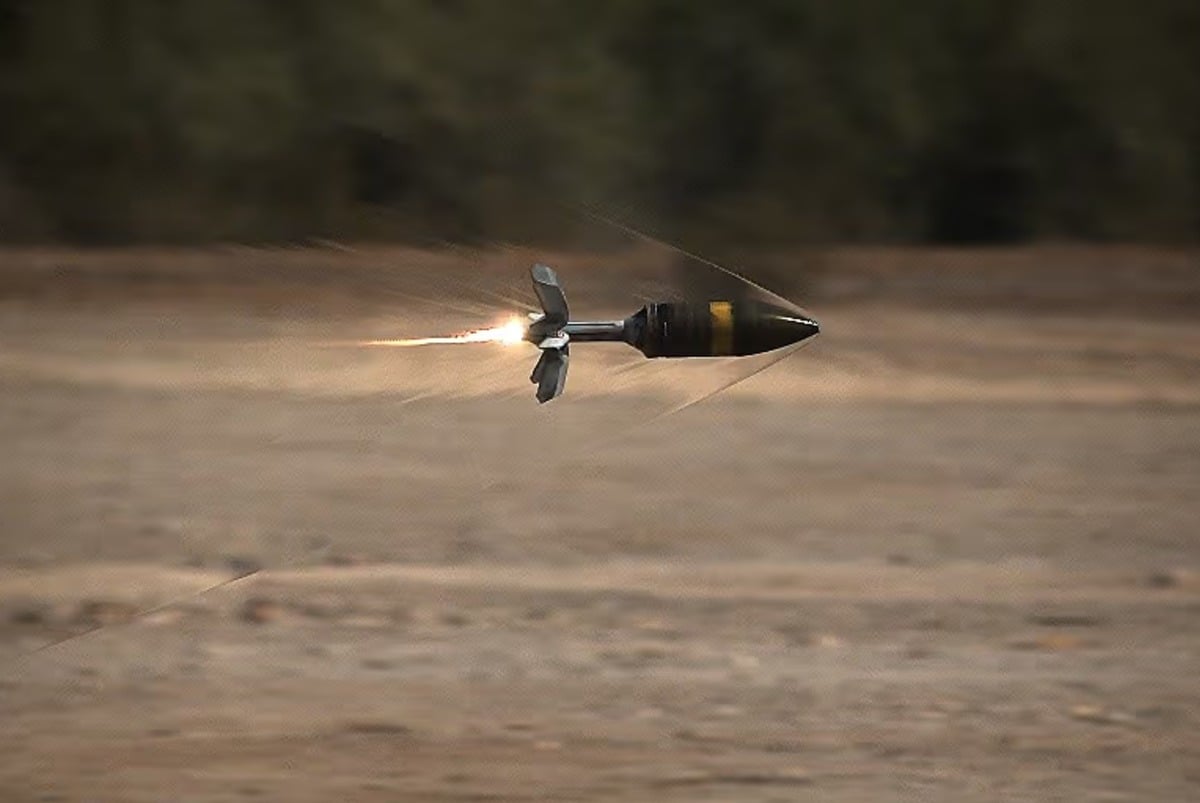
The U.S. Army just handed Northrop Grumman a five-year contract to mass-produce its newest 120mm tank ammunition. It is called the M1147 Advanced Multi-Purpose round, or AMP. Most defense reporting treated this like a routine corporate win. It is not.
This contract alters the logistical reality of armored warfare. If you follow military tech or defense investing, you know how heavy, complicated, and slow military supply chains get. Carrying four different types of heavy shells inside a cramped M1 Abrams tank is a nightmare for crews. This single contract wipes that problem off the board. Don't miss our earlier coverage on this related article.
The Army cleared the M1147 for full-rate production recently, and this new agreement secures the manufacturing pipelines for both American forces and overseas allies who rely on the Abrams platform. Financial details were not published, but the scale of the commitment tells you exactly where the Pentagon is looking. They want simpler, faster, and more lethal operations.
The Four-in-One Consolidation
To understand why this contract is a big deal, look at what tank crews currently have to load into their ammo racks. For decades, a tank commander had to guess what kind of threat they would face next. They carried specialized shells for specialized jobs. If you want more about the history of this, Business Insider offers an excellent breakdown.
- M830 High Explosive Anti-Tank (HEAT): Good for light armor, but limited against modern structures.
- M830A1 Multi-Purpose Anti-Tank (MPAT): Added a proximity fuze to help take down low-flying helicopters.
- M1028 Canister: Basically turning a 120mm tank cannon into a massive shotgun to clear enemy infantry out in the open.
- M908 Obstacle Reduction: Designed specifically to smash through concrete blocks, boulders, and roadblocks.
That is a lot of separate inventory. If a crew loaded up on HEAT rounds but got ambushed by infantry squads hiding in tree lines, they had the wrong tool for the job.
The M1147 replaces all four. Every single one of them.
Instead of fumbling through different racks to find the right round while taking fire, the loader shoves an AMP round into the breech. The tank’s fire control system talks directly to the shell. It programs the fuze in milliseconds. One round does everything.
How the Tech Works Under Fire
The magic of the M1147 lies in its multi-mode programmable fuze. When the gunner tracks a target, the computer determines the optimal way for the shell to explode. The round handles three primary detonation modes.
Point Detonation
This is your standard impact mode. The shell hits a target, like a light armored vehicle or a truck, and explodes instantly. It relies on raw kinetic and explosive force to destroy the target upon physical contact.
Point Detonation Delay
This mode tells the shell to wait a fraction of a second after impact before going off. Think about fighting in urban environments. If an anti-tank missile team is hiding inside a bunker or behind a double-reinforced concrete wall, a standard explosive round just scorches the outside. With a delayed fuze, the M1147 punches through the concrete wall first, enters the room, and then detonates. It neutralizes threats hidden behind hard cover.
Airburst
This is the answer to modern trench warfare and infantry ambushes. If enemy troops are dug into trenches or hiding behind a ridge line, traditional flat-trajectory shells fly right over them or slam into the dirt in front of them. The airburst mode calculates the exact distance to the enemy position. The shell flies over the target and explodes in mid-air, raining fragmentation downward. It eliminates the protection that trenches or geography used to provide.
The Logistics Back-End
Defense procurement experts know that battles are won or lost on logistics. Tank ammunition is incredibly heavy. Shipping, storing, and organizing thousands of tons of ordnance across oceans is the hardest part of any deployment.
When you cut four supply lines down to one, the savings are massive. Armored brigade combat teams do not have to manage four distinct stockpiles. Supply trucks do not have to worry about delivering the wrong ratio of canister rounds to obstacle reduction rounds. Every shell on the truck is useful for every scenario.
Northrop Grumman has been making large-caliber ammo for over 45 years. They have delivered more than five million tactical and training rounds to the U.S. military and global partners. They have the factory tooling ready to scale this up.
This isn't a pilot program. It is an industrial scaling project. The Army needs depth in its industrial base, especially as global stockpiles face historic strain. Securing a five-year runway allows Northrop to buy raw materials in bulk, keep assembly lines staffed, and lower the unit cost for the taxpayer.
What This Means for Global Allies
This contract isn't just for American tanks. The Pentagon explicitly noted that international partners will get these rounds too. Look at the geopolitical map. Countries like Poland, Australia, and Taiwan are investing heavily in the Abrams ecosystem. Poland bought hundreds of M1A2 SEPv3 tanks to anchor its eastern border.
For international buyers, the M1147 solves a massive training and maintenance headache. Foreign militaries do not always have the deep logistical infrastructure that the U.S. military possesses. Simplifying their ammo supply chain makes their newly acquired armored units effective much faster.
It also ensures interoperability. If U.S. and allied tanks operate in the same theater, they can share the exact same ammunition without compatibility issues. In a high-intensity conflict, that kind of flexibility saves lives.
Firepower in the Era of New Tanks
The timing of this contract aligns with a broader shift in armored warfare strategy. The U.S. Army recently pivoted its long-term modernization strategy, canceling some older upgrade packages to focus on the upcoming M1E3 Abrams concept. The M1E3 aims to make the tank lighter, more survivable against loitering munitions, and more fuel-efficient.
Even as the physical vehicle evolves toward a lighter frame with active protection systems, the main weapon remains the 120mm smoothbore cannon. The M1147 ensures that the current fleet of M1A2 SEPv3 tanks stays lethal right now, while providing the primary ammunition framework for whatever the M1E3 looks like in the 2030s.
Militaries are realizing that adding armor isn't enough to survive modern anti-tank systems. You have to destroy the enemy before they fire. Being able to hit a drone team or an anti-tank guided missile position at maximum range with an airburst shell changes the survival math for the crew.
Your Next Steps
If you are tracking the defense sector, look closely at the tier-two suppliers providing the specialized components for these programmable fuzes. The electronics that allow a tank's computer to talk to a shell flying out of a barrel at Mach 4 are incredibly precise. Companies handling precision microelectronics and advanced energetic materials are the ones driving these defense contracts behind the scenes. Keep your eye on upcoming quarterly defense budget allocations to see how quickly the Army scales down its funding for legacy rounds to feed this single production line.