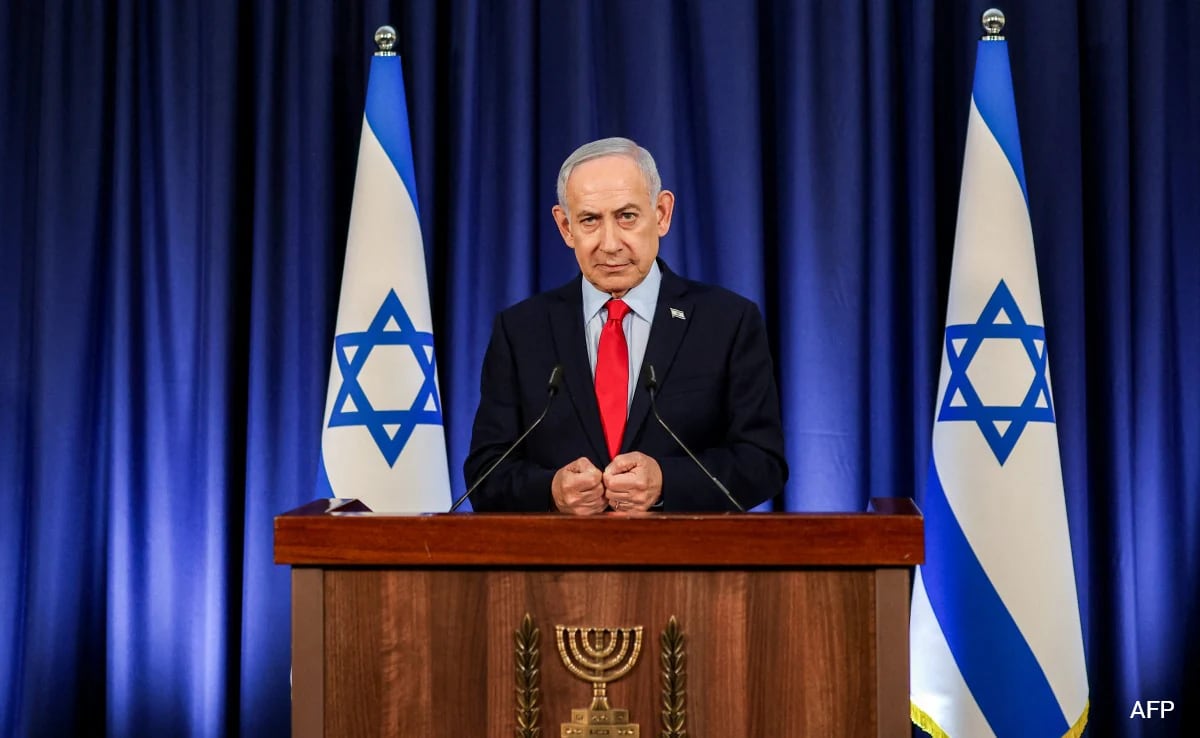
Is the Iranian nuclear threat actually over? Prime Minister Benjamin Netanyahu says it is. During a press conference in Jerusalem on March 19, 2026, he made a bold claim that could change the map of the Middle East. He told the world that after 20 days of intense air strikes, Iran has lost its ability to enrich uranium.
It's a massive statement. If true, it means the decade-long shadow of a Persian nuclear bomb has finally lifted. But as with anything in this conflict, the reality on the ground is messier than a single headline. You've got a war that started on February 28, a missing Supreme Leader, and a global energy market that's currently in a tailspin.
The end of the Iranian centrifuge
Netanyahu didn't mince words. He stated that the "industrial base" of Iran's nuclear program is being wiped out. We aren't just talking about hitting a few warehouses. Operation Rising Lion—and the current campaign launched with the U.S.—targeted the very factories that make the components for centrifuges and missiles.
Think about it this way. If you blow up a car, the owner can buy a new one. If you blow up the only factory that makes the engines, the car is gone for good. That’s the strategy here.
The strikes hit the big names you’ve heard of before: Natanz and Fordow. These facilities were the heart of Iran's enrichment. By targeting the power grids, the cooling systems, and the actual centrifuge halls, the U.S. and Israel aimed to make it physically impossible for Iran to process uranium gas into fuel. Netanyahu says they succeeded.
Where is the proof
Here's the catch. Netanyahu didn't provide any photos or sensor data to back this up. He's asking the world to take his word for it. While the Israeli Air Force claims it dropped 12,000 bombs in under three weeks, not everyone is convinced the job is done.
Rafael Grossi, the head of the International Atomic Energy Agency (IAEA), has a different take. He recently noted that much of Iran's nuclear infrastructure remains intact. Why the gap in stories? It's likely because Iran spent years building "immune" facilities deep underground.
- The "Mountain" Problem: Sites like Fordow are buried under hundreds of feet of rock.
- Mobile Tech: Centrifuge parts are small. You can hide a workshop in a basement in Tehran, and no satellite will ever find it.
- The Stockpile: Even if the machines are broken, Iran already had enough 60% enriched uranium for several bombs before the war started.
Honestly, until inspectors get back on the ground, we're guessing. Netanyahu's confidence might be a psychological move to break the morale of the Iranian leadership. He’s already pointed out that the new Supreme Leader, Mojtaba Khamenei, hasn't even shown his face since the war began.
The ballistic missile factor
You can't talk about the nuclear program without talking about how those weapons get delivered. Netanyahu also claimed Iran can no longer manufacture ballistic missiles. This is a huge deal for anyone living in Tel Aviv or Riyadh.
For years, Iran’s strategy was "strategic depth." They didn't need a massive air force because they had thousands of missiles. But the recent strikes allegedly took out 60% of their launchers and 85% of their air defense systems.
But don't think Iran is toothless. Just hours after Netanyahu’s speech, sirens went off in Jerusalem. Iran is still firing what it has left. They’re hitting oil refineries in Saudi Arabia and gas fields in Qatar. They're trying to prove they can still hurt the world's wallet, even if their "industrial base" is in ruins.
The Trump variable
This isn't just an Israeli show. It's a joint operation with the United States. Netanyahu was quick to praise President Trump’s "visionary leadership," but there’s clearly some friction behind the scenes.
Israel recently hit Iran’s South Pars gas field. It’s one of the biggest in the world. Trump reportedly asked Netanyahu to hold off on more attacks there because the global price of natural gas is skyrocketing. Netanyahu agreed, but he made sure to mention that Israel "acted alone" in that specific strike.
It shows the tightrope they’re walking. They want to crush the regime, but they don't want to crash the global economy in the process.
What happens to the Iranian people
The third goal of this war, according to Netanyahu, is creating the conditions for the Iranian people to "grasp their freedom." He’s betting on a domestic uprising. He says he sees "cracks" in the leadership.
But history is a cruel teacher here. External attacks often make people rally around their flag, even if they hate their leaders. It’s too early to tell if the protests from earlier this year will turn into a full-scale revolution. Netanyahu basically said it's up to them now.
If you're following this, watch the Strait of Hormuz. That’s the real chokepoint. Iran is trying to blackmail the world by threatening to shut it down. If they can’t enrich uranium, they’ll try to "enrich" the price of oil until the West begs for a ceasefire.
Keep an eye on the official IAEA reports over the next few weeks. If they confirm the destruction of the centrifuge halls, then Netanyahu’s claim moves from "war-time rhetoric" to "historical fact." Until then, stay skeptical of anyone who says a nuclear program can be "crushed to dust" from the air alone.
Check the latest updates on global energy prices. If natural gas continues to climb, expect more pressure from Washington on Israel to wrap this up. You should also monitor the Iranian state media (if it stays online) for any sign of Mojtaba Khamenei. His silence is the loudest thing in the Middle East right now.