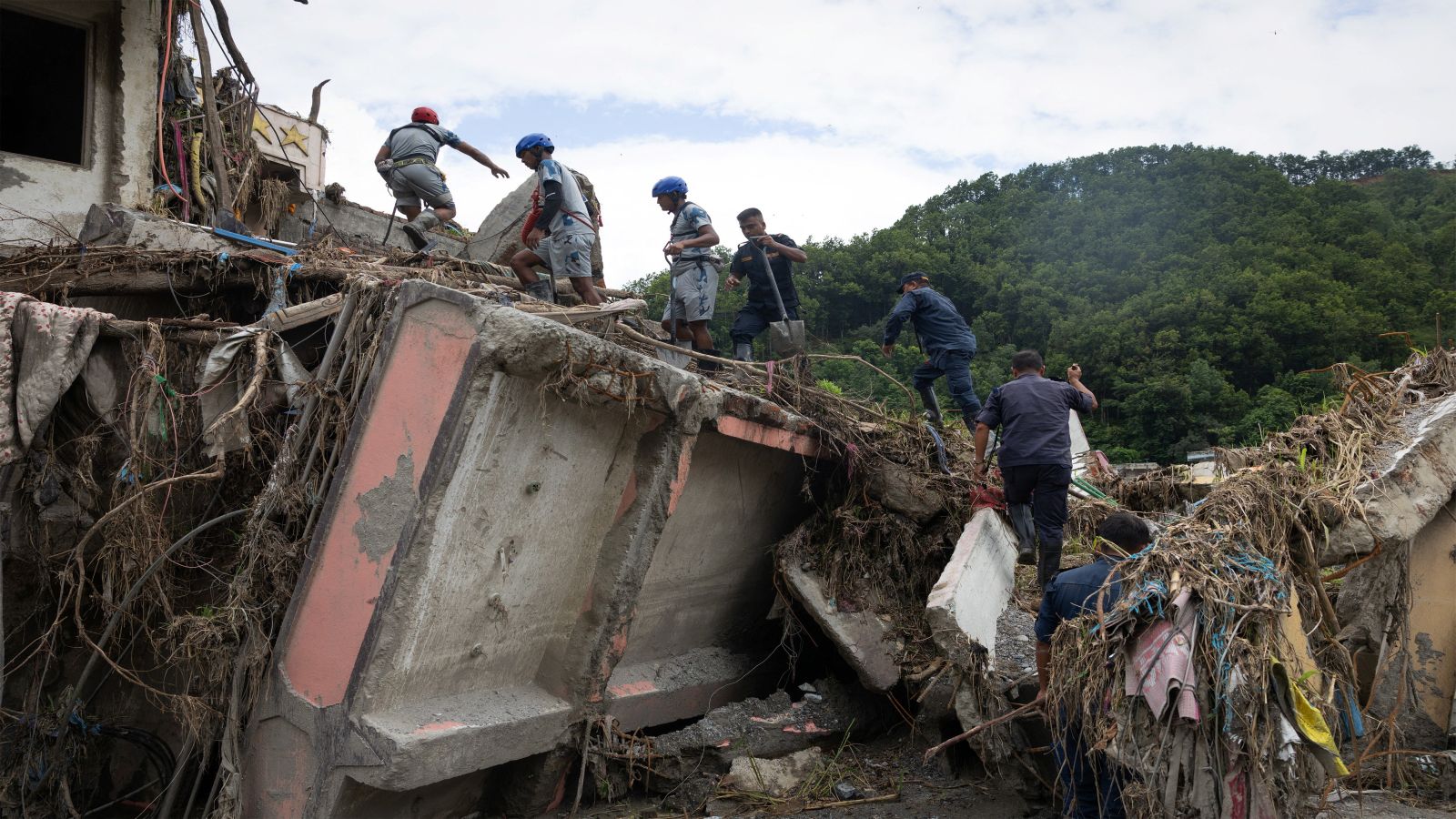
The numbers are staggering. As rescue operations push past the thirteenth day, the death toll from the catastrophic flash floods in Nepal has climbed to 1,355, with nearly 5,000 people still unaccounted for.
If you only scanned mainstream news headlines, you might think this was just another seasonal monsoon disaster. It wasn't. Triggered by a massive ice-rock avalanche near the Nepal-Tibet border, an unstoppable wall of water tore down the Bhotekoshi and Trishuli river corridors on August 26, erasing villages and trapping workers deep inside hydropower tunnels.
Yet, outside of South Asia, the global media reaction feels muted. A disaster of this magnitude—featuring hundreds of missing foreign nationals and entire communities washed away—demands a closer look at why mountain regions bear the brunt of climate breakdown while structural support lags behind.
The Scale of the Catastrophe
Let's look at the raw data provided by Nepal's National Disaster Risk Reduction and Management Authority (NDRRMA). Over 13,000 people have been rescued, but the human cost remains agonizingly high. Districts like Chitwan, Nuwakot, Rasuwa, and Nawalparasi are reporting hundreds of fatalities.
Worse still, identification is turning into an unprecedented bottleneck. Most bodies recovered from the riverbeds are decomposed, fragmented, or carried miles downstream into neighboring areas. Authorities have been forced to collect DNA samples and bury over a thousand unidentified bodies because local morgues simply ran out of capacity.
Among the nearly 5,000 missing are hundreds of foreign nationals—tourists, spiritual pilgrims, and migrant workers caught unaware by a wall of water that gave virtually zero warning.
Why Mountain Valleys Are Ground Zero for Sudden Disasters
We tend to associate floods with flat river plains overflowing after days of steady rain. High-altitude flash floods operate entirely differently.
When an ice-rock avalanche or glacial collapse happens near the borderlands, it unleashes a localized tsunami through narrow gorges. The water moves faster than any evacuation siren can sound. Infrastructure gets pulverized instantly. Roads vanish. Bridges snap like toothpicks.
Hydropower projects, heavily built along these exact river channels to harness clean energy, turned into death traps. Scores of workers became sealed inside underground tunnels as tons of mud and debris choked the entrances. International tunneling experts, including specialists who managed high-profile rescues in India, flew in to assist local authorities, but shifting debris fields make every foot of progress a gamble.
The Forgotten Vulnerable Inside the Relief Camps
Survival doesn't end when a rescue helicopter drops you at a makeshift shelter. Thousands of displaced residents now crowd into temporary holding centers, school classrooms, and municipal tents.
Conditions inside these camps are grim. According to reports from groups like the UN Population Fund, thousands of pregnant and postpartum women are stuck without adequate nutrition, clean water, or specialized medical care. Mothers forced to feed infants heavy adult rations due to a lack of baby formula face an uphill battle against rising stomach infections and trauma.
When basic sanitation collapses, the threat of waterborne diseases like cholera multiplies exponentially. The UN has launched urgent funding appeals, but material aid takes time to trickle down mountain trails where roads have been reduced to jagged cliffs.
What Needs to Happen Now
If you want to understand how to help or how emergency response needs to shift, look past the immediate shock value.
- Targeted Humanitarian Aid: Financial contributions are vital, but organizations prioritize flexible cash assistance and medical supplies that address maternal health and child nutrition inside remote camps.
- Infrastructure Overhaul: Himalayan nations need advanced, high-altitude early warning sensors linked directly to downstream communities. Relying on traditional seasonal forecasting is obsolete when glacial destabilization can trigger catastrophes in minutes.
- Sustained Global Attention: Media cycles move fast, but reconstruction in mountain terrain takes years. Keeping pressure on international partners to fulfill aid pledges prevents forgotten recovery zones.
The tragedy in Nepal isn't just a local emergency. It's a glaring preview of how fragile high-altitude ecosystems have become, and how quickly ordinary lives can be upended when the mountains break.