When a glacial collapse near the Tibet border sent a catastrophic wall of water tearing down the Bhote Koshi and Trishuli river basins, it triggered an immediate search-and-rescue emergency. Days later, a secondary nightmare unfolded across hospital mortuaries and temporary holding centers in Nepal. The sheer volume of recovered bodies completely overwhelmed local infrastructure, forcing officials to confront a grim operational reality: there was simply nowhere left to put the dead.
Hospitals in districts like Chitwan and Kaski found their storage limits eclipsed almost instantly. Public and private medical facilities in Chitwan, for instance, can collectively store only about 30 to 50 bodies at any given time. When more than 200 bodies arrived from downstream riverbanks, health workers had to convert unused industrial spaces and community halls into makeshift cooling hubs.
The Race Against Decomposition
Storage is only half the battle during a disaster of this magnitude. Time works against forensic teams with brutal efficiency. In makeshift centers where temperatures hover between 2 and 6 degrees Celsius, bodies can only be preserved for roughly ten days to two weeks. Without sub-zero freezing units, rapid cellular breakdown sets in, turning visual identification into an impossible task.
Compounding the crisis, hundreds of recovered victims remained completely unidentifiable. Mud-thick waters, severe trauma, and partial remains meant that families staring at initial lists could find no matches. Out of hundreds of recovered victims, only a tiny fraction were positively identified by relatives in the immediate aftermath. This left authorities with hundreds of unclaimed individuals and storage capacities stretched past the breaking point.
Protocol Behind the Mass Burials
Faced with decaying remains and zero remaining morgue space, the Ministry of Home Affairs authorized mass burials under a specific legal directive designed for overwhelmed districts.
Before any body goes into the ground at designated sites like Devghat in Bharatpur, strict forensic protocols take place:
- Medical teams extract and preserve DNA samples for long-term genetic matching.
- Fingerprints, dental records, and digital photographs of tattoos or scars are cataloged.
- Every personal item, from clothing to jewelry, is sealed in tracking bags mapped to a permanent identification number.
- QR code systems and official burial plot coordinates are permanently archived so families can locate graves later.
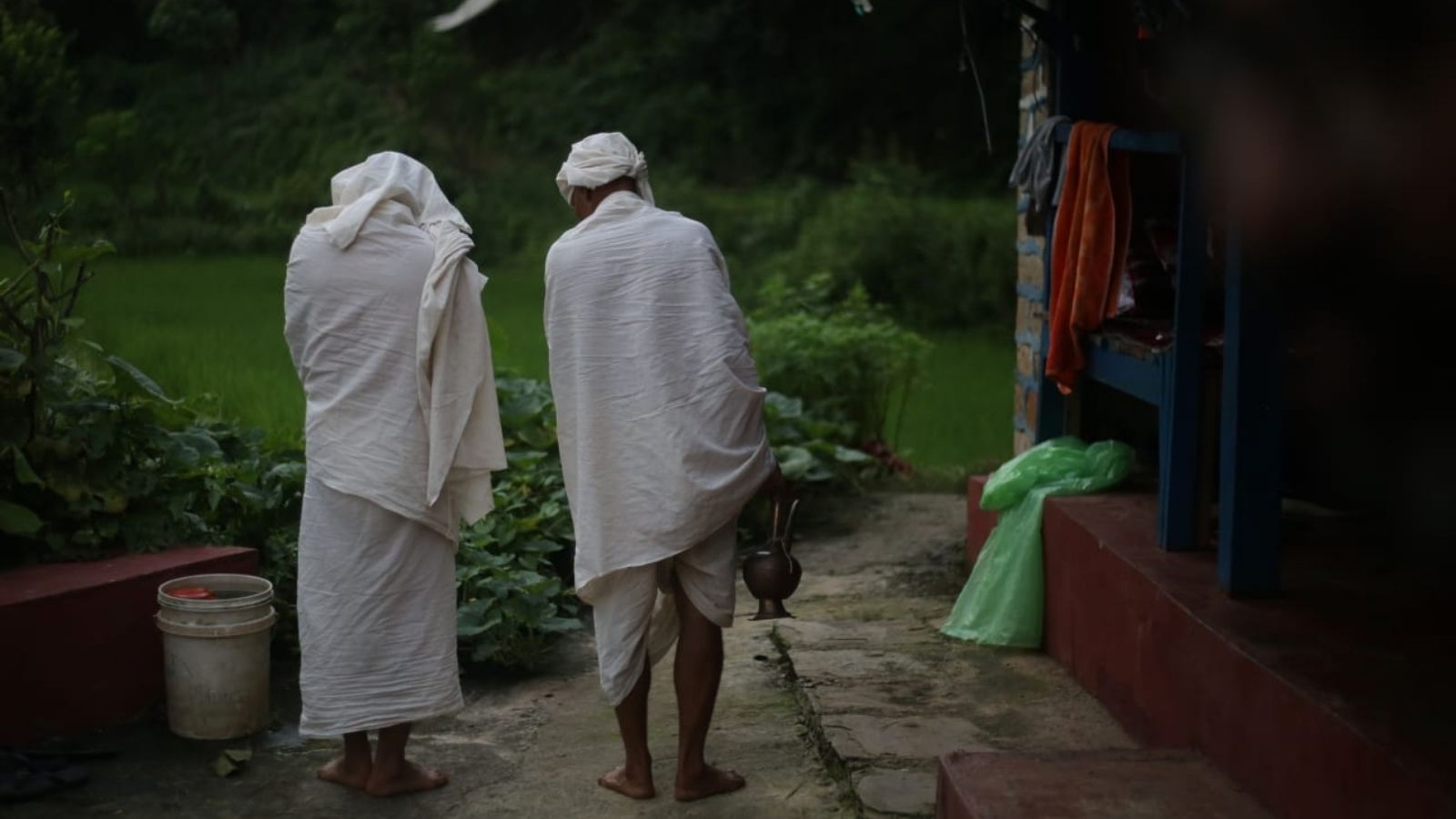
Officials stress that these burials are a practical necessity rather than a permanent closure. If relatives arrive later from other regions or across borders—including families searching for missing foreign nationals—the preserved DNA and archived records will allow bodies to be exhumed and returned for traditional rites.
Local administrations continue to coordinate with forensic experts and international rescue teams to process incoming remains while managing the immense human toll of the disaster. Anyone searching for missing loved ones should contact local district administration offices or designated police disaster cells to submit inquiry details and coordinate DNA matching procedures.