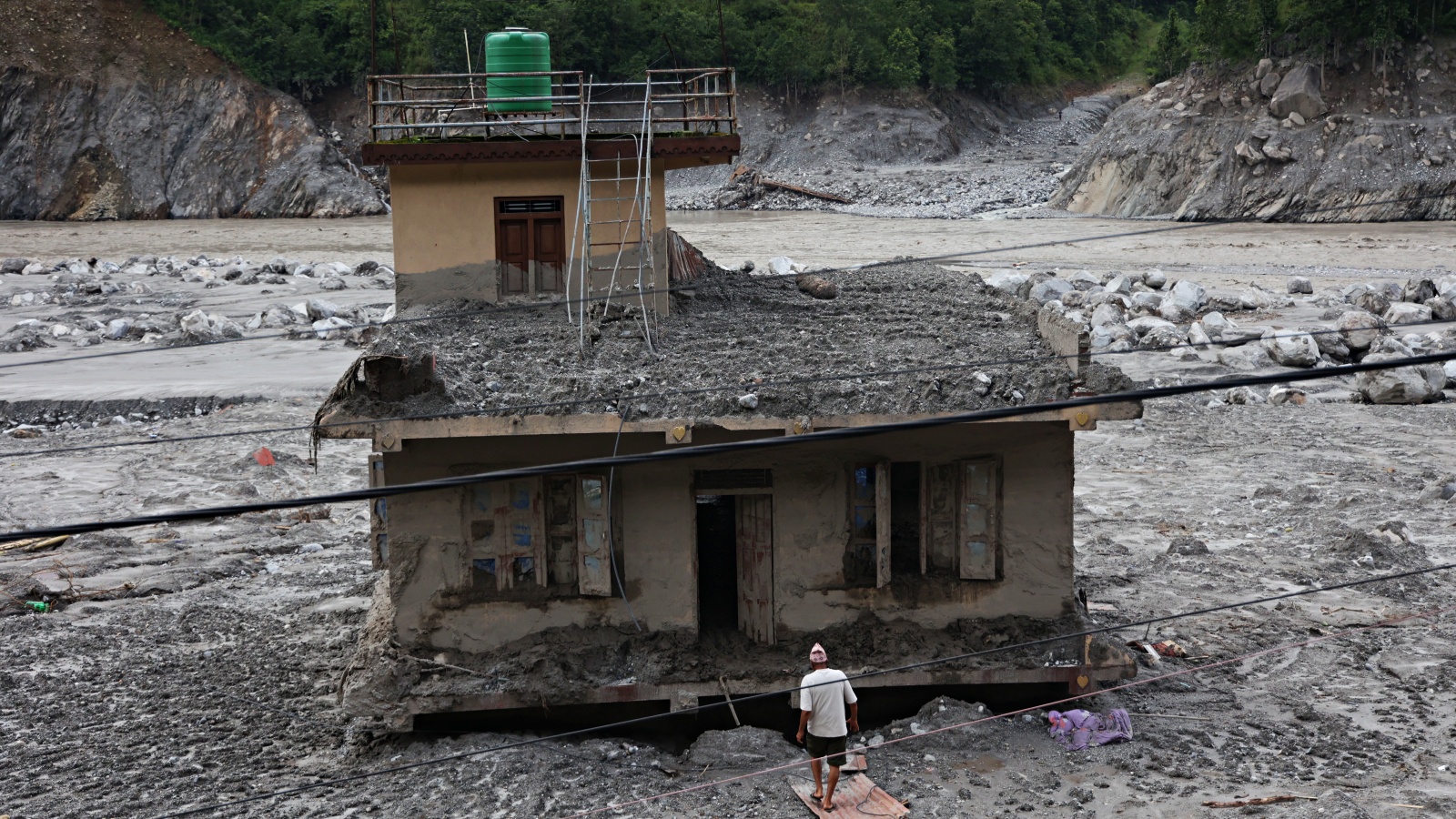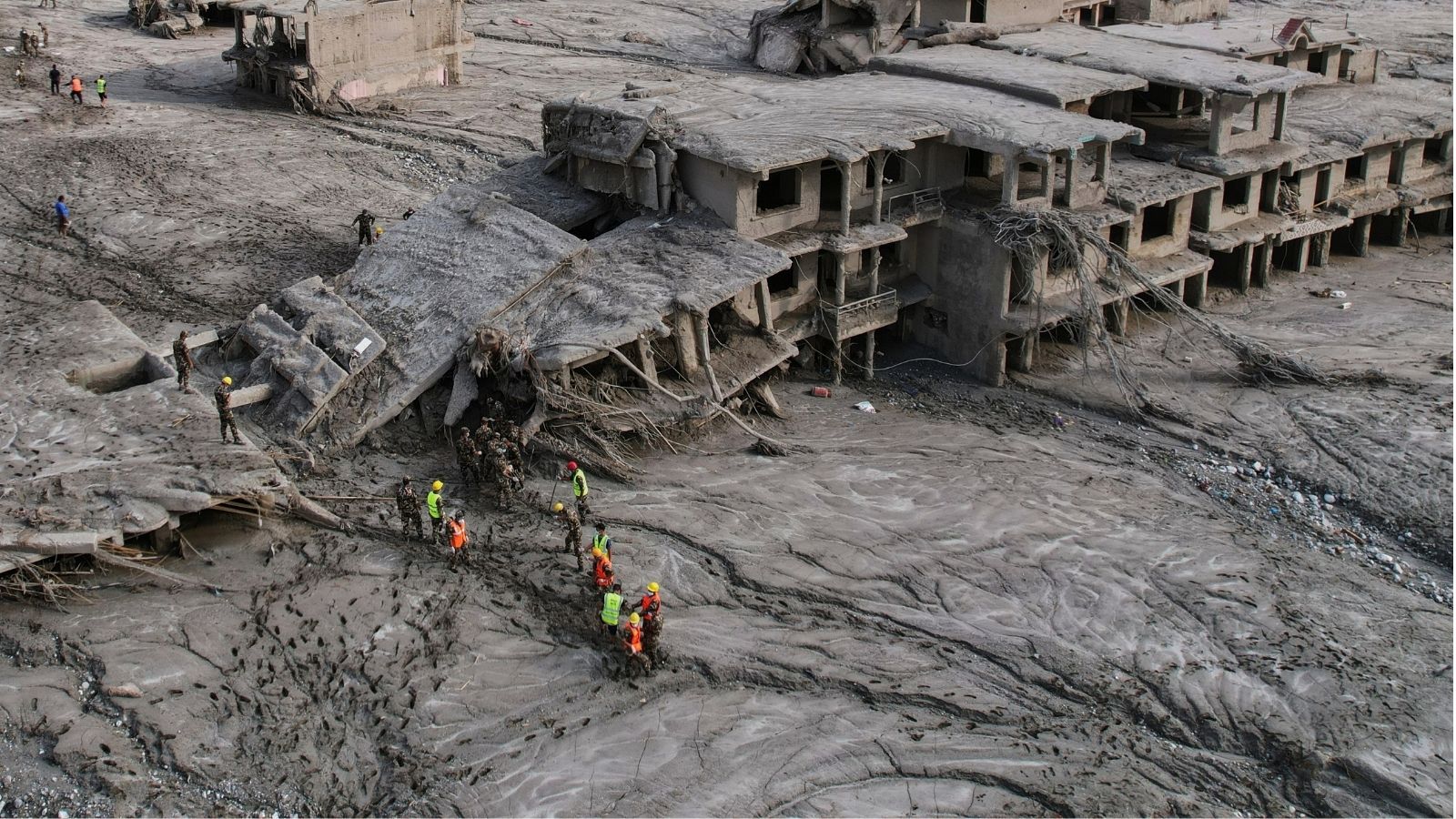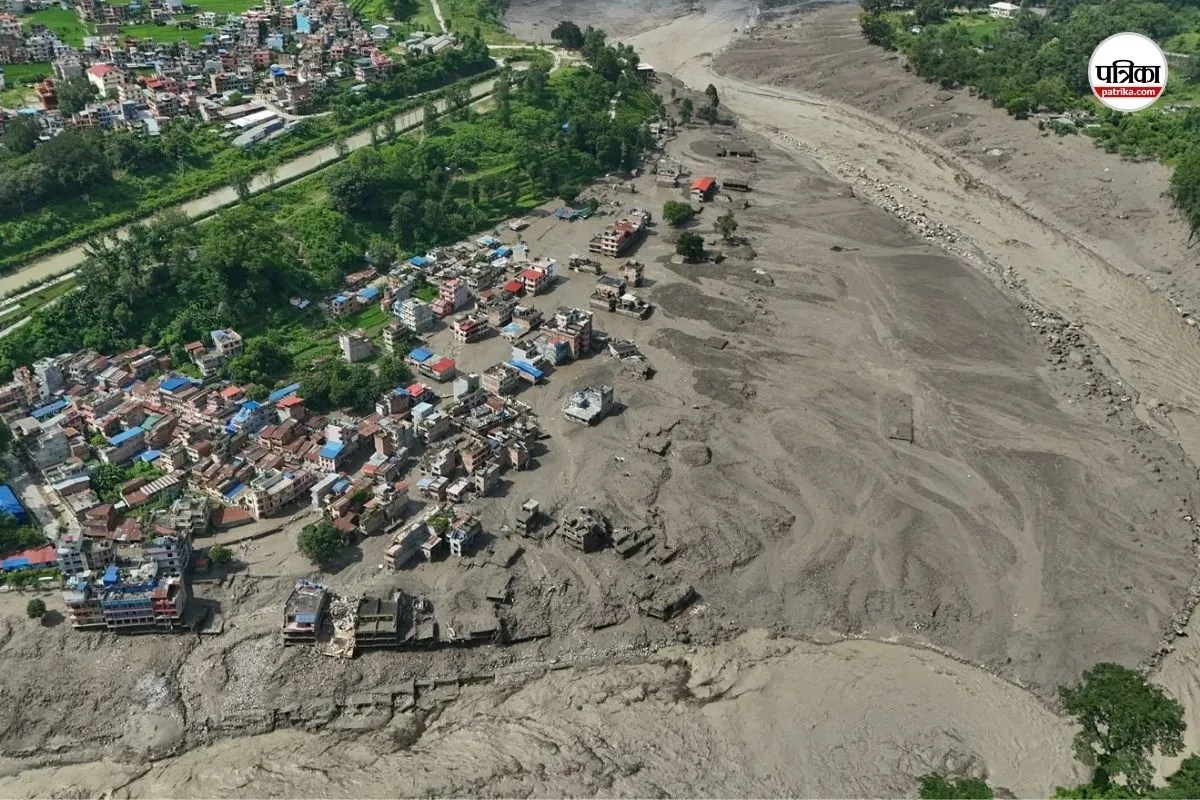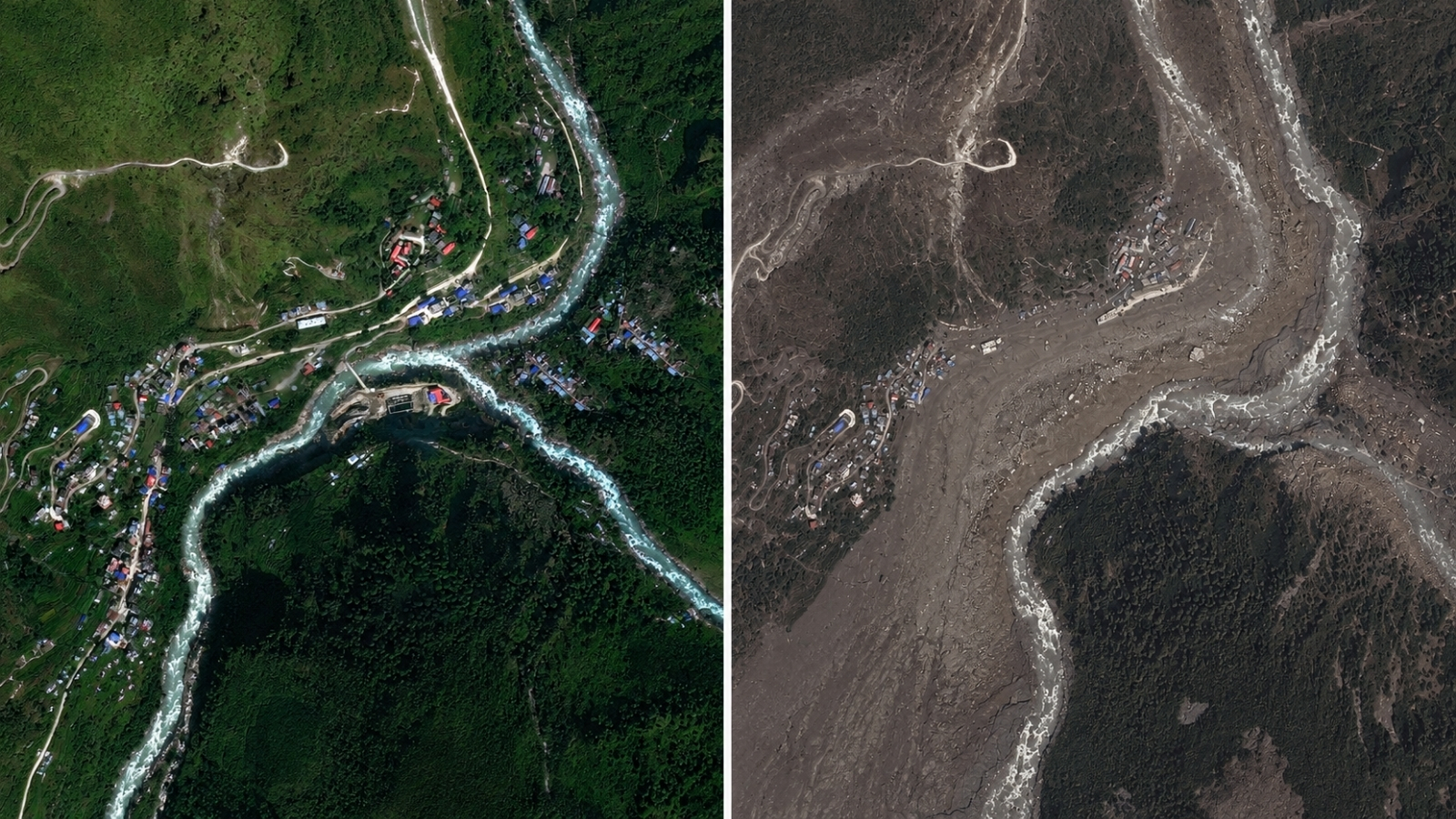
The green slopes beneath the Langtang Lirung peak did not erode over centuries; they vanished in a matter of seconds. When a massive section of high-altitude bedrock and glacial ice gave way at 5,200 meters near the Nepal-China border, it triggered a cataclysmic flash flood that wiped out settlements, altered river channels, and left hundreds dead with over a thousand missing. While mainstream media outlets lean heavily on before-and-after satellite photographs to document the raw scale of destruction along the Bhote Koshi and Trishuli corridors, these orbital images only capture the final frame of a much longer, poorly understood geological breakdown. The real story is not merely that a valley turned brown with mud and debris; it is that the structural integrity of the entire mountain range is quietly unravelling under our feet.
For decades, hazard assessments in the Hindu Kush Himalayas focused primarily on glacial lake outburst floods, commonly known as GLOFs. Authorities watched the high-altitude basins where meltwater pooled behind fragile moraine walls, treating those turquoise tarns as the ultimate ticking clocks. But this catastrophe bypassed the standard lake mechanism entirely. There was no gradual pooling of water, no slow seepage through loose gravel. Instead, seismometers initially registered a magnitude 4.4 tremor that researchers later confirmed was not an earthquake at all, but the sheer kinetic impact of a mountain face collapsing onto itself. A massive slab of rock and hanging glacier plunged more than a vertical kilometer into the Lhende River basin, acting as an instant pneumatic piston that blasted water, ice, and pulverized stone downstream.
This distinction matters because rock-and-ice avalanches defy traditional early warning systems designed to monitor liquid water. When permafrost—the ancient cement of frozen rock and soil holding high-altitude precipices together—thaws due to rising regional temperatures, internal friction coefficients drop drastically. The mountain essentially loses its internal stitching. Geomorphologists tracking Planet Labs and Copernicus imagery noted that the bedrock failure took a substantial chunk of the glacier down with it, generating an unregulated debris flow that bypassed every physical barrier in its path. Water levels at downstream monitoring points surged by nearly ten meters within minutes, trapping workers inside hydropower tunnels at projects like Trishuli 3A and obliterating arterial roads connecting Nepal to Tibet.
The human and economic toll exposes the perilous trade-offs of rapid regional development. Nepal needs energy and trade links to fuel its economy, driving the aggressive expansion of hydropower plants and cross-border transport routes through narrow, volatile river gorges. Constructing heavy infrastructure in steep Himalayan valleys requires balancing vital economic ambitions against an increasingly unpredictable physical baseline. When multiple hydropower stations are simultaneously knocked offline and bridges are tossed aside like twigs, the financial losses ripple far beyond local districts, threatening national energy security and stranding international pilgrims and tourists.
Satellite data remains an invaluable tool for forensic science, mapping how the Trishuli River widened from a narrow green ribbon into a churning black-and-brown torrent choked with sediment. Yet orbital archives only tell us what has already been lost. As debris forms hazardous new barrier lakes upstream that threaten secondary floods, recovery operations face immediate halts due to unstable terrain. The satellite images prove that the landscape has changed permanently; adapting to that reality will require accepting that the old rules of mountain engineering no longer apply.