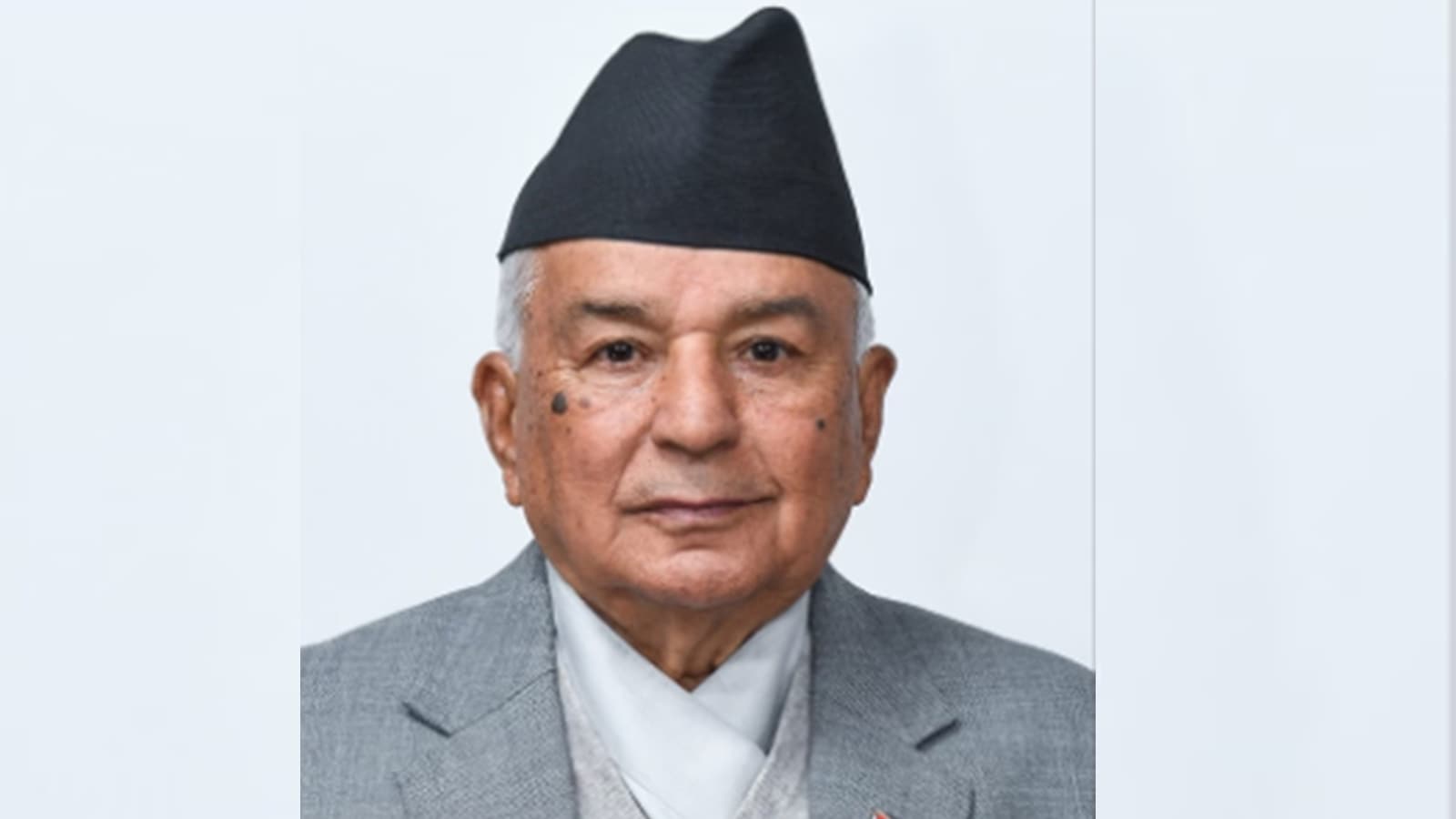
The recommendation by the Nepal Cabinet to resend the Constitutional Council (Functions, Duties, and Procedures) Act amendment ordinance to the President marks a dangerous inflection point in the country’s democratic experiment. It is a raw exercise of executive power designed to bypass parliamentary scrutiny and consolidate control over the state’s most sensitive watchdog bodies. By lowering the quorum required for the Constitutional Council to make appointments, the government is effectively dismantling the "checks" in checks and balances.
This move is not merely a procedural tweak. It is a calculated strike against the spirit of the 2015 Constitution, which envisioned the Constitutional Council as a high-level, bipartisan body capable of reaching consensus on the leadership of the judiciary, the Election Commission, and the National Human Rights Commission. When the executive branch decides it no longer needs the opposition or the judiciary's consent to fill these roles, the independence of these institutions evaporates.
The Quorum Trap and the Death of Consensus
Under the original framework, the Constitutional Council required the presence of the Prime Minister, the Chief Justice, the Speaker of the House, the Chairperson of the National Assembly, the Leader of the Opposition, and the Deputy Speaker. Decision-making relied on a heavy majority, ensuring that no single political faction could pack the courts or oversight agencies with loyalists.
The ordinance changes the math. By allowing a simple majority of existing members to convene and make binding decisions, the Prime Minister can now push through appointments even if the Leader of the Opposition and the Speaker boycotted the meeting.
This creates a feedback loop of institutional capture. If a Prime Minister can unilaterally appoint the head of the Commission for the Investigation of Abuse of Authority (CIAA), that agency—tasked with fighting corruption—becomes a weapon to be used against political rivals rather than a shield for the public interest. We have seen this play out in various nascent democracies across South Asia, where the transition from "rule of law" to "rule by law" begins with the quiet amendment of appointment protocols.
Judicial Independence on the Chopping Block
The inclusion of the Chief Justice in the Constitutional Council was always a double-edged sword. While it provided the judiciary a seat at the table, it also dragged the highest judge into the murky waters of political horse-trading. With the new ordinance, the Chief Justice’s role is further compromised.
If the Council meets and makes appointments without the full house, the legality of those appointments inevitably ends up before the Supreme Court. This creates a recursive nightmare. The very judges who must rule on the validity of the ordinance may have been appointed through the same flawed process they are asked to strike down. This is not a hypothetical risk; it is the current trajectory of the Nepali legal system.
The Opposition Role in a Vacuum
The primary justification often floated by government defenders is "administrative necessity." They argue that the opposition’s refusal to attend meetings has paralyzed the state, leaving dozens of vital constitutional posts vacant. This argument holds a grain of truth but ignores the underlying cause.
Political gridlock is a feature of a functioning democracy, not a bug to be bypassed by decree. It forces negotiation. By opting for an ordinance, the Cabinet is admitting that it has failed at the art of governance and has instead chosen the path of least resistance: authoritarian efficiency.
The Role of the Presidency
The President’s role in this saga has shifted from a ceremonial guardian of the Constitution to a rubber stamp for the executive. In a healthy parliamentary system, the Head of State serves as a final filter, capable of sending a controversial ordinance back for reconsideration if it appears to violate the basic structure of the law.
Instead, the rapid-fire approval and re-approval of these ordinances suggest a symbiotic relationship between the Prime Minister’s Office and Shital Niwas. This alignment removes the final barrier to executive overreach. When the President fails to question the necessity of an ordinance that fundamentally alters the balance of power, the constitutional architecture begins to lean precariously.
A History of Executive Impatience
Nepal has a long, exhausting history of using ordinances to circumvent the Pratinidhi Sabha (House of Representatives). This trend did not start with the current administration, but it has certainly been refined. The frequent dissolution of the House and the subsequent reliance on executive decrees have created a permanent state of emergency-style governance.
This "ordinance raj" erodes public trust. When citizens see that the rules of the game can be changed mid-match to suit the players in power, the incentive to follow those rules diminishes. The Constitutional Council was meant to be the bedrock of the state’s integrity. Now, it is becoming a partisan tool.
The Long-Term Cost of Short-Term Gains
The immediate gain for the Cabinet is clear: they get their people into key positions. They can fill the Election Commission before a vote, ensuring a favorable tilt. They can seat friendly judges. They can neutralize the CIAA.
But the long-term cost is the hollowing out of the state. Institutions that lose their independence also lose their legitimacy. If the public perceives the Election Commission as a branch of the ruling party, the results of any future election will be met with protests rather than acceptance. If the Human Rights Commission is led by government appointees, its reports on state-sponsored violence will be ignored by the international community.
The tragedy of the Constitutional Council ordinance is that it prioritizes the survival of a specific government over the survival of the democratic framework. It treats the Constitution as a series of obstacles to be cleared rather than a sacred pact with the people.
The Global Context of Democratic Backsliding
Nepal does not exist in a vacuum. This move mirrors a global trend where populist leaders use legal mechanisms to dismantle democratic norms. From Hungary to India, the playbook is consistent: weaken the judiciary, capture the oversight bodies, and marginalize the opposition through technicalities.
In Nepal's case, the fragility of its post-conflict transition makes these moves even more volatile. The country spent decades fighting for a representative system. To see that system dismantled by the very people who claim to lead it is a bitter irony for the electorate.
Why the Ordinance Matters to the Average Citizen
It is easy to dismiss this as high-level political theater, but the impact trickles down. When the Constitutional Council is compromised, accountability dies.
- Corruption: Without an independent CIAA, public funds are diverted into the pockets of the well-connected without fear of prosecution.
- Justice: A politically motivated judiciary means that the law protects the powerful and punishes the weak.
- Services: Constitutional bodies oversee everything from women's rights to the rights of marginalized communities. When these bodies are filled with political loyalists, the needs of the people are secondary to the needs of the party.
The resending of this ordinance is a signal that the government is doubling down on a strategy of exclusion. It is a rejection of the "all-party" spirit that was supposed to define Nepal's republican era.
The Legal Challenge and the Path Forward
The Supreme Court remains the final arbiter, but its ability to act is being hemmed in by the very ordinance it must judge. Legal experts have already pointed out that the ordinance contradicts Article 284 of the Constitution, which specifies the composition and intent of the Council.
For the ordinance to be truly defeated, it requires more than just a court ruling. It requires a realization within the ruling class that a state without checks is a state destined for collapse. History shows that when the pendulum of power swings, those who dismantled the safeguards are often the first to be crushed by the machinery they created.
The move to bypass the House and govern through the President’s signature is a shortcut to instability. The Cabinet may have succeeded in resending the ordinance, but in doing so, they have sent a clear message to the world: Nepal’s democratic institutions are for sale, and the current government is the highest bidder.
There is no middle ground when it comes to the independence of the Constitutional Council. Either it is a bipartisan body that protects the state, or it is a committee that serves the Prime Minister. By choosing the latter, the Cabinet has initiated a process that will be difficult, if not impossible, to reverse without a total systemic reset. The oversight mechanisms of the state are being turned into mirrors of the executive, reflecting only the will of the few while the interests of the many are cast into the shadows.