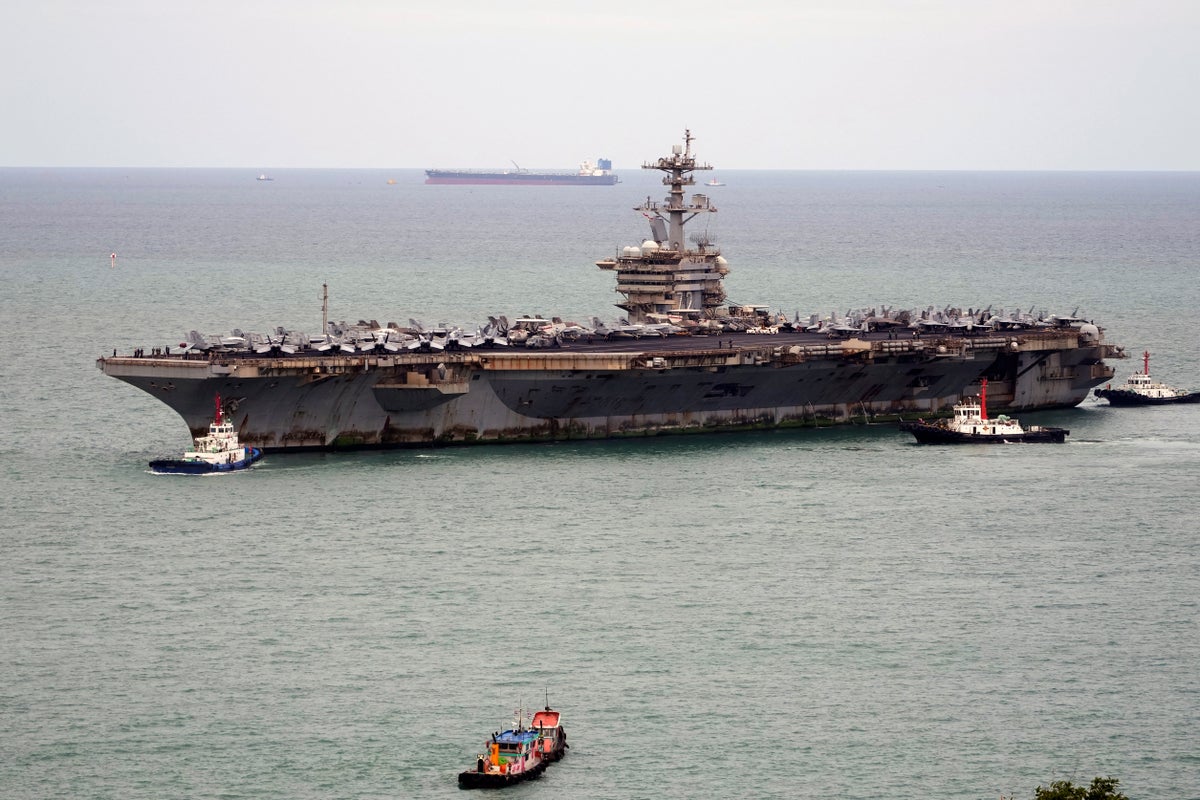
The air in the alleyways of Thailand’s most infamous party town does not cool down when the sun drops; it thickens. It smells of hot asphalt, diesel exhaust, stale Chang beer, and the unmistakable, sugary cloud of cheap vapes. For months at a time, thousands of sailors aboard the massive, nuclear-powered floating city known as the USS Abraham Lincoln slice through the silent expanses of the ocean, living on strict schedules, eating in fluorescent mess halls, and staring out at a horizon made entirely of water. Then comes port call.
To understand what happens next, you have to understand the psychological compression of a deployment. Imagine living inside a steel drum for one hundred and twenty days, surrounded by the constant hum of a reactor and the chatter of thousands of your closest coworkers. The pressure builds. The routine becomes a cage. When the liberty boat finally drops its ramp onto foreign soil, the sudden explosion of color, noise, and absolute freedom acts like a physical blow to the senses. Most men and women handle it. They find a quiet bar, buy a souvenir for someone back home, eat a plate of spicy pad thai, and breathe the damp, heavy air.
Two sailors from the Lincoln did not do that.
Let us call the first one Miller, a twenty-one-year-old machinist’s mate whose hands are usually stained with grease, and the second Vance, a gunner’s mate who had spent the last three weeks staring at maintenance logs. When they stepped into the neon labyrinth of that notorious Thai resort town, the anchor of military discipline slipped. It starts innocently enough. A bucket of local beer. Loud music echoing off concrete walls. The laughter of strangers who do not know your rank, your division, or the serial number of your equipment.
Alcohol does not change a person; it removes the author. By two in the morning, the laughter curdled. A spilled drink, a sharp word, a shove in the crowded corridor of a packed venue—and the invisible tether holding them to the United States Navy snapped completely.
Fights in overseas liberty ports are as old as naval warfare itself. Sailors have been blowing off steam since the days of wooden galleons and rum rations. But the modern era carries a different kind of consequence. There are no longer hidden corners where a brawl stays between the participants. In an instant, cell phones emerge from the shadows. Lenses capture the flailing punches, the shouts, the shattered glass, and the frantic attempts of local security to restore order.
Within hours, the digital footprint of that drunken brawl bypassed the chain of command entirely, leaping across oceans to flash on screens in Washington and San Diego before the morning muster even began.
The immediate fallout was swift and absolute. There was no long trial, no lingering debate. The liberty was yanked away like a rug pulled off a polished floor. Two sailors who had waited months for a taste of dry land found themselves escorted not back to the beach clubs, but onto a swift launch cutting through the dark water, heading straight back to the flight deck of the USS Abraham Lincoln.
Back to the steel drum. Back to the scrutiny.
When you return to a carrier in disgrace, the atmosphere changes instantly. The ship does not yell at you; it absorbs you. Word travels through the mess decks with terrifying speed. Every sailor knows your face before you walk past them in the passageways. The weight of accountability settles over you like a lead vest. The Navy invests millions of dollars into every single individual who wears the uniform, training them to operate complex, lethal systems where a single mistake can spell catastrophe. When those individuals turn their raw, untamed energy against each other in a foreign street, the breach of trust echoes far beyond a simple local police blotter. It damages the diplomatic delicate threads that keep overseas port visits open for thousands of others who behaved honorably.
Consider what happens next for Miller and Vance. Their deployment is no longer about the mission, the tactical drills, or the ports yet to come. It is about mast—non-judicial punishment where the commanding officer looks you in the eye and decides the shape of your immediate future. Reduction in rank. Forfeiture of pay. Extra duty that feels endless. The stain on a record that whispers of potential unfulfilled.
The neon lights of Thailand fade into a distant memory, replaced once again by the endless, gray roll of the sea and the unyielding glare of overhead fluorescent tubes. They went looking for an escape from the pressure cooker, and all they found was a faster way back inside.
The horizon outside the steel skin of the ship remains empty, indifferent to the choices made in the dark alleys miles away.