The screen flickers at 4:15 AM in a basement office in Queens, casting a cold blue wash over cups of half-drank espresso and a face that has not seen real sunlight in three days. Marcus does not look at the news. He looks at the ticker. Silicon valley algorithms are hungry again. Another billion-dollar auction block for processing power, for the invisible architecture of tomorrow, and the green numbers on his terminal begin to climb like mercury in a fevered throat.
Across the ocean, in the damp chill of a North Sea harbor, a tanker captain secures a heavy steel valve. He has just watched the price of crude slide down another notch, slipping away like a wet stone into the dark water.
These two events look disconnected. They happen thousands of miles apart, governed by entirely different gods—one worshiping the microchip, the other bowing to the pump. Yet they are tied together by an invisible cord of human anxiety and raw momentum. Global markets are rising today, propelled upward by an insatiable appetite for artificial intelligence shares, even as oil prices retreat into a quiet slump.
To understand why this matters, you have to step away from the abstract financial jargon and look at what people are actually betting on.
Money is belief frozen into numbers. When investors pour capital into semiconductor manufacturers and software giants, they are not buying pieces of silicon. They are buying a promise. They are paying for a future where thinking machines shoulder the burden of human labor, where logistics are optimized down to the nanosecond, and where growth can outrun gravity.
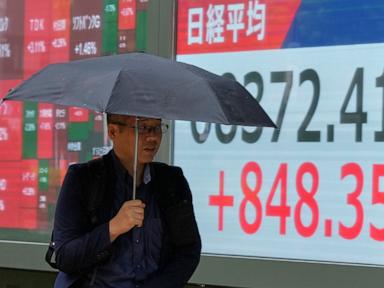
Marcus feels this in his bones. He manages a mid-tier logistics portfolio, and his phone has buzzed non-stop since the opening bell in Tokyo. Tokyo rose. Then Frankfurt ticked upward. By the time Wall Street woke up, the momentum was already an avalanche. People want the future, and they are willing to pay a heavy premium to get it.
Yet, every boom casts a shadow.
While the digital architects celebrate rising share prices, a very different kind of story is playing out in the commodities pit. Oil is falling. For decades, crude was the undisputed blood of the global economy. When oil prices dropped, it usually meant the world was grinding to a halt, choked by recession or paralyzed by fear.
Not this time.
The retreat in oil prices is not a sign of industrial exhaustion. It is a symptom of redirection. The world is burning less fuel to move traditional goods because efficiency is creeping into every corner of trade, and supply chains are finding their footing after years of pandemic-era whiplash. At the same time, the transition away from fossil-dependency, however halting and uneven, quietly alters the baseline demand.
Consider what happens when energy gets cheaper while computing power gets more expensive. It creates a strange, bifurcated reality. The old economy of steel, diesel, and heavy hauling is stabilizing, loosening its grip on household budgets at the gas pump. Meanwhile, the new economy of algorithms, data centers, and neural networks demands an empire of capital, drawing liquidity away from traditional energy stocks and funneling it straight into the digital frontier.
It is a high-stakes gamble.
Markets do not move on logic alone; they move on hope and terror, often in equal measure. The surge in tech shares carries a quiet desperation. Companies everywhere know that if they do not adopt automated intelligence systems now, they will be left behind like blacksmiths watching the first Ford Model T rumble down a dirt road. They are buying in not out of casual interest, but out of survival instinct.
And the market rewards that panic. Indices tick higher. Portfolios swell. For a few brief hours, the collective pulse of the global exchange beats a little faster, driven by the seductive narrative that technology can solve productivity problems that human hands alone cannot touch.
At the same time, the drop in oil prices offers a rare, tangible exhale for the working world. Lower fuel costs ripple down to grocery store shelves, airline tickets, and delivery fees. It is a quiet subsidy injected directly into the pockets of consumers who have spent the last few years battered by inflation. While the tech barons feast on capital gains, the ordinary commuter catches a break at the local gas station.
This duality defines the current era. We are living between two worlds. One world is heavy, physical, and burning fossil fuels to keep the lights on. The other world is weightless, digital, and burning billions of dollars to build a synthetic mind.
As the trading day winds down, Marcus finally closes his laptop. The blue light fades from his tired eyes. Outside his window, the city traffic hums along the highway, fueled by cheaper petroleum, while inside his machine, servers hum quietly in Virginia and Dublin, processing queries for an intelligence that never sleeps. The numbers on the screen will shift again tomorrow. But tonight, the balance holds.