The media has a reliable, lazy formula for covering high-profile acts of violence.
Step one: Identify the suspect.
Step two: Track down the most recent place they rented an apartment.
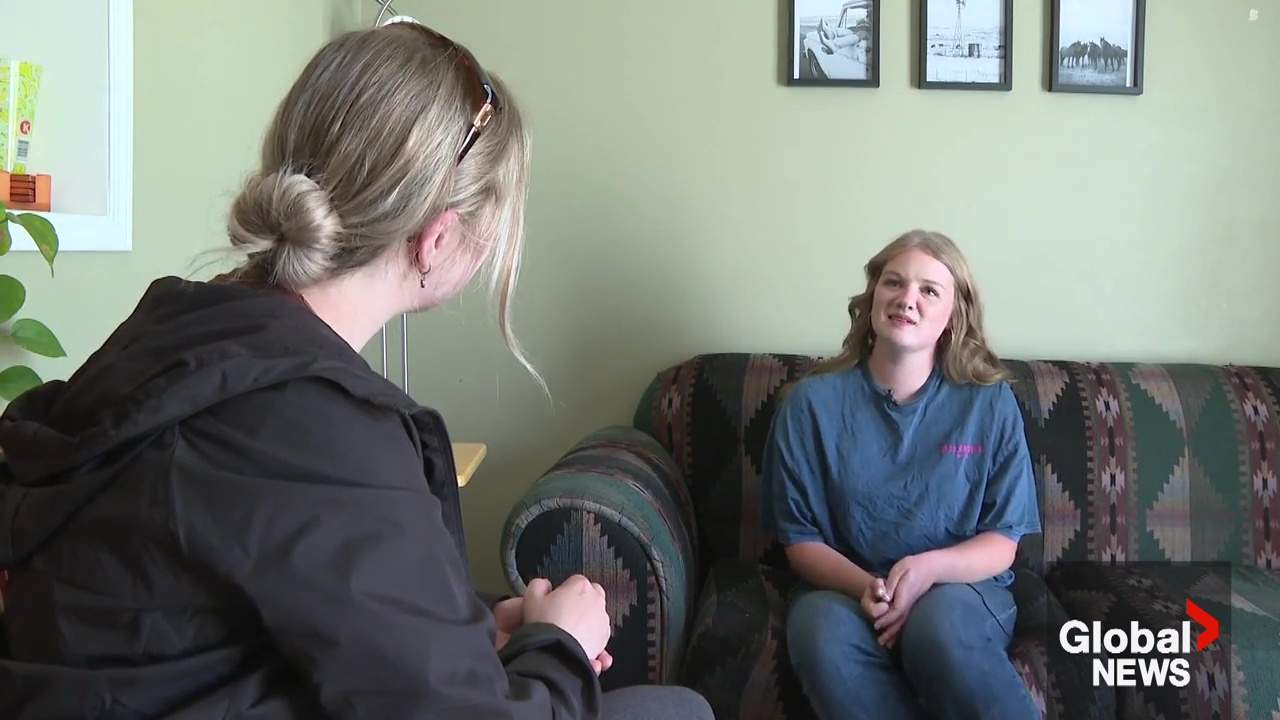
Step three: Stick a microphone in front of a bewildered neighbor who claims they "seemed completely normal" or "kept to themselves."
We are seeing this play out right now following the tragic Montreal shootings, as mainstream outlets rush across provincial lines to Lethbridge, Alberta, hunting for anyone who once shared a hallway with the alleged shooter.
It is a journalistic ritual as predictable as it is useless.
Editors treat these neighbor interviews like vital investigative reporting. In reality, they are a form of psychological comfort food masquerading as news. They feed a deeply flawed premise: that bad actors broadcast their intentions to the person living in 4B, and that if we just watch each other closely enough, we can predict the unpredictable.
I have spent fifteen years analyzing how media narratives shape public panic during criminal investigations. I can tell you plainly that these "neighbor speaks out" profiles do not just fail to inform the public—they actively distort our understanding of human behavior and criminal psychology.
The Illusion of the Insignificant Insight
Let us dissect the typical neighbor interview. A reporter knocks on a door in a quiet Lethbridge neighborhood. A resident, visibly shaken by the sudden presence of satellite trucks, recalls that the suspect once helped them carry groceries or, conversely, never made eye contact.
The media frames these anecdotes as pieces of a puzzle. They are not. They are noise.
Human beings are spectacularly bad at detecting latent malice based on casual, domestic interactions.
Psychologists refer to this misjudgment as the fundamental attribution error combined with retrospective corroboration. Once an individual is accused of a heinous crime, every past interaction is recontextualized through the lens of that crime. If the suspect was quiet, they were "brooding." If they were polite, they were "calculating."
Mainstream reporting weaponizes this cognitive bias to create a narrative arc where none exists. They imply that the community missed the signs.
This approach ignores the fundamental reality of modern criminal psychology: individuals capable of targeted violence frequently compartmentalize their lives with extreme efficiency. The version of a person that exists online, or in their own fractured psyche, rarely aligns with the version that rolls the green garbage bin to the curb on Tuesday mornings.
Why Local Proximity Does Not Equal Expertise
The core flaw of the competitor’s coverage is the inflation of proximity into authority. Sharing a ZIP code or a stucco wall does not grant a bystander insight into a suspect’s motives, radicalization pathway, or mental state.
By centering the narrative on local shock, media outlets accomplish two counterproductive things:
- They center the story on collective trauma voyeurism rather than systemic or investigative facts.
- They create an algorithmic feedback loop that rewards panic over policy.
Consider the data on targeted violence compiled by organizations like the National Threat Assessment Center. In the vast majority of mass casualty incidents, the individuals who notice concerning behavior are not casual neighbors. They are intimate partners, immediate family members, or direct co-workers—people exposed to the suspect's unvarnished, private communications.
By treating a neighbor's shock as breaking news, media outlets misdirect public vigilance. They suggest that citizens should be policing their apartment complexes for "weird" behavior, a standard that inevitably targets the eccentric, the introverted, and the mentally ill, while doing absolutely nothing to identify actual threats.
The Dangerous Allure of the Subdivided Narrative
Why does the press keep doing this? Because dealing with the structural realities of violent crime is difficult, politically fraught, and rarely fits into a two-minute broadcast segment.
It is far easier to frame a tragedy as a spooky, localized mystery. He lived among us. Could your neighbor be next?
This sensationalism drives digital engagement, but it destroys public trust. It turns serious investigative journalism into a sub-genre of true crime entertainment. When we treat the geography of a suspect’s past as a character in the story, we lose the thread on the actual mechanics of the crime: the logistics, the institutional failures, the radicalization pipelines, and the timeline of the offense.
Dismantling the Premise of Public Safety Vigilance
If you look at public forums and comment sections surrounding the Montreal investigations, the "People Also Ask" dynamic manifests as a desperate search for warning signs. What were the red flags? How did no one notice?
The brutal, uncomfortable truth that no legacy media outlet wants to admit is this: Sometimes, there are no public signs.
The desire to find a neat, linear progression of clues in a suspect’s daily routine is a coping mechanism. We want to believe the world is predictable. We want to believe that evil wears a distinct uniform or plays loud music late at night.
Admitting that a person can be a perfectly unremarkable neighbor while harboring destructive intent is terrifying. It means acknowledging a level of vulnerability that most people cannot stomach. So instead, the media serves up interviews with landlords and grocery clerks, pretending that their confusion is a valuable contribution to the public record.
Stop Interviewing the Bystanders
The path forward requires a aggressive shift in how we consume and produce breaking crime news.
We must stop treating shock as an asset. The fact that a community in Lethbridge is surprised that a former resident is accused of a shooting in Montreal is not news. Surprise is the default human reaction to extreme events. It requires zero journalistic resources to uncover, and it yields zero actionable insights for public safety.
If media organizations want to demonstrate actual expertise and authority, they need to redirect their resources away from doorstep ambushes of private citizens and toward the hard data of threat assessment.
- Analyze the cross-jurisdictional gaps in law enforcement tracking.
- Examine the digital ecosystems where radical ideas propagate unchallenged.
- Detail the specific policy failures that allow volatile individuals to acquire resources.
Leave the neighbors alone. They do not know anything, because they could not have known anything. Stop demanding that ordinary citizens act as amateur profilers, and stop pretending that a quote from the guy down the hall is journalism. It is theater. And it is time to close the curtain.