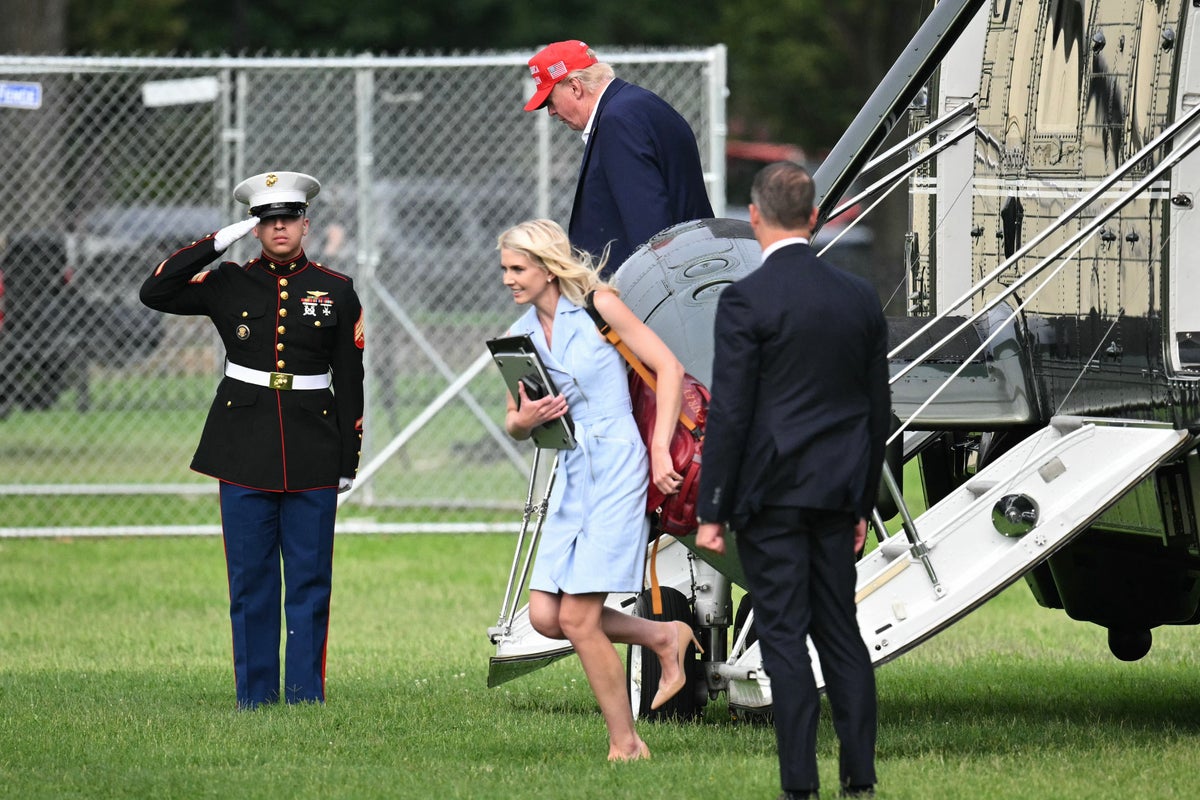
Pictures don't always lie, but they rarely capture the full absurdity of political loyalty. When photographs surfaced showing Donald Trump's executive assistant Natalie Harp sprinting uphill after his golf cart at Turnberry in Scotland, the internet did what the internet does. It laughed, mocked, and dissected every frame.
Yet, beneath the viral jokes about the 2023 incident lies a much stranger reality. This wasn't just a clumsy moment on a links course. It was a physical manifestation of how proximity and absolute devotion operate inside the highest circles of American power.
If you want to understand how modern political aides function, look past the press releases. Look at the people willing to run up a Scottish hill at full speed just to keep pace.
The Human Printer and Her Gatekeeper Status
Most people know her moniker by now. The media calls her the "human printer" because she famously lugs a portable printer everywhere. Her job? Delivering positive news stories, cherry-picked polling data, and choice social media clips directly to Trump.
She isn't just an administrative assistant. She is an information filter.
In a world where leaders are constantly shielded, gatekeepers hold immense gravity. Harp controls a vital conduit of daily information. She has direct access to Truth Social, typing out posts at his dictation, and standing just off-camera during major public appearances.
When you manage the daily mental diet of a former and future president, you stop being ordinary staff. You become part of the machinery.
The Letters That Exposed the Dynamic
The golf cart sprint might have faded from headlines if not for what came after. Investigative reports later brought to light private letters Harp wrote to Trump. In one note, she apologized for the Turnberry incident, writing that she was sorry if she had been an "embarrassment walking the course".
The correspondence went much deeper than a casual apology. She called him her "Guardian and Protector in this Life" and insisted that "you are all that matters to me".
Critics found the language cultish and unsettling. Supporters saw it as authentic, fierce loyalty in a town full of backstabbers.
Her fierce allegiance traces back to her personal history. Harp has openly shared how she survived stage II bone cancer, crediting experimental treatments she accessed due to policies championed during Trump's first term. For her, the bond isn't merely transactional careerism. It is deeply personal, rooted in a belief that her survival is tied directly to him.
What the Internet Misses About Access
Commentators love to mock the optics. They post the photos, share the text snippets, and wonder out loud why an adult would run behind a vehicle.
They miss the point entirely.
In high-stakes political environments, physical presence is currency. Staffers who prioritize dignity often find themselves sidelined. Staffers who prioritize total, unyielding availability climb to the inner sanctum. Harp chose the latter, riding in the trunk of an SUV and skipping basic comforts to ensure she was never left behind.
Political survival doesn't reward boundaries. It rewards endurance. Whether sprinting up a hill in Scotland or managing a constant stream of digital outrage, Natalie Harp built a role where she is virtually impossible to replace.
Love it or hate it, that level of absolute dedication shapes how power is exercised every single day.