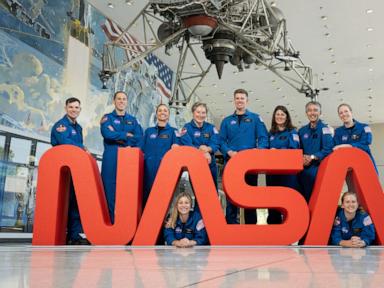
Every four years, NASA drops a press release inviting the public to apply for the astronaut corps, and the entire tech media apparatus turns into a glorified recruiting brochure. You know the drill. Glossy headlines ask if you want to walk on the Moon. Articles list the basic requirements—a master’s degree in STEM, two years of professional experience, U.S. citizenship—and frame the whole thing like a cosmic lottery ticket to the stars.
It is pure fiction. For an alternative look, consider: this related article.
If you apply to NASA’s Artemis program expecting to channel your inner Neil Armstrong, you are signing up for the biggest career bait-and-switch in modern aviation. The agency isn't looking for swashbuckling explorers to plant flags in lunar regolith. They are hiring hyper-compliant systems operators to sit in fluorescent-lit conference rooms in Houston, reviewing PDF manuals for hardware that is perpetually three years behind schedule.
The Math of the Lunar Bottleneck
Let’s look at the actual numbers, because the space journalism cheerleaders refuse to do basic arithmetic. Similar coverage on this trend has been shared by The Verge.
When NASA opens an astronaut selection cycle, they routinely pull in over 12,000 applications. Out of that pile, they pick roughly ten to twelve people. That gives you an acceptance rate hovering around 0.08 percent. Getting into Harvard is practically an open-door policy by comparison.
Now, suppose you beat those odds. You survive the agonizing medical screenings at Johnson Space Center, pass the psychiatric evaluations designed to weed out anyone with an ounce of non-conformist ego, and earn your silver pin after two years of grueling astronaut candidate (ASCAN) training. Where do you go?
Not the Moon.
Look at the manifest. NASA already has an active corps of roughly 40 to 50 fully qualified, flight-ready astronauts sitting on the bench. Meanwhile, the Artemis architecture—built around the massively delayed Space Launch System (SLS) rocket and the Orion capsule—flies once every few years at best. Artemis II is a lunar flyby. Artemis III, the putative landing mission, is bottlenecked by spacesuit development delays at Axiom Space and the monumental engineering hurdle of orbital refueling for SpaceX’s Starship Human Landing System (HLS).
Each Artemis mission carries four crew members. Only two of them actually descend to the lunar surface.
Do the math. With 40+ veteran astronauts ahead of you in line, and a flight cadence that puts maybe two boots on the Moon every 24 to 36 months, a rookie selected today will be lucky to see low-Earth orbit on a commercial crew dragon before 2032. By the time a new recruit’s name comes up in the lunar rotation, the SLS rocket will likely be canceled in favor of commercial heavy-lift architectures, and the entire program will have been rebranded twice by shifting congressional administrations.
The Death of the Right Stuff
I’ve spent fifteen years watching brilliant engineers and military test pilots burn out inside aerospace contractor loops, and the psychological toll of the modern astronaut track is the industry's dirty secret.
In the Mercury and Apollo eras, NASA wanted stick-and-rudder mavericks. They wanted Chuck Yeager types who could manually fly a failing spacecraft out of a flat spin. Today, that personality profile gets your application thrown into the shredder during the first interview round.
Modern spaceflight is heavily automated. You don't "fly" a Crew Dragon or an Orion capsule; you monitor telemetry and act as a meat-based backup system when a flight computer throws a fault code. Consequently, NASA’s selection committee—dominated by veteran bureaucrats and former shuttle commanders—screens aggressively for institutional patience and committee-style consensus.
Here is what your actual job description looks like for the first seven to ten years after selection:
- CAPCOM Duty: Sitting at a console in Mission Control, reading scripted updates to the people who actually got to go to space.
- Requirements Verification: Attending endless technical interchange meetings with Boeing, Lockheed Martin, or Northrop Grumman engineers to debate the ergonomic placement of a Velcro strip inside a module that won't launch until next decade.
- Public Relations: Shaking hands at middle school assemblies in Ohio and delivering talking points approved by the Office of Communications.
- Simulations: Spending eight hours inside a neutral buoyancy pool in a 300-pound Extravehicular Mobility Unit (EMU) suit, practicing procedures for a space station that is scheduled to be deorbited in 2030.
If you are a high-agency builder—the kind of person who actually pushes boundaries in robotics, medicine, or aviation—spending a decade as a mid-level GS-13 civil servant waiting for a flight assignment isn't a dream. It’s a career coma.
Dismantling the "Minimum Requirements" Lie
The mainstream coverage of NASA’s hiring drives always emphasizes the baseline eligibility rules: a master's degree in a STEM field, plus two years of related experience or 1,000 hours of pilot-in-command time in jet aircraft.
Listing those minimums is like saying the requirement to play in the NBA is owning a pair of sneakers. It’s technically true and practically useless.
When you strip away the PR fluff, the selection committee relies on an unwritten hierarchy of operational grit. Having a Ph.D. in astrophysics from MIT means very little if your entire career happened inside a clean laboratory or behind a Python terminal. NASA doesn't need more academics; they have thousands of contractors at JPL and Goddard for that. They need operators who don't panic when systems fail in lethal environments.
Look at the real backgrounds of recent classes. They are Navy SEALs turned emergency room doctors. They are Antarctica overwinter researchers who spent six months in pitch darkness fixing broken generators. They are experimental test pilots from Edwards Air Force Base who have had to eject from burning prototypes.
They aren't just smart. They possess proven operational resilience—the documented ability to execute complex checklists while hypoxic, exhausted, and staring at a warning light that means death. If your biggest workplace crisis was a crashed server or a missed quarterly deadline, you aren't competitive. You're filler for their application statistics.
The Commercial Space Elephant in the Room
The biggest blind spot in legacy media reporting is treating NASA as the sole gatekeeper to space. That monopoly died the day SpaceX landed an orbital-class booster on a drone ship.
If your genuine goal is to go to space, advance human spaceflight, or work on lunar infrastructure, joining the NASA astronaut corps is arguably the slowest, lowest-probability path available.
Consider the trajectory of commercial spaceflight. Companies like SpaceX, Blue Origin, Axiom Space, and Vast are building the actual hardware—the life support systems, the orbital habitats, the lunar landers. More importantly, private missions like Inspiration4 and Polaris Dawn have shattered the government monopoly on who gets to fly.
Imagine a scenario where two identical aerospace engineers graduate today. Engineer A spends ten years padding their resume with military flight hours and government fellowships to get into NASA, only to sit in a Houston cubicle until 2038 waiting for a single 10-day trip around the Moon. Engineer B joins a commercial propulsion or life-support startup, leads the team designing the actual lunar habitat, owns equity in the company, and flies as a mission specialist on a private charter funded by their own industry success.
Who had the bigger impact on humanity becoming a multi-planetary species? Who actually got their hands dirty?
The Brutal Truth About the Paycheck and the Price
Let’s address the unspoken questions people ask when these applications open, without the sugarcoating.
Is the pay worth it?
No. NASA astronauts are paid on the federal government’s General Schedule (GS) pay scale, typically starting at GS-13 or GS-14. Depending on locality adjustments in Houston, you are looking at roughly $105,000 to $160,000 a year. For a surgeon, a senior AI engineer, or a commercial airline captain, taking a NASA slot means taking a massive pay cut—often 50 to 70 percent—while signing away your ability to monetize your own likeness, write books for profit while employed, or hold conflicting equity.
What happens if you wash out or never fly?
You become a highly credentialed middle manager. Many astronauts leave the corps without ever strapping into a rocket because medical issues crop up during the decade-long wait, or because they realize their flight slot is fifteen years away. They transition into executive roles at defense contractors, where their value isn't their spaceflight experience, but their Rolodex of Pentagon and NASA procurement officials.
Why does NASA still run these massive public cattle calls?
Because NASA is a taxpayer-funded agency that survives on congressional appropriations. Every time they announce an astronaut search, they generate millions of dollars in free earned media. It keeps the agency culturally relevant, inspires kids to study math, and reminds lawmakers in Washington why they should keep signing $25 billion annual checks. You aren't the customer in this recruiting drive. You're the marketing campaign.
What You Should Actually Do
To be clear: there is still unmatched prestige in wearing the blue flight suit. If your core motivation is public service, national representation, and the sheer, stubborn pride of mastering the world's most bureaucratic aerospace machine, then the grind might be worth it to you. Nobody takes away the title once you earn it.
But if you want to build, fly, and push the frontier without asking permission from a congressional subcommittee, stop refreshing the USAJOBS portal.
- Move to the hardware. Go work directly on Starship, Blue Moon, or commercial orbital stations. The engineers building the life support and guidance systems have infinitely more influence over the future of lunar exploration than the astronauts who will eventually push the buttons they designed.
- Acquire extreme-environment skills. If you still insist on applying to NASA in a future cycle, drop the generic tech jobs. Go fly search-and-rescue helicopters, work on deep-sea saturation diving rigs, or practice trauma medicine in austere environments. Prove you can keep people alive when the hardware breaks.
- Target commercial flight slots. Keep your eye on private research missions. Universities, biotech firms, and sovereign wealth funds are increasingly buying seats on commercial capsules to run microgravity experiments. Becoming the world's foremost expert in a niche microgravity domain—like protein crystal growth or orbital fiber-optic manufacturing—is a faster ticket to orbit than joining the government queue.
NASA’s astronaut application isn't a golden ticket to the Moon. It’s an audition to become a very patient, very polite cog in a slow-moving federal machine. Know what you’re actually buying before you submit your transcripts.