Stone remembers what stone is told to hold. For a brief, dizzying chapter, the marble and steel of the nation’s cultural cathedral bore a name that polarized streets, living rooms, and late-night broadcast desks. Then came the silence of removal. Then came the courts.
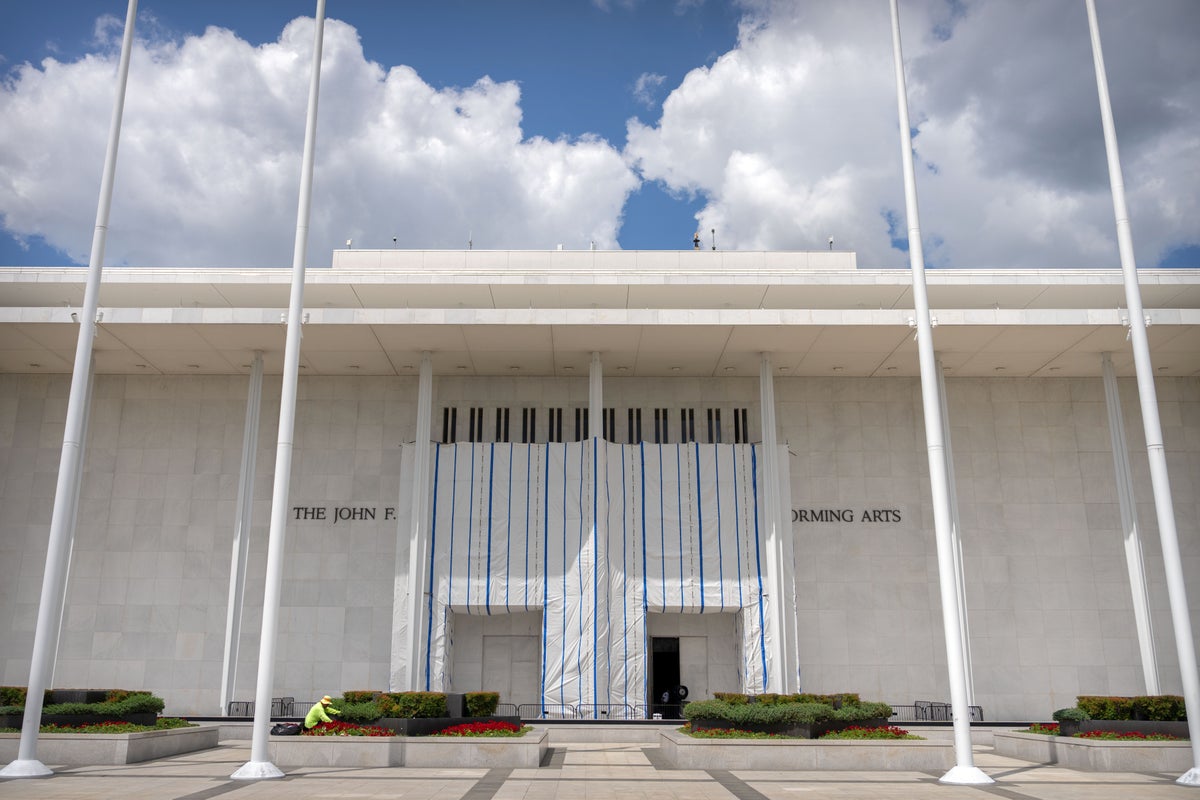
Listen closely to the quiet corridors of the capital. Beneath the polished marble floors of the John F. Kennedy Center for the Performing Arts, beneath the velvet-draped boxes where ambassadors nod politely to swelling string sections, a legal clock is ticking. The hands move toward a specific date. September eighth.
It is easy to view this through the dry lens of a docket sheet. Lawyers in charcoal suits file motions. Judges adjust their reading glasses. Briefs are exchanged like cold iron across a desk. But strip away the legalese, and you find a much older human impulse: the desperate, unyielding urge to anchor one’s legacy to physical geography.
Imagine walking past the Potomac as dusk settles over Washington. The river is dark, heavy, indifferent to the political tempests raging a mile away. Inside the center, ushers tear tickets. Patrons adjust their coats. They have come for jazz, for ballet, for the shared illusion of beauty that transcends the daily fracture of the news cycle. Yet, for months, an invisible anchor weighed heavily on the institution’s identity. Whose house is this? Is it a monument to a fallen president of memory, or a canvas for whoever holds the temporary levers of executive gravity?
When the legal machinery ground into gear over the sudden alteration of the building's exterior signage, the stakes felt abstract to outsiders. They were not abstract to the people who walk those halls every morning.
Consider a box office manager who has spent thirty years selling tickets to school groups and world-class orchestras. To that manager, the building is not a political football. It is a living, breathing acoustic organism. Every time the marquee changes, or the threat of a change hovers in the administrative air, the phone rings. Donors call with trembling voices. Patrons cancel subscriptions or double down with defiant checks. The name on the stone isn't just letters; it's a lightning rod for the entire country's unresolved anxieties about history, ownership, and respect.
The Kennedy Center recently told a federal court that it will not rush to restore Donald Trump's name to the building before September 8. Why that date? Because the wheels of justice, however slow they might crawl, demand a rhythm. A schedule has been set. Briefs must be written. Arguments must be heard. The institution has elected to stand its ground in the courtroom rather than scramble to alter its facade in the dead of night.
There is profound wisdom in that pause.
We live in an era that demands instantaneous remediation. Click a button, change a profile picture, rewrite a bio, flip a sign. Speed is treated as a virtue, even when it leads straight off a cliff. But monumental architecture resists speed. It was built to outlast administrations, crises, and temporary indignations. When the Kennedy Center chose to wait for the judicial process rather than react to the immediate political weather, it chose patience over panic.
To understand why this matters, you have to look at how we treat our shared spaces. Public art and cultural centers are the mirrors we hold up to our better and worse angels. When a name goes up or comes down, it signals to every citizen who walks through the front doors whether they belong in the story being told inside.
The legal battle itself is a fascinating collision of federal oversight, board governance, and the sweeping ambition of executive actions. Can a name be slapped onto a congressionally chartered cultural monument on a whim? Can it be stripped away just as fast? The courts will ultimately decide the statutory boundaries. They will parse statutes passed decades ago, written by lawmakers who could never have foreseen the specific brand of digital-age polarization we inhabit today.
Yet, while the lawyers argue jurisdiction and administrative procedure, the rest of us are left to ponder a deeper question. What do we actually want our monuments to signify?
If a building is named for a slain leader who championed the arts as a vital expression of freedom, then every note played within its walls carries the weight of that ideal. When that identity becomes contested terrain, the music doesn't stop, but it changes key. It becomes melancholy. It forces the audience to listen not just to the cellos and the horns, but to the rustle of programs, the murmur of doubt, the hum of an uneasy nation trying to figure out who it is becoming.
September 8 will arrive without theatrical fanfare. There will be no marching bands or dramatic unvelings on the steps overlooking the river. There will only be a hearing, a judge’s steady gaze, and another layer of legal paper added to the pile.
Until then, the stone remains what it was before the storm. Unmarked by the transient titles of today, waiting for the law to speak. The ushers will keep tearing tickets. The music will keep playing. And the river will keep flowing past the windows, indifferent to our frantic attempts to write our names upon the world, reminding us that the only things that truly endure are the ways we treat one another in the dark.