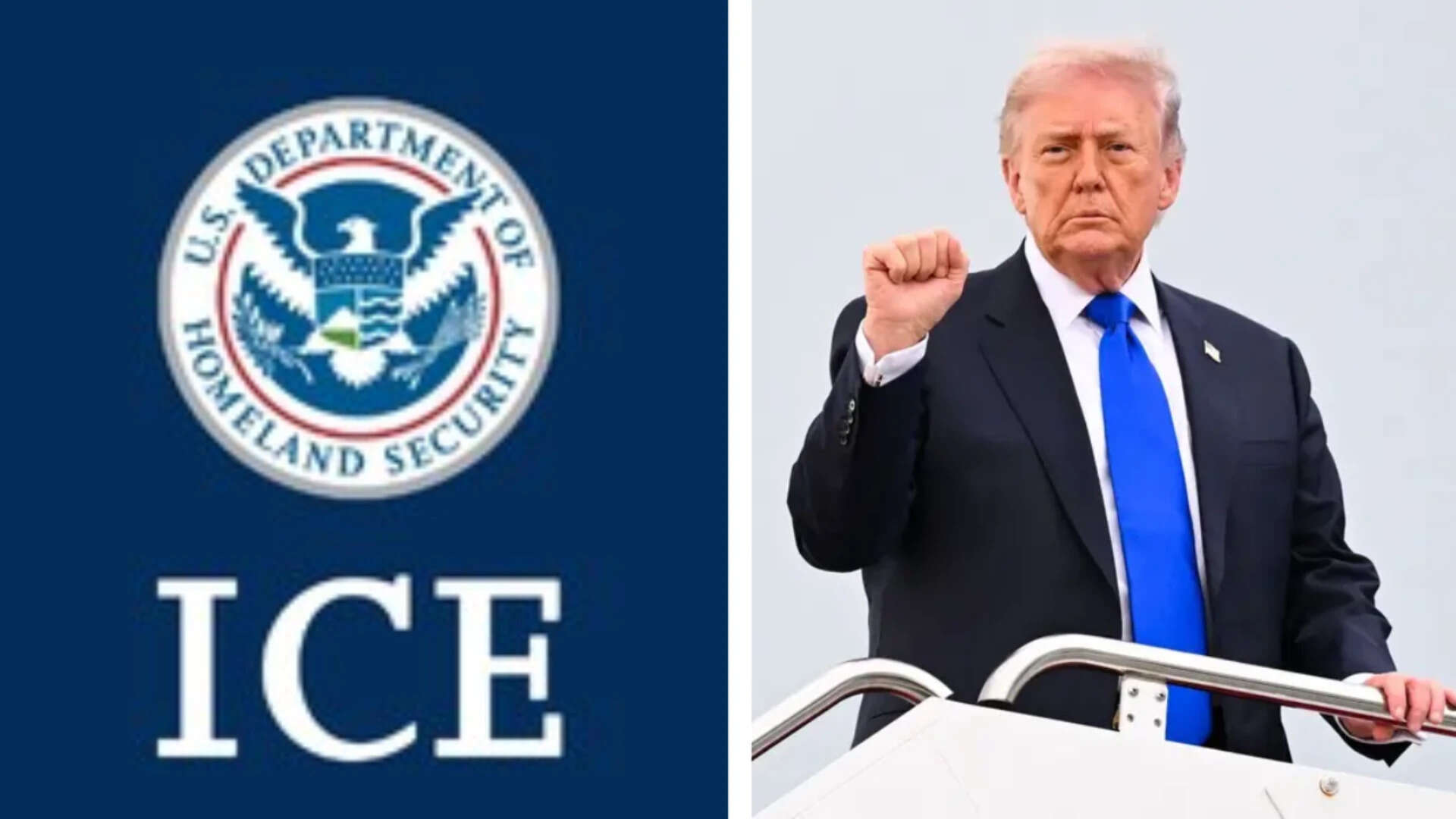
The black windbreaker is iconic. It is thick, stiff, and bears three letters in high-contrast yellow or white: ICE. Across the United States, those three letters have become more than an acronym for Immigration and Customs Enforcement. They are a psychological weight. For some, they represent the thin line of a functioning nation. For others, they are the harbinger of a knock at 4:00 a.m., the sound of a zipper on a tactical bag, and the permanent splintering of a family tree.
Words are heavy. They carry gravity. Donald Trump, a man who built an empire on the golden-lettered branding of skyscrapers, understands this better than most. He recently proposed a rebranding of the agency, suggesting it be renamed "NICE."
It sounds like a punchline. It feels like a linguistic sleight of hand. But beneath the surface of this proposed shift from ICE to the National Immigration and Customs Enforcement lies a deeper story about how we use language to sanitize, or perhaps weaponize, the reality of state power.
The Weight of a Moniker
To understand why a name change matters, you have to look at the people living in the shadow of the current one. Imagine a woman named Elena. This is a hypothetical scenario, but it is one played out in thousands of apartment complexes from Queens to El Paso. Elena has lived in the country for twelve years. She pays her taxes with an ITIN. She watches the local news with a knot in her stomach.
When Elena sees a white van with those three letters, her heart rate spikes. The acronym "ICE" evokes something cold. It is clinical. It suggests a freezing of movement, a hardening of the heart. It is a brand that has become synonymous with "the deportation machine."
Trump’s pivot to "NICE" is a masterclass in psychological marketing. By adding the word "National" to the front, the acronym transforms from a chilling noun into a pleasant adjective. It is an attempt to soften the edges of an agency that has faced years of blistering public relations battles. It is the political equivalent of a corporation changing its name after an oil spill.
The Mechanics of the Makeover
The logic is simple. If you change the name, you change the conversation.
The current identity of the agency is rooted in the post-9/11 era, born from the Department of Homeland Security's creation in 2003. It was designed to be tough. It was meant to sound like a shield. But decades of viral videos showing tearful goodbyes and workplace raids have tarnished the chrome.
By pushing for "NICE," the administration isn't just looking for a new letterhead. They are looking for a reset button. Consider the optics of a headline that reads: "NICE agents detained forty people today." The cognitive dissonance is staggering. The word itself acts as a buffer, a linguistic shock absorber that makes the harsh realities of enforcement feel, if only slightly, more palatable to the casual observer.
But the stakes aren't found in the headlines. They are found in the budget.
Rebranding a federal agency is a monumental task. It isn't just about changing a website header. We are talking about thousands of uniforms. Thousands of car decals. Badges. Signage on detention centers. Business cards. Legal documents. The cost of "being nice" would likely run into the millions of dollars. For a taxpayer, this raises a question of utility: Is the goal to improve the efficiency of the border, or is it to improve the "vibes" of the enforcers?
The Power of the Adjective
Language governs our empathy. When we use cold, mechanical terms, we find it easier to distance ourselves from the human consequences of policy. When we use soft, inviting terms, we can accidentally mask the gravity of what is actually happening.
Think about the difference between a "detention center" and a "shelter." Think about the difference between an "alien" and a "neighbor."
The "NICE" proposal is an admission that the current brand is "mean." It acknowledges that the public perception of immigration enforcement has reached a point of friction that is no longer sustainable for the political goals of the administration. They want the power of the enforcement without the PR nightmare of the "ICE" brand.
But a name is a thin coat of paint.
If Elena sits in her kitchen and hears a knock, it doesn't matter if the man on the other side of the wood is wearing a jacket that says "ICE" or "NICE." The boots are the same. The handcuffs are the same. The legal statutes being invoked remain identical. The human element of the story—the fear, the displacement, the legal labyrinth—does not change because a marketing team found a way to make the acronym more melodic.
The Invisible Stakes of Rebranding
The real danger in this kind of linguistic maneuvering is the erosion of clarity.
We live in an era where truth is often treated as a secondary concern to narrative. If we begin to rename our most controversial institutions with pleasant-sounding euphemisms, we lose the ability to speak honestly about what they do. We move into a world of "polite" enforcement and "friendly" surveillance.
The agency’s work is, by its very nature, a conflict of interests. It is the state's sovereignty versus the individual's desire for a better life. That is a heavy, somber, and often tragic intersection. To call it "NICE" feels like a betrayal of the gravity of the work itself. It insults the people being deported, and in a way, it insults the officers who believe they are doing a difficult, necessary job. They aren't there to be "nice." They are there to enforce the law.
There is a certain honesty in a cold name. "ICE" doesn't pretend to be your friend. It is a tool. It is a function of government.
By trying to wrap the iron fist in a velvet glove of branding, we risk falling into a collective amnesia. We risk forgetting that behind every acronym, there is a person like Elena, and behind every badge, there is a person tasked with making a choice that will echo through a family's history for generations.
The gold letters on the tall buildings are for selling luxury. But the letters on a government windbreaker are for representing the law. When those two worlds collide—the world of branding and the world of policing—the truth is usually the first thing to be edited out.
The wind blows through the canyons of the city, and the jackets remain the same for now. The letters are bold. They are clear. They tell you exactly who is standing at the door. Perhaps that clarity is the only "nice" thing we have left in a world where words are increasingly used to hide what we are doing to one another.
A name change might update the wardrobe, but it will never change the weight of the hand on the shoulder.