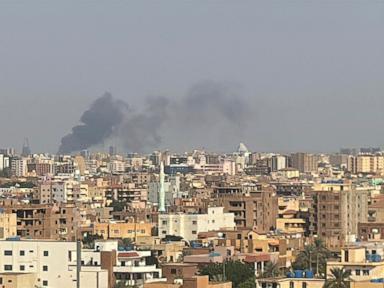
The mainstream media has found its latest geopolitical villain, and the narrative is as predictable as it is lazy. Reports are circulating that the United Arab Emirates is covertly training Colombian mercenaries to fight in Sudan’s brutal civil war. The commentators are aghast. The human rights industry is churning out press releases. The collective consensus has landed on a comfortable conclusion: Gulf wealth is buying South American muscle to fuel an African fire.
It is a neat, cinematic story. It is also completely wrong.
The outrage machine fundamentally misunderstands the mechanics of modern private military companies (PMCs). They are looking at a highly commercialized, legally complex global labor market through the outdated lens of 1970s "Dogs of War" paperbacks. The idea that the UAE is assembling a rogue shadow army of Colombian cartel-fighters to deploy into the Sudanese desert misses the structural reality of how global security actually functions today.
Let us dismantle the lazy consensus and look at the cold mechanics of the global security trade.
The Colombian Soldier Export Economy
The shock value of the "Colombian mercenary in Africa" headline relies on the assumption that this is an anomalous, dark-ops conspiracy. Anyone who has spent time analyzing security procurement in the Middle East knows this is standard procurement.
Colombia has spent over half a century fighting a brutal counter-insurgency war against Marxist guerrillas, right-wing paramilitaries, and highly sophisticated drug cartels. The result? The Colombian military produces some of the most combat-hardened, elite light infantry units on the planet. They are experts in jungle warfare, urban counter-terrorism, and high-intensity asymmetric conflict.
They are also chronically underpaid.
A retired Colombian soldier or special forces operator faces bleak economic prospects at home. When a Gulf-based private security firm offers them five to ten times their domestic salary to perform static security, asset protection, or defensive operations abroad, it is not a shadowy conspiracy. It is a rational labor migration.
I have watched defense contractors navigate these talent pipelines for two decades. The influx of South American personnel into the Gulf security apparatus is not a recent escalation for the Sudan conflict. It dates back to the early 2010s, when contractors like Erik Prince utilized Colombian personnel for infrastructure defense networks within the UAE. To frame the presence of these contractors as a sudden, bespoke deployment engineered specifically for the Sudanese battle space is historically illiterate.
The Real Logistics of the Sudan Conflict
The narrative claims these Colombian units are being groomed as frontline shock troops to turn the tide for the Rapid Support Forces (RSF) against the Sudanese Armed Forces (SAF). This ignores the tactical reality on the ground in Khartoum and Darfur.
Sudan's war is an chaotic, high-casualty attritional meatgrinder defined by heavy artillery duels, shifting tribal allegiances, and massive drone deployments. It is a conflict of brutal logistics, not specialized tactical maneuvers.
- The Language Barrier: Elite Colombian contractors speak Spanish. The RSF and SAF speak Arabic. In high-intensity urban combat, communication is the difference between survival and a friendly-fire disaster. The idea of embedding Spanish-speaking tactical units into loose coalitions of Sudanese militia groups is a operational nightmare that no competent military planner would attempt.
- The Cost-Benefit Failure: Deploying highly paid international contractors as frontline infantry in a low-margin war of attrition makes zero financial sense. Western analysts love to paint Gulf states as reckless spenders, but their security apparatus operates on strict return-on-investment metrics. You do not buy a million-dollar tool to use it as an anvil.
- The Real UAE Strategy: The UAE’s leverage in regional conflicts has never been about providing boots on the ground. Their power lies in logistics, financial networks, intelligence sharing, and drone technology. If a Gulf state wants to influence the outcome in Sudan, they do it via cargo planes landing in neighboring Chad, supplying fuel, cash, and unmanned aerial vehicles to local actors who already know the terrain and speak the language.
The Hypocrisy of the Western Lens
The Western press covers the privatization of security in the Global South with a distinct colonial paternalism. When a Virginia-based contractor deploys retired US Navy SEALs or British SAS operators to a mining site in Africa or a logistics hub in the Middle East, it is framed as "risk management" or "corporate asset protection." When a Gulf nation utilizes Colombian contractors for similar security architectures, the media decries the use of "foreign mercenaries."
The term "mercenary" itself is deployed selectively to score geopolitical points. Under international law, specifically Article 47 of Protocol I to the Geneva Conventions, the definition of a mercenary is incredibly narrow. A contractor providing training, logistics, or static security within a sovereign state’s borders rarely meets the legal criteria of a mercenary.
The global defense apparatus has evolved. The line between a legitimate private security contractor and a mercenary has been deliberately blurred by commentators who prefer moral outrage to legal accuracy. The United States pioneered the total privatization of military logistics and security during the Iraq and Afghanistan campaigns. DynCorp, KBR, and Blackwater rewrote the playbook. The rest of the world simply learned the lesson.
The Downside of the Contract Reality
To be clear, the commercialization of force is not a victimless corporate evolution. There are severe systemic risks, but they are not the ones dominating the headlines.
The true danger of the PMC model is the complete erosion of accountability. When national armies commit abuses, there is a framework—however flawed—for state responsibility and military justice. When multinational contractors operate through a web of shell companies, offshore bank accounts, and shifting jurisdictions, tracking violations becomes nearly impossible.
If a Colombian contractor operating under a UAE-funded security umbrella violates international humanitarian law in a conflict zone, who holds the gavel? The home country (Colombia) lacks jurisdiction. The hiring country (the UAE) has plausible deniability through corporate layers. The host country (Sudan) is a failing state with a collapsed judicial system.
That accountability vacuum is the real story. But investigating international corporate law and jurisdictional loopholes does not generate the same clicks as a sensationalist headline about South American commandos fighting in Africa.
Dismantling the Premise
The public asks the wrong questions because the media feeds them the wrong premises.
People ask: How can we stop foreign mercenaries from entering Sudan?
The brutal, honest answer is that you cannot, because you are trying to stop a global labor market with a local border control mindset. Sudan is not suffering because of a few hundred Latin American contractors. Sudan is tearing itself apart because of deep-seated structural rot, weapon proliferation from multiple global powers, and a total collapse of domestic political legitimacy.
Stop looking for the cinematic villain. Stop assuming every conflict can be explained by a simplistic narrative of wealthy puppet masters and foreign guns for hire. The reality of modern warfare is fragmented, corporate, and decentralized. The UAE, Colombia, and Sudan are nodes in a hyper-capitalist security network that operates completely independent of Western moral disapproval.
The market for force exists because there is a demand for it. Until the structural incentives change, the global pipeline of combat-trained labor will continue to flow wherever the capital dictates. No amount of selective media outrage will change the ledger.