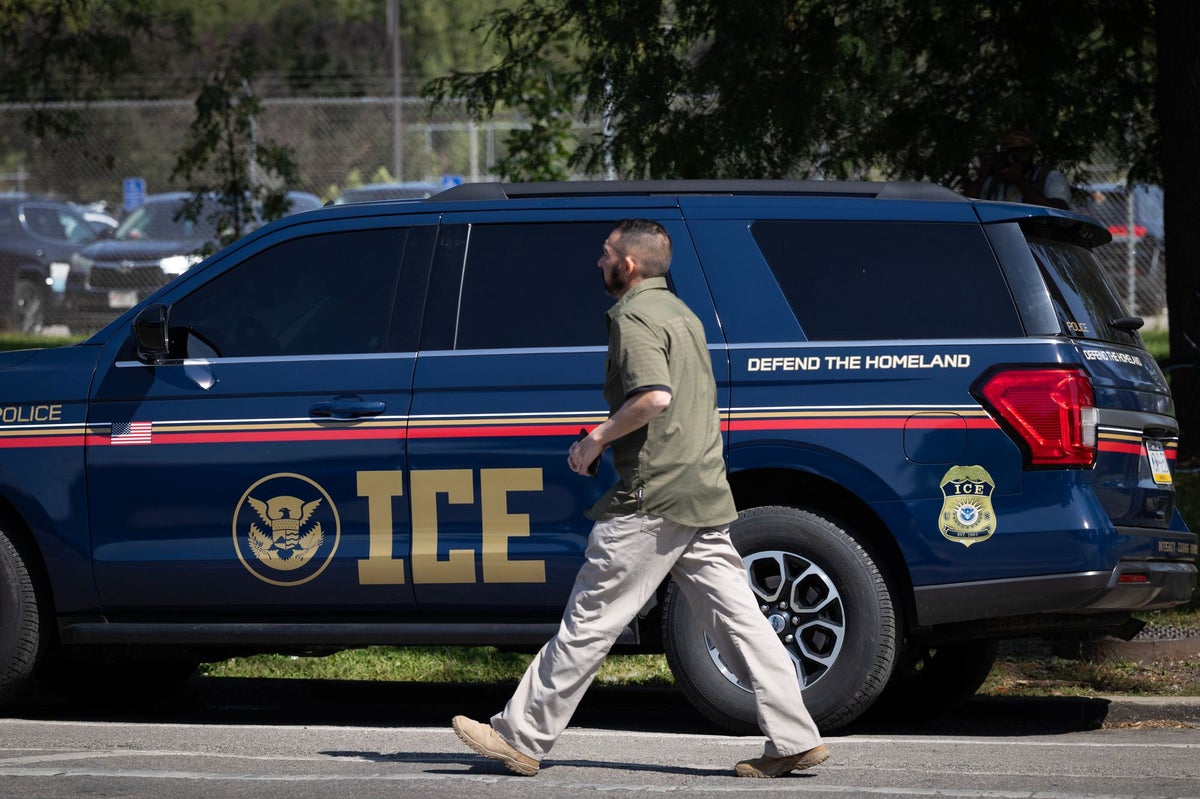
The media is currently obsessing over the Department of Homeland Security reversing course on its short-lived era of wrapping Immigration and Customs Enforcement vehicles in high-visibility graphics. The mainstream narrative is neat, tidy, and completely wrong. Pundits are praising the return to "covert operations" as a victory for tactical efficiency and common sense.
They are missing the entire point.
Ditching shiny wraps to return to traditional unmarked white and gray Ford Explorers isn’t a tactical masterstroke. It is a multi-million-dollar placebo. It is bureaucratic nostalgia masking a fundamental misunderstanding of modern surveillance, public psychology, and operational security.
The debate shouldn't be about whether a government SUV is painted matte gray or wrapped in reflective vinyl. The true crisis is that the concept of an "unmarked law enforcement vehicle" is an obsolete relic of the 1990s.
The Illusion of the Invisible SUV
Let’s dismantle the lazy consensus that taking decals off a fleet makes it invisible.
Every seasoned field operator knows the truth. An unmarked law enforcement vehicle is the most visible car on the road. You can strip the agency name off the door, but you cannot hide the heavy-duty steel wheels. You cannot hide the array of antennas poking out of the roof like a mechanical hedgehog. You cannot hide the distinct, blocky silhouette of a fleet-spec utility vehicle idling at a curb with blacked-out windows and a visible push-bar on the grill.
Assuming that removing a wrap suddenly allows a vehicle to blend into a neighborhood is a dangerous fantasy. It assumes the public is blind.
Worse, it assumes the criminal element isn’t actively looking for them. Organized networks don't look for the words "ICE" or "Police" printed on a quarter panel. They look for the exact make, model, stance, and behavior of a government asset. In the age of localized social media groups, crowdsourced traffic apps, and mesh-networked dashboard cameras, a fleet vehicle is burned the moment it leaves the motor pool.
Changing the color of the wrapper doesn't change the shape of the candy.
The True Cost of Tactical Indecision
Look at the financial reality of these administrative pivots.
When leadership demands a fleet-wide rebranding, millions of dollars of taxpayer money dissolve into thin air. First, millions are spent contracting vendors to design, print, and install high-visibility wraps across thousands of vehicles under the guise of "community presence" and "transparency." Then, a new administration takes the wheel, shifts the political compass, and spends millions more to peel those same wraps off, patch the paint, and restore the vehicles to a "covert" state.
Imagine a private logistics firm operating this way. If FedEx decided to paint its trucks bright green for two years, then spent millions to scrape it off because they realized white vans are less conspicuous, shareholders would revolt. The leadership would be fired before the paint dried.
In government procurement, this is just called Tuesday.
This flip-flopping exposes a deeper flaw: a total lack of long-term strategic vision. Fleet management should be dictated by lifecycle metrics, asset depreciation, and actual field utility—not by political optics or aesthetic trends disguised as tactical doctrine.
The Psychology of Presence vs. Stealth
The argument for returning to covert operations ignores a basic principle of behavioral science: the deterrent effect of visible authority.
When a law enforcement agency operates entirely in the shadows, it surrenders its greatest passive tool: deterrence. A highly visible, clearly marked asset alters behavior instantly. It signals a hard boundary. Removing that visibility doesn’t stop the activity; it merely shifts it, while simultaneously alienating the law-abiding community members who feel abandoned when the visible presence of security vanishes.
Conversely, the "unmarked" approach creates a toxic environment of paranoia. When citizens cannot tell the difference between a legitimate federal asset and a predator driving an old interceptor bought at a state auction, trust erodes completely.
If an agency wants to be covert, they should actually be covert. Buy a dented 2012 Toyota Prius. Buy a faded contractor van with a fake plumbing logo on the side. Driving a brand-new, unblemished, dark gray Chevrolet Tahoe with tinted windows and spotlight mounts on the A-pillars isn't undercover work. It’s just cosplaying as a spy while holding a giant neon sign.
The Technical Reality Check
Let’s look at the actual mechanics of modern counter-surveillance.
| Feature | The "Covert" Illusion | The Reality |
|---|---|---|
| Vehicle Identification | No door decals means anonymity. | Fleet silhouettes, heavy suspensions, and government plates are instantly recognizable. |
| Digital Footprint | Plain paint hides the asset from view. | Automated License Plate Readers (ALPRs) and mobile apps track the vehicle regardless of color. |
| Cost Efficiency | Scraping wraps is a simple asset adjustment. | Hundreds of labor hours and paint degradation destroy residual fleet value. |
The digital landscape has completely rewritten the rules of engagement. Even if a vehicle manages to deceive the human eye, it cannot deceive the automated systems that saturate modern urban environments. Private networks of ALPRs log every vehicle passing through major intersections. If a generic white Explorer consistently hits the same high-interest locations at the same hours, algorithmic tracking flags it long before a human operator notices.
Stripping vinyl wraps off a car to achieve operational security in 2026 is like trying to hide from a thermal imaging drone by putting on a camouflage t-shirt. It is an analog solution to a digital problem.
Stop Wrapping, Start Innovating
If an agency truly wants to optimize its mobile assets, it needs to stop treating vehicles like moving billboards or cinematic props.
The strategy should be binary.
First, maintain a dedicated, unmistakably marked fleet for standard operations where visibility, deterrence, and clear authority are paramount. This eliminates the ambiguity that leads to community friction and operational mishaps.
Second, for actual covert operations, abandon the traditional fleet procurement model entirely. Use short-term leases of civilian-spec vehicles that change every few months. Vary the makes, models, colors, and conditions. Mix in standard sedans, worn-out delivery trucks, and crossovers that match the exact socioeconomic fabric of the target area.
Anything in between—like an unmarked, late-model American SUV with black rims—is a useless compromise that satisfies nobody. It fails as a deterrent because it’s trying to hide, and it fails as a covert asset because everyone knows exactly what it is.
The retreat from the high-visibility experiment isn't a return to tactical excellence. It is an admission that the bureaucracy would rather spend millions chasing a nostalgic illusion of stealth than build a fleet strategy capable of surviving in the modern world.
Stop hiding the cars. Change the strategy.