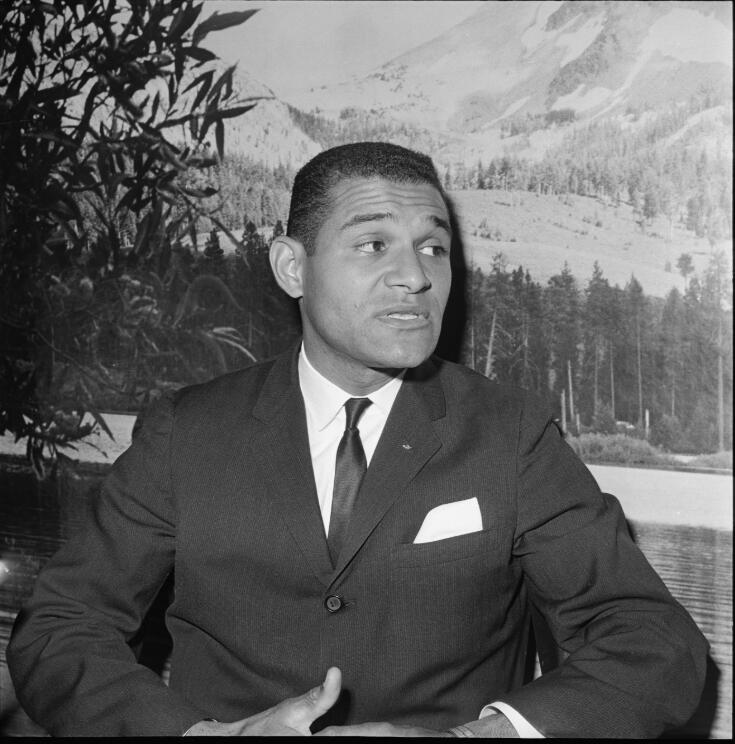
Obituaries are a lazy medium. When a figure like Billy G. Mills passes away, the institutional press defaults to a predictable script. They count the firsts. They celebrate the breakthroughs. They paint a picture of a trailblazer who cracked open the system so progress could flow naturally.
It is a comforting narrative. It is also entirely wrong. You might also find this related coverage useful: The Sea of Echoes and the New Metal of the Indo Pacific.
To look at Billy G. Mills—one of the first three Black councilmembers elected to the Los Angeles City Council in 1963—and simply label him a "pioneer" is to completely misunderstand the brutal mechanics of mid-century urban politics. It reduces a calculating, pragmatic political operator to a cardboard cutout of representation.
The mainstream retrospective views 1963 as a triumphant turning point. In reality, it was a masterclass in institutional containment. As reported in latest articles by The New York Times, the effects are widespread.
The Co-optation of the Firsts
The standard historical account treats the 1963 election of Billy Mills, Tom Bradley, and Gilbert Lindsay as a sudden awakening of Los Angeles democracy. For decades, the 8th, 9th, and 10th districts had been gerrymandered or controlled by entrenched white incumbents who ignored the massive demographic shifts in South Los Angeles. When the breakthrough happened, it was framed as a victory for civil rights.
But look at the mechanics of power.
Mills did not break the machine. The machine accommodated him because it had no other choice, and then it immediately set about neutralizing his leverage.
When Mills took his seat in the 8th District, he entered an institution designed by its very charter to diffuse power. The L.A. City Council was a collection of fiefdoms. To get anything done, a freshman councilman had to play the game of logrolling—trading votes with segregationist or deeply conservative colleagues on city-wide infrastructure just to get a single park or street repair approved in their own district.
I have spent years analyzing municipal power structures and watching modern organizations make the exact same mistake. They mistake a seat at the table for a hand on the steering wheel. They celebrate a diverse appointment while the underlying budget allocations and structural vetoes remain completely unchanged.
Mills was brilliant, possessing a sharp legal mind from UCLA and USC Law. He understood this trap better than the activists who cheered his victory. He realized early on that inside the Council chambers, ideological purity was a quick path to irrelevance. So, he adapted. He became a pragmatist. And in doing so, he exposed the core limitation of electoral politics as a vehicle for radical social change.
The Illusion of Post-Watts Progress
The defining crisis of Mills’s early tenure was the 1965 Watts Rebellion. The conventional narrative suggests that having Black representation on the council provided a crucial bridge during and after the uprising.
That is revisionist history. The presence of Mills, Bradley, and Lindsay did not stop the explosion, nor did it fundamentally alter the city's response to it.
Consider the relationship between the City Council and the Los Angeles Police Department under Chief William H. Parker. The city charter insulated the police chief from direct political control. Mills could give impassioned speeches, he could demand accountability, but the structural power lay with the Police Commission and a deeply entrenched civil service system.
People frequently ask: "Why didn't the early Black political class dismantle LAPD's aggressive tactics?"
The answer is brutally simple: they lacked the structural mechanisms to do so. The media framing of Mills as a powerful civic leader collapses when confronted with the reality of the 1925 L.A. City Charter, which deliberately weakened the mayor and council to prevent the rise of a New York-style political machine. The irony is that this "anti-corruption" design functioned perfectly to prevent minority politicians from exercising real executive authority when they finally won elections.
Mills did not reform the LAPD. He could not. Instead, his role during the crisis was largely performative containment—trying to pacify a community that was systematically denied economic investment, while simultaneously negotiating with a white power structure that viewed any concession as weakness.
The Judicial Escape Trap
If Mills’s legislative career was an unalloyed triumph of Black political power, his exit makes absolutely no sense.
In 1974, at the height of his political influence, Mills walked away from the City Council. He accepted an appointment from Governor Ronald Reagan to the Los Angeles County Superior Court.
Think about that choice. He left the legislative body of the second-largest city in America to become one judge among hundreds in a sprawling county court system.
The romantic historical view frames this as another barrier broken—the transition of a legal mind to the bench where he could administer blind justice. That is a naive misreading of the situation.
Mills left because he hit the ceiling of what the L.A. City Council could provide. He saw his colleague Tom Bradley ascend to the mayoralty in 1973, effectively locking up the top political spot in the city for the foreseeable future. Mills looked at the endless, grinding warfare of the council, the structural inability to enact sweeping systemic change, and the constant vulnerability to shifting district lines, and he chose the permanence and safety of the judiciary.
It was an act of political realism. He recognized that an individual actor within a hostile legislative framework faces diminishing returns. On the bench, he had total sovereignty over his courtroom. He traded the illusion of collective power for the reality of individual authority.
Stop Demanding Pioneers, Demand Infrastructure
The obsession with celebrating "firsts" like Billy Mills is actually a disservice to their legacy. It creates a false sense of security. It suggests that the primary hurdle to equity is merely representation, and once a group achieves a demographic milestone on a committee or a council, the work is done.
This approach fails every single time.
If you want to understand the real lesson of Billy Mills's career, look at what he did after he got elected, and look at how little the material conditions of South L.A. changed despite his presence. This is not a failure of his character; it is a failure of the strategy that placed all its bets on a few charismatic individuals.
True power does not come from winning a seat in a broken system. It comes from building independent economic and organizational infrastructure outside of it that forces the system to respond. Mills knew this. He operated within the limits of his era, slicing off whatever concessions he could secure for his constituents through sheer legislative competence and backroom maneuvering.
We need to stop writing hagiographies that sanitize the brutal, compromising reality of mid-century politics. Billy G. Mills was not a saintly pioneer marching effortlessly into history. He was a cold-eyed realist trapped in a political structure designed to limit his impact, who chose to exit the arena when the cost of accommodation outweighed the value of the returns.
Treating him as anything less diminishes the actual battle he fought.