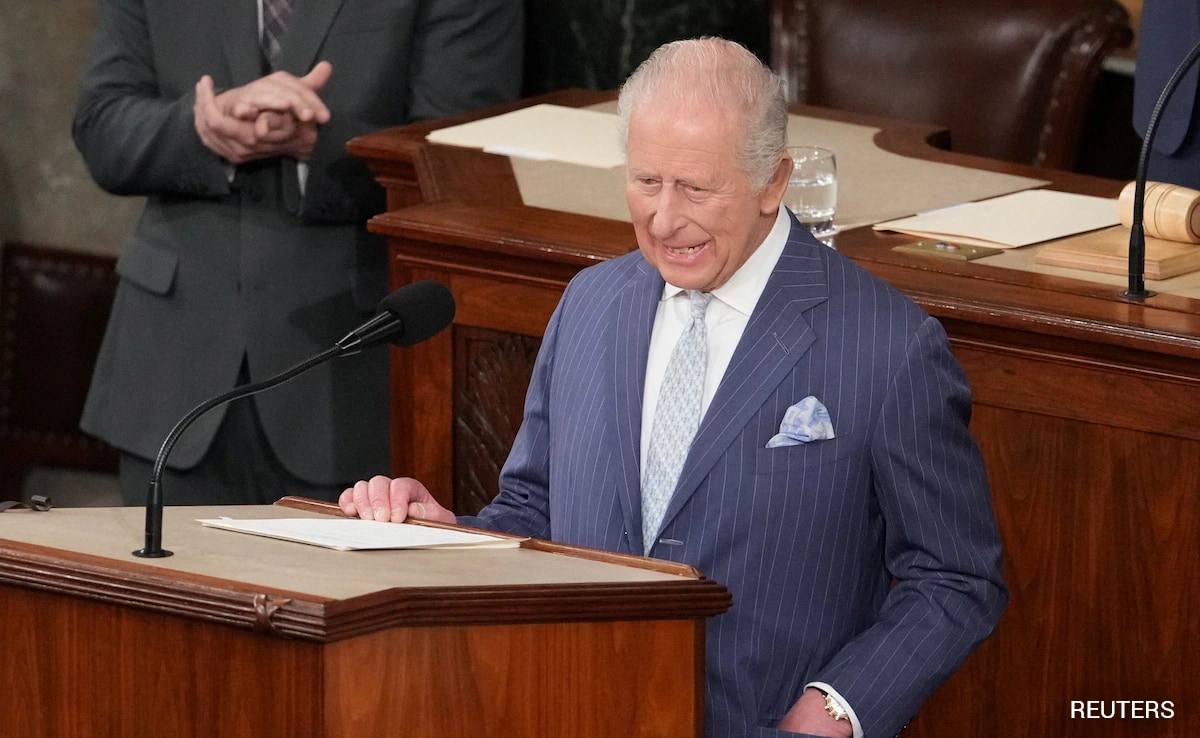
The press corps spent the morning swooning over King Charles III's address to the US Congress, dusting off the usual adjectives: "statesmanlike," "principled," and "unifying." They missed the point entirely. By framing the King’s condemnation of political violence as a moment of profound moral clarity, the media ignored the reality that an unelected monarch lecturing a democratic republic on the sanctity of its institutions is a recipe for long-term resentment, not resolution.
The consensus view suggests that a neutral third party—especially one with a crown—can act as a cooling agent for American hyper-polarization. This is a fairy tale.
The Sovereign’s Paradox
Political violence isn't a glitch in the American system; it’s a symptom of a deep-seated crisis of legitimacy. When King Charles stands before a divided Congress to denounce "extremism," he isn't offering a solution. He is inadvertently highlighting the very elitism that fuels populist rage.
I’ve spent years analyzing international diplomacy, and the pattern is always the same. When a foreign dignitary, particularly one representing the old-world order, attempts to "correct" the behavior of a domestic electorate, it triggers a defensive immune response. For the faction already skeptical of "globalist" influence, the King’s speech didn't feel like a hand extended in friendship. It felt like a finger wagged from a high horse.
Stop Asking if the King is Right
The question shouldn't be whether political violence is bad. Of course it is. That’s a low-bar observation that requires zero courage to state. The real question is why we believe a British monarch has the social capital to influence American legislative culture in 2026.
People also ask: "Can the British Monarchy help stabilize US-UK relations?"
The answer is a brutal no. In fact, using the monarchy as a moral arbiter complicates relations. It forces American politicians to choose between appearing subservient to a foreign crown or snubbing a vital ally. By weighing in on domestic American strife, Charles didn't bridge the gap—he walked right into the middle of a minefield.
The Failure of Platitude Diplomacy
Traditional media focuses on the rhetoric of the speech. They talk about the "gravity of his tone" and the "historical weight of the occasion." This is fluff.
If you want to understand the mechanics of power, look at the incentives. The King’s speech was designed for two audiences: the UK government, which needs to maintain the "Special Relationship" for post-Brexit trade, and the American centrist establishment, which loves the aesthetics of tradition.
Neither of these groups is actually involved in the radicalization currently tearing at the edges of the US political map.
The "lazy consensus" dictates that we need "more voices like this." No, we don't. We need fewer symbolic gestures and more substantive policy. Condemning violence is the easiest thing a politician or a monarch can do. It costs nothing. It changes nothing. It’s the political equivalent of "thoughts and prayers" delivered in a Savile Row suit.
The Logic of the Fringe
Let’s run a thought experiment. Imagine a scenario where a high-ranking American official went to the House of Commons and delivered a blistering critique of the UK’s handling of Scottish independence or the Northern Ireland Protocol, citing "democratic integrity." The British press would be in an absolute frenzy over "Yankee overreach."
Yet, when the roles are reversed, we are told to find it charming.
This double standard matters because it feeds the narrative of the "forgotten" citizen. When the people at the top of the social hierarchy—the literal King and the Congressional elite—congratulate each other on their shared values, they further alienate the millions of people who feel those values have failed them.
The Data of Discontent
While the King spoke of "peaceful transition" and "democratic norms," the numbers tell a different story. Trust in institutions is at an all-time low. According to recent longitudinal studies on democratic health, the primary driver of political volatility isn't a lack of "moral speeches." It’s economic stagnation, the erosion of the middle class, and the perception of a rigged system.
A man who inherited a billion-dollar estate talking about the "will of the people" is an irony so thick it’s a wonder the Congressmen didn’t choke on it.
The Nuance of Interference
The competitor article claims this was a "necessary intervention." It wasn't. It was a distraction.
Real diplomacy happens in the quiet rooms of the State Department and the Foreign Office, dealing with intelligence sharing and nuclear non-proliferation. This speech was theater. And the problem with theater is that when the curtains close, the audience goes back to their real lives—which, in the case of the US electorate, are increasingly defined by tribalism and distrust.
If the goal was truly to reduce political violence, the King would have stayed home. His presence forced a domestic political event into an international spectacle, providing a fresh target for those who believe the American "establishment" is more interested in its standing with European royals than with its own constituents in the Rust Belt or the rural South.
The Hard Truth About Influence
We have to stop mistaking visibility for impact. Charles III is visible. His words were broadcast to millions. But his impact on the actual trajectory of American political violence is exactly zero.
The status quo loves these moments because they provide a veneer of stability. They make the elite feel like "the adults are in the room." But the room is on fire, and the "adults" are busy debating the proper way to hold a tea cup while the walls burn down.
If you are looking to a 77-year-old monarch to save a 250-year-old republic from itself, you aren't looking for a solution. You’re looking for a lullaby.
Stop celebrating the speech. Start questioning the motive behind the invitation. The King didn't come to Washington to save American democracy; he came to ensure the monarchy remains relevant in a world that is rapidly outgrowing the need for symbols that can’t vote, can’t legislate, and can’t relate.
The next time a foreign leader stands at that podium to tell you how to run your country, don't applaud. Ask yourself what they’re trying to sell you. In this case, it was a version of "stability" that only exists in the history books the King is so desperate to stay in.
Go back to work. The crown can't help you.