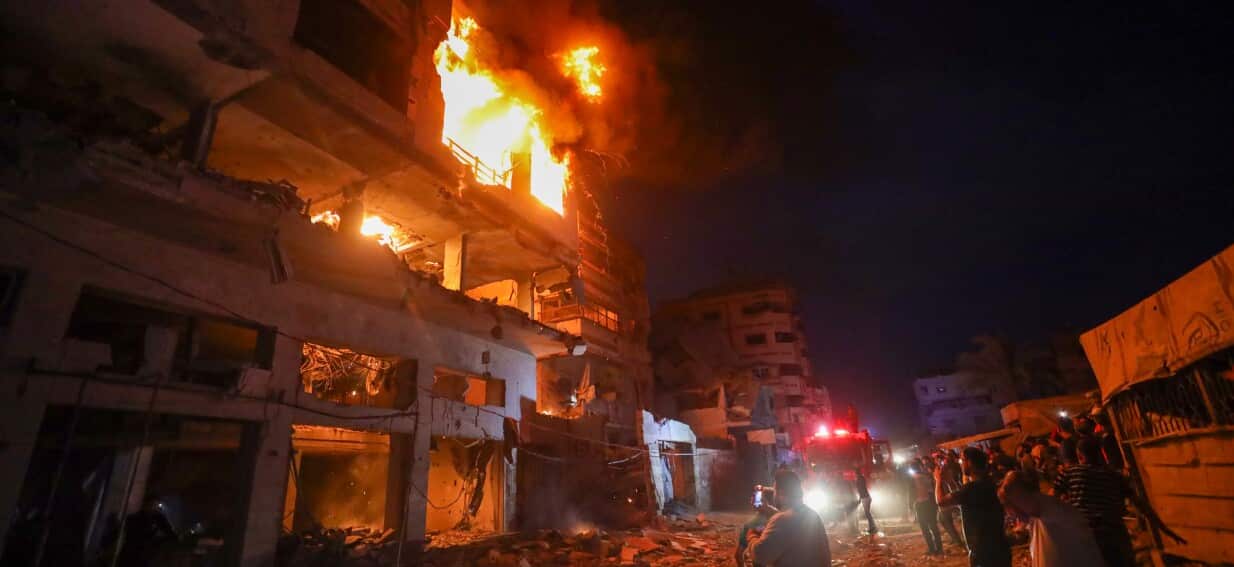
The loudspeakers of Gaza’s mosques are blaring a script the world has heard for decades. A high-ranking Hamas military commander is dead. The news rooms in Washington and Tel Aviv are already spinning this as a catastrophic, war-ending blow to the insurgency. They are telling you that the decapitation strategy works, that the snake has lost its head, and that the organization is on the brink of collapse.
They are wrong. They are misreading the entire architecture of modern asymmetric warfare.
Western intelligence agencies and mainstream media outlets remain obsessed with the Great Man theory of history, applying it blindly to decentralized militant networks. They treat complex, hydra-headed insurgencies like Fortune 500 corporations, assuming that if you remove the CEO, the stock price plunges and operations grind to a halt.
It is a comforting illusion. It is also a dangerous lie that guarantees perpetual conflict.
The reality of modern guerrilla warfare is that individual leaders are designed to be disposable. The death of a military chief is not an operational dead end; it is a bureaucratic transition.
The Decapitation Fallacy
For twenty years, security analysts have tracked the targeted killing of insurgent leaders. The data tells a story that politicians consistently ignore. When a state eliminates a militant mastermind, the underlying network rarely dissolves. Instead, it adapts, decentralizes, and frequently becomes more radical.
Look at the historical precedents. When Israel assassinated Hamas co-founder Ahmed Yassin in 2004, the conventional wisdom predicted the group's imminent decline. Instead, the organization formalized its political wing, consolidated its grip on Gaza, and built a more resilient, institutionalized command structure. When the US targeted Al-Qaeda leaders in Iraq, they didn't kill the movement; they cleared the way for the rise of ISIS, a far more brutal and efficient mutation.
Insurgencies do not operate on a top-down hierarchy. They function as open-source networks. The commander announced dead today had already spent months, if not years, codifying his tactics, delegating operational control to regional cells, and training his replacement. The operational blueprints are already distributed. The rockets are already cached. The tunnel networks do not cave in just because the man who ordered their digging is gone.
The Bureaucratization of Terror
To understand why this strike changes nothing, you have to look at how these organizations actually manage power. I have spent years analyzing the structural mechanics of non-state armed groups, and the amateur mistake outsiders always make is conflating a charismatic figurehead with the system itself.
Hamas long ago transitioned from a loose band of fighters into a deeply institutionalized bureaucracy. It possesses a Shura Council, regional commands, logistical pipelines, and a financial apparatus that spans multiple continents.
- Redundancy: Every major commander has at least two designated deputies who have operated alongside them for years.
- Decentralization: Local cell commanders possess autonomous authority to launch operations without direct orders from the top.
- Martyrdom Mechanics: The death of a leader is explicitly built into the group’s recruitment and ideological framework. It acts as a marketing feature, not a bug.
When a leader is killed, the organization does not enter a period of mourning and paralysis. It activates a pre-planned succession protocol. The new leader often steps into the role with something to prove, meaning the immediate aftermath of a high-profile assassination is usually marked by an escalation in violence, not a lull.
The Flawed Questions We Keep Asking
Go look at the standard news analysis right now. The questions driving the narrative are entirely wrong.
"Who will replace him?"
"How will this impact their operational capability next week?"
These questions assume the group relies on a singular genius. The correct question is: What happens to a highly radicalized, well-funded ecosystem when you remove a stabilizing, experienced commander and replace him with a younger, more aggressive deputy?
The premise that killing leaders wins asymmetric wars is fundamentally flawed. It satisfies the political need for a tangible victory—a clean headline, a trophy to show the public—but it does absolutely nothing to address the structural drivers of the conflict. It treats the symptom while the infection mutates.
The Cost of the Illusion
There is a dark irony to the celebration surrounding these strikes. By focusing entirely on tactical decapitation, state actors avoid the grueling, uncomfortable work of strategic disruption. It is easy to track a cell phone, launch a drone, and level a building. It is incredibly difficult to dismantle a clandestine financial network, counter an ideology, or offer a political alternative that erodes an insurgency's recruitment base.
The decapitation strategy is a security narcotic. It provides a temporary high of tactical success while masking the systemic failure of the broader strategy. Every time a mosque loudspeaker announces the death of a commander, the Western press corps treats it like a novel development that will reshape the region.
It won't. The replacement is already sitting in an underground bunker, signing the next set of operational orders, using the death of his predecessor as his primary recruitment tool. Stop measuring victory by the body count of commanders. The network is alive, the system is functioning, and the war is exactly where it was yesterday.