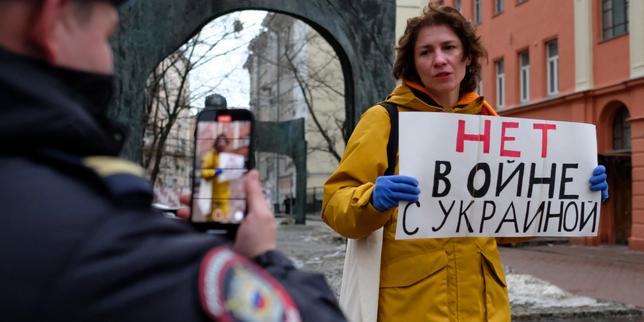
The Western media has a fetish for the tragic, isolated Russian hero. You have read the article a thousand times: a solitary soul in Moscow, looking over their shoulder, shivering in the cold, holding a blank piece of paper in Red Square before being dragged away by the FSB. It is a cinematic, deeply emotional narrative. It frames the struggle against Vladimir Putin as a romantic, doomed battle of individuals trying to survive under a monolith.
It is also complete nonsense.
This hyper-individualistic lens does not just misread Russian politics; it active misinforms anyone trying to understand how power and dissent actually function inside the country. Western analysts have spent over two decades waiting for a liberal, atomized revolution that will never happen, precisely because they misunderstand what resistance looks like when the stakes are life and death.
The lazy consensus insists that resistance is either a solo act of martyrdom or it does not exist at all. The reality is far more complex, transactional, and invisible to an outside observer.
The Flaw of the Solo Martyr
The Western obsession with the "lone dissident" stems from a fundamental misunderstanding of autocratic survival. In a highly securitized state, overt, individual defiance is not resistance. It is a logistical error.
When an individual stands alone in a public square with a sign, they are not sparking a movement; they are volunteering for a swift, predictable processing through the penal system. It feeds a specific Western appetite for David-and-Goliath narratives, but it achieves zero political leverage.
True resistance under sophisticated authoritarianism does not look like a protest. It looks like infrastructure.
[Overt Individual Protest] -> High Visibility -> Immediate Arrest -> Zero Systemic Friction
[Decentralized Networks] -> Zero Visibility -> Sustained Operations -> Constant Systemic Friction
I have spent years analyzing the mechanics of underground political movements, and the metrics are clear: systems change when networks form, not when individuals break. The focus on the isolated actor ignores the deep, quiet, collective infrastructure that actually keeps dissent alive.
We need to stop asking, "How does a lone person survive in Moscow?" The correct question is, "How do informal networks exploit the massive, corrupt blind spots of the Russian state apparatus?"
The Economy of the Undercurrent
The Russian state is not a seamless, omniscient machine. It is a bloated, bureaucratic leviathan held together by corruption, competing intelligence factions, and a massive shadow economy. The assumption that everyone who stays in Russia has either succumbed to apathy or is living in total isolation misses the entire parallel reality functioning right beneath the surface.
1. The Legal Defense Syndicates
Organizations like OVD-Info do not operate on vibes or lone-wolf courage. They run on sophisticated crowdsourcing, decentralized chat networks, and highly coordinated legal triage. When someone is detained, a network of decentralized actors activates to provide immediate legal representation, track the detainee through the system, and fund the subsequent fines. It is a highly organized, collective defense mechanism disguised as a series of isolated incidents.
2. The Digital Underground
While Western commentary laments the blocking of independent media and Western platforms, a massive portion of the population simply migrated. The use of Virtual Private Networks (VPNs) in Russia is not a niche hobby for tech-savvy elite; it is a mass consumer reality. Resistance here is not about printing samizdat in a dark basement. It is about maintaining mirror sites, setting up decentralized financial pipelines via cryptocurrency to bypass sanctions, and keeping information flowing through encrypted channels.
3. The Institutional Subversion
This is the part Western observers consistently miss because it requires looking past the official state rhetoric. Resistance often happens inside the institutions. It is the middle-manager who quietly delays a conscription notice. It is the tech specialist who intentionally leaves a loophole in a censorship algorithm. It is the regional bureaucrat who fudges economic data to protect local businesses from federal predation.
Imagine a scenario where a state security officer accepts a bribe to look the other way regarding an anti-war graffiti artist. To a Western purist, that is just corruption. In reality, that transaction is a friction point that slows down the totalitarian machine. Corruption is the acid eating away at the state’s ability to enforce absolute conformity.
Dismantling the Consensus
Let us address the standard questions that dominate the international conversation regarding domestic opposition to the Kremlin.
People Also Ask: Why don't Russians overthrow Putin if they oppose the war?
📖 Related: The Blue Wall at the Classroom Door
The premise of this question is deeply flawed. It assumes that mass mobilization is a simple matter of public willpower, completely ignoring the structural mechanics of modern dictatorship. The Russian state spends billions on internal security—the Rosgvardiya (National Guard) alone outnumbers the land forces of many European nations.
More importantly, the state does not need active, passionate support from 140 million people. It only needs managed apathy. By framing resistance as a binary choice—either you riot in the streets or you support the regime—Western commentators play directly into the Kremlin’s hands. The Kremlin wants you to believe that if you aren't protesting, you are compliant. The reality is a massive, gray zone of non-cooperation.
People Also Ask: Is there any real opposition left inside Russia after Navalny's death?
Yes, because opposition was never just one man. Alexey Navalny’s death was a profound tragedy, but the Western media’s reaction exposed its own analytical weakness: the belief that a political movement requires a singular, charismatic leader to exist.
When you kill the head of a centralized organization, you cripple it. But the current Russian opposition is not centralized. It cannot be, because a centralized target is too easy to destroy. The opposition today consists of horizontal, atomized cells that communicate via decentralized platforms. They do not have a press secretary. They do not have a headquarters. That makes them harder to profile for a Sunday magazine feature, but it also makes them significantly harder for the Center for Combating Extremism to completely eradicate.
The Danger of Romanticizing Isolation
There is a distinct downside to the contrarian reality I am laying out. The informal, decentralized nature of modern Russian dissent means it lacks the power to force a sudden, dramatic regime change. It is a strategy of attrition, not a blitzkrieg. It is messy, compromised by compromise, and completely lacks the moral purity that Western audiences demand from their heroes.
When you look at the actual data of political prosecutions inside Russia, you see a terrifying trend of escalating sentences for minor infractions. This has forced the true resistance to go completely dark. They are not looking for your applause on social media. They are trying to survive the next five years without going to a penal colony, while quietly maintaining the social ties that will be required to rebuild the country whenever the current system inevitably fractures under its own weight.
Stop looking for a Russian Velvet Revolution. Stop writing elegies for the lone hero standing against the state. The real story is not the person standing alone in Moscow. It is the invisible web of people making sure that person isn't actually alone when the cameras turn off.