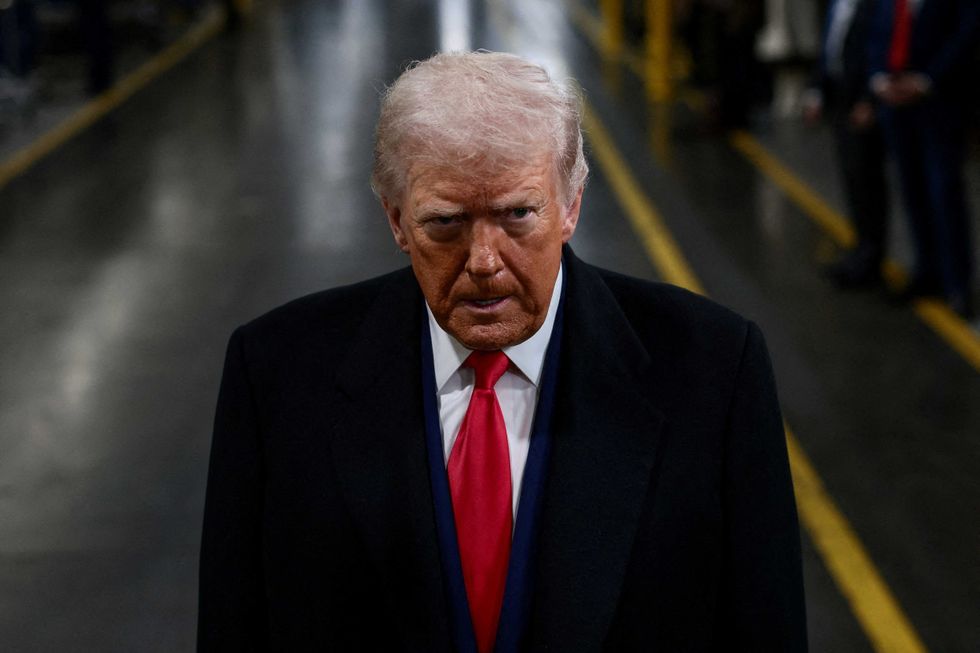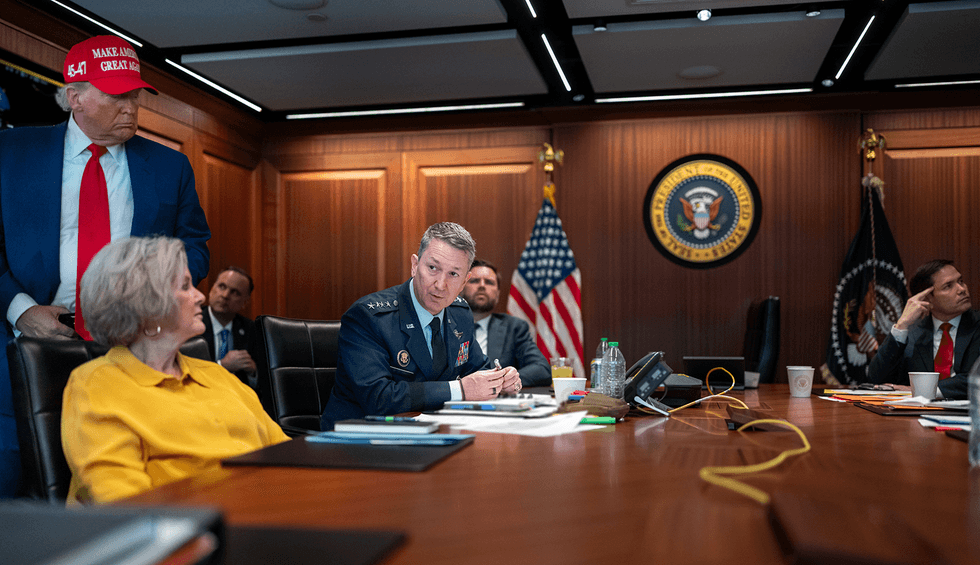
The "expert" class is at it again. This time, the narrative is that Donald Trump—and by extension, the entire hawkish wing of the U.S. foreign policy establishment—suffered a "significant misread" of Iran’s power. They point to the survival of the regime, its continued proxy influence, and its nuclear acceleration as evidence of a failed calculation.
They are wrong. But they aren't just wrong about the outcome; they are wrong about the variables. If you found value in this article, you should check out: this related article.
The lazy consensus suggests that because Iran didn't collapse under "Maximum Pressure," the strategy was a failure of intelligence. This assumes that the goal of geopolitical pressure is always a neat, binary outcome: total capitulation or total regime change. It ignores the cold, mathematical reality of attrition. In the world of high-stakes diplomacy and economic warfare, "misreading" power is often a euphemism for "refusing to accept that the other guy is willing to starve longer than you are willing to wait."
The Sovereignty Trap
We love to talk about Iran’s "power" as if it’s a monolith. It isn’t. For another angle on this story, check out the recent update from The New York Times.
What the critics call a misread was actually a stress test. I’ve seen boards of directors do this to competitors for decades: you don’t strike to kill; you strike to see where the structural integrity fails. When the U.S. pulled out of the JCPOA and ramped up sanctions, it wasn't because they thought Tehran would fold in twenty-four hours. It was an attempt to price Iran out of the Middle East.
The mistake wasn't underestimating Iran’s strength. The mistake was overestimating the West’s stomach for a messy, non-linear ROI.
Iran’s power isn't derived from its GDP, which is abysmal, or its conventional military, which is largely comprised of vintage hardware. Its power is derived from its "Asymmetric Alpha." They specialize in low-cost, high-impact disruption. A few thousand dollars for a drone can threaten a billion-dollar destroyer. That isn't a "misread" of power by the U.S.; it’s a fundamental shift in the cost of doing business in the 21st century.
The Attrition Delusion
People ask: "Did sanctions work?"
The premise of the question is flawed. Sanctions are not a light switch; they are a slow-acting poison. To say Trump misread Iran’s power because the regime is still standing is like saying a chemotherapy treatment failed because the patient didn't walk out of the hospital the next day.
The data tells a different story than the headlines. Iran’s currency, the rial, hasn't just depreciated; it has been vaporized. The "power" the critics claim we underestimated is actually just the regime's ability to cannibalize its own middle class to fund the IRGC.
- Capital Flight: Since 2018, billions have fled the country.
- Infrastructure Decay: The oil sector is cannibalizing itself just to maintain baseline production.
- Proxy Costs: While Hezbollah and the Houthis remain active, the cost of maintaining them has skyrocketed relative to Iran’s shrinking pie.
If you’re a CEO and your revenue drops 60% but you keep your marketing budget the same, you aren't "powerful." You’re insolvent and desperate. Washington’s "insiders" mistake desperation for resilience because they’ve never had to balance a ledger under fire.
The Intelligence Gap or the Will Gap?
Former strategists love to claim that "we didn't realize how much influence they had." Nonsense. Everyone knew. The "misread" wasn't about Iran’s reach; it was about the Western world’s inability to offer a viable alternative to the vacuum left behind.
In business, if you disrupt a market leader but don't have a product to fill the gap, the leader eventually crawls back. That’s not a failure of intelligence; it’s a failure of product-market fit. The U.S. successfully disrupted the Iranian "market" of regional influence but failed to provide a security architecture that the local players actually trusted more than the status quo.
The Nuclear Red Herring
The most tired argument is that the "misread" led to Iran getting closer to a nuclear weapon.
Let’s be brutally honest: Iran was always going for the bomb. The JCPOA didn't stop the ambition; it just put it on a payment plan. The idea that "Maximum Pressure" accelerated the program ignores the fact that the program was already a foundational pillar of their state identity.
The contrarian truth? A nuclear-adjacent Iran is actually more manageable for a superpower than a wealthy, reintegrated, conventional Iran. A wealthy Iran buys advanced Russian Su-35s, builds a blue-water navy, and dominates the global energy market. A sanctioned, nuclear-obsessed Iran is a pariah state that can be contained within a box.
We didn't misread their power. We correctly identified that their only path to relevance was the nuclear one, and we forced them to sprint toward it before they were economically ready to handle the consequences.
Stop Asking if They Are Stronger
The "People Also Ask" section of the internet is obsessed with whether Iran is "stronger now than in 2016."
Stop. You’re asking the wrong question.
The question is: Is Iran more expensive to manage now? Yes. But that’s the nature of a decaying hegemon. As the U.S. pulls back, the cost of maintaining order goes up. It’s a classic supply and demand curve for security.
If you want to understand the "power" of the Iranian regime, look at their domestic crackdowns. A truly powerful, confident state doesn't need to kill its own people for showing their hair. That is the behavior of a regime that knows its "power" is a facade built on fear and dwindling cash reserves.
The Strategy for the Real World
If you’re waiting for a "Game Over" screen in the Middle East, you’re playing the wrong game. This is an infinite game.
The unconventional advice for the next administration? Stop trying to "read" their power. Start dictating their costs.
- Weaponize the Currency: Don't just sanction the oil; sabotage the digital rails they use to bypass the dollar.
- Internal Liquidity Attacks: Focus on the pension funds of the elite. When the generals stop getting paid, the "power" vanishes.
- Accept the Chaos: The "misread" crowd wants a stable, predictable Middle East. That doesn't exist. The only winning move is to be the most comfortable entity in the room when things get messy.
The critics think we failed because we didn't achieve a Western-style peace. They are still reading the 1990s playbook. In the 2020s, power is measured by who survives the volatility.
Iran is surviving, but they are hollowed out. They are a house infested with termites that has been freshly painted. The "insiders" are staring at the paint and calling it a fortress. I’m looking at the foundation, and I’m telling you: the wood is gone.
Stop listening to people who have never had to manage a crisis where the "correct" answer results in a 40% loss. They don't understand that sometimes, the goal isn't to win. It's to make sure the other guy loses more.
Go back to the spreadsheets. Look at the capital flows. Ignore the speeches. Iran isn't a rising power; it’s a distressed asset. And in any market, the worst thing you can do with a distressed asset is overpay for the "solution" to fix it.
Let it burn. Just make sure you aren't standing downwind.