Geopolitics loves a clean narrative. The latest reports of Iranian-linked attacks on Saudi Arabia’s East-West Pipeline are being framed as a catastrophic failure of regional security. The "lazy consensus" among energy analysts is that the Strait of Hormuz is a choke point, and any damage to the pipes designed to bypass it represents a shift in the global power balance.
They are wrong.
The obsession with physical infrastructure—steel tubes running across the desert—is a 20th-century preoccupation in a 21st-century energy market. The reality is that the East-West Pipeline was never a "solution" to the Hormuz problem. It was a pressure valve that was never meant to hold the full weight of Saudi exports. Attacking it doesn't signal a new era of vulnerability; it highlights the desperation of actors who realize that physical sabotage is becoming increasingly irrelevant in a world of diversified supply and digital trading.
The Physicality Fallacy
Every time a drone hits a pumping station, the markets freak out. Oil prices spike for forty-eight hours, and cable news pundits start drawing red arrows on maps. This reaction ignores the sheer redundancy built into the Saudi energy network.
The East-West Pipeline, also known as the Petroline, has a capacity of roughly 5 million barrels per day (bpd). Saudi Arabia’s total production capacity sits north of 12 million bpd. Even if the pipeline functioned at 100% efficiency—which it rarely does due to maintenance and domestic requirements—it could only handle a fraction of the Kingdom’s output.
When analysts scream about "bypassing Hormuz," they ignore the math. You cannot fit 12 million barrels of intent through a 5-million-barrel pipe. The "bypass" is a tactical backup, not a strategic replacement. Attacking it is like popping a spare tire on a semi-truck; it’s annoying, it’s messy, but the engine is still running, and the driver has other ways to get the cargo to the warehouse.
The Drone War is a Budget War
The media frames these attacks as high-stakes military maneuvers. They aren't. They are low-cost asymmetric harassments designed to trigger an expensive response.
Consider the cost ratio:
- Offense: A delta-wing suicide drone or a modified commercial UAV costs between $20,000 and $50,000.
- Defense: A single Patriot missile interceptor costs roughly $3 million to $4 million.
I have seen energy firms sink hundreds of millions into kinetic defense systems—radars, jamming tech, physical barriers—only to realize that an adversary doesn't need to destroy the facility. They just need to make the insurance premiums too high to justify operations. This is the "battle scar" of modern energy security: we are over-investing in hard defenses for assets that are increasingly protected by market liquidity rather than concrete walls.
The Invisible Safety Net: Why the Price Spike Fails
If these attacks were truly effective, we would see sustained triple-digit oil prices. We don't. Why? Because the global oil market is no longer a monolith controlled by a few valves in the Middle East.
The rise of American shale and the expansion of the "Global Spare Capacity" mean that localized sabotage is absorbed by the system within days. When the East-West Pipeline is hit, the market doesn't look at the fire; it looks at the inventories in Cushing, Oklahoma, and the floating storage in the South China Sea.
The status quo says that Middle Eastern stability is the only metric for energy security. The counter-intuitive truth is that the more "unstable" the region becomes, the more the rest of the world accelerates the decoupling of price from physical transit. By attacking the pipeline, Iran—or its proxies—actually hastens the irrelevance of the very geography they are trying to weaponize.
Dismantling the "Closing the Strait" Threat
The competitor article suggests that damaging the pipeline leaves the world at the mercy of the Strait of Hormuz. This is a fundamental misunderstanding of how a blockade works.
Closing the Strait of Hormuz is the "nuclear option" that kills the user as fast as the target. If the Strait closes, Saudi Arabia loses its primary revenue stream, yes. But Iran loses its only lifeline. China, the primary customer for most of this oil, would be forced to intervene.
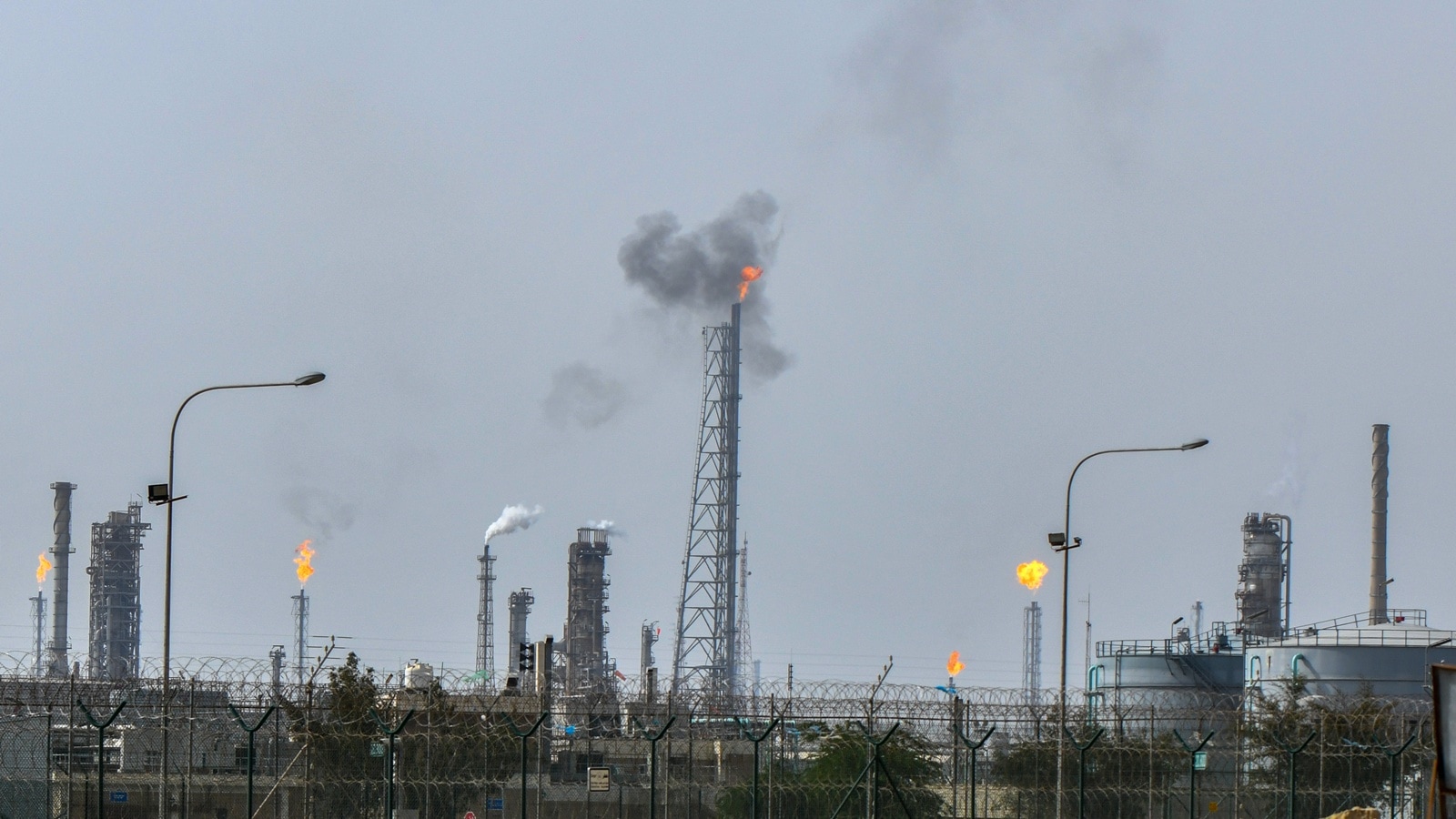
Attacking a pipeline is a "gray zone" tactic because it’s small enough to avoid a full-scale war but loud enough to make headlines. It is theater. It is a performance for an audience of algorithmic traders and panicked politicians. If you want to understand the real threat to energy, stop looking at satellite photos of smoke plumes in the desert and start looking at the diversification of the global refining stack.
The Logistics of the "Bypass" Myth
Let's look at the actual path of a barrel of oil.
- Extraction: The Ghawar field.
- Transport: Petroline to the Yanbu port on the Red Sea.
- Transit: Through the Bab el-Mandeb strait.
Here is the part the "Hormuz is the only problem" crowd misses: to bypass Hormuz via the pipeline, you simply trade one choke point for another. The Red Sea route requires passage through the Bab el-Mandeb, a narrow strait bordered by Yemen—where the very forces attacking the pipeline are already entrenched.
Moving oil via the East-West Pipeline doesn't achieve "security." It achieves "geographic diversification of risk." You aren't avoiding the fire; you're just moving to a different room in a burning building.
The Actionable Reality for Investors
If you are trading based on pipeline attacks, you are the "dumb money" in the room. Professional energy analysts look at "Downstream Flexibility."
When a pipeline is damaged, the immediate question isn't "When will it be fixed?" The question is "How much crude is already sitting at the terminal in Yanbu?" Saudi Aramco maintains massive storage facilities at both ends of the line. A temporary disruption in the flow through the pipe does not equate to a disruption in exports from the port.
The industry knows this. The headlines just ignore it because "Pipeline Repaired in 48 Hours Using Redundant Pumping Stations" doesn't get clicks. "Iranian Attack Threatens Global Oil Supply" does.
The Failure of Kinetic Sabotage
We are witnessing the obsolescence of physical sabotage. In the 1970s, blowing up a pipeline could starve a nation. In 2026, it’s a data point.
The real vulnerability isn't the pipe; it’s the SCADA (Supervisory Control and Data Acquisition) systems that manage the pressure and flow. A sophisticated cyberattack that tricks the system into over-pressurizing the line and causing simultaneous ruptures across a thousand miles would be a "paradigm shift"—if I were allowed to use that word. But a drone hitting a steel tube? That's just expensive graffiti.
The attackers know this. The Saudis know this. The only people who don't seem to know this are the ones writing the frantic reports you read this morning.
Stop treating the East-West Pipeline as a strategic crown jewel. It is a utility. Like any utility, it has outages. Like any utility, it has backups. The obsession with its safety is a relic of an era when we thought energy was a matter of geography. It’s not. Energy is a matter of logistics, and logistics is a game of numbers, not locations.
The next time you see a report of a fire in the desert, don't look at the map. Look at the storage charts. The fire is a distraction. The data is the reality.
The pipeline is damaged. The world keeps spinning. The oil keeps flowing. The threat is a ghost.