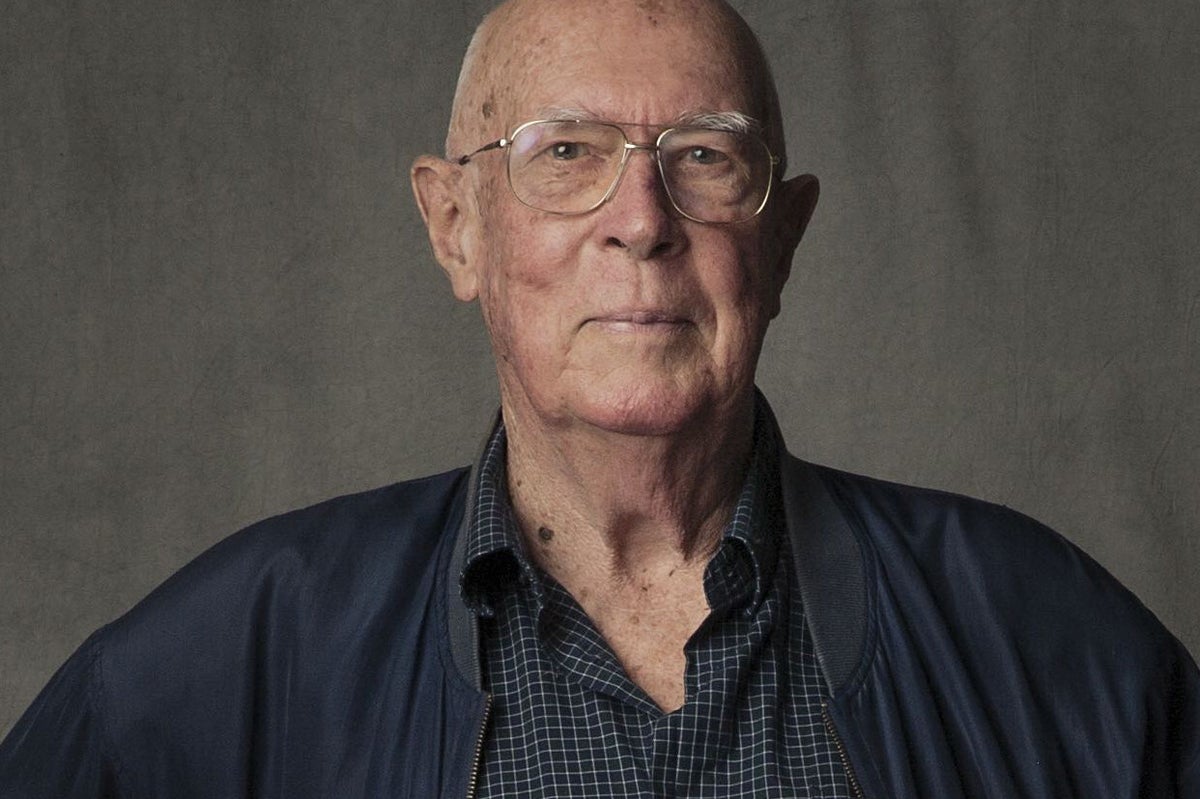
The legacy media is currently doing what it always does when a titan passes away: polishing the edges, flattening the history, and drowning the reality in a wave of uncritical nostalgia.
With the passing of Les Mills at 91, the obituary factories are churning out standard copy. They paint him as the benevolent founding father who democratized sweat, took group fitness out of the dusty church halls of the 1970s, and gifted the world a shiny, synchronized utopia of health.
It is a comforting narrative. It is also completely wrong.
What Les Mills actually built was not a health revolution. It was the world's most successful corporate homogenization project for the human body.
By taking exercise—an inherently chaotic, individualized, and adaptive human necessity—and turning it into a rigidly choreographed, globally franchised intellectual property, the group fitness industry did something insidious. It traded true physical capability for predictable, metric-driven entertainment. It convinced three generations of gym-goers that moving in perfect synchronization to a high-tempo remix of a top-40 pop song was the pinnacle of human performance.
I have spent two decades in the trenches of athletic performance and commercial gym consultancy. I have watched facility owners rip out free-weight sections to clear floor space for licensed studio classes because the margins on group software are predictable, while teaching a human being how to properly deadlift requires actual skill.
We need to stop conflating commercial scale with public health efficacy. Les Mills was a brilliant businessman and an elite athlete in his own right. But the empire that bears his name did not revolutionize fitness. It industrialized it, packaged it, and in the process, stripped away the very thing that makes exercise effective: biological individuality.
The Illusion of Efficiency: Why Group Choreography Fails the Body
The fundamental premise of the franchised group workout is simple: one size fits all, provided you move to the beat.
From a business perspective, it is a masterstroke. You train an instructor for a weekend, give them a digital video to memorize, hand them a pre-mixed soundtrack, and tell them to execute the exact same movements in Auckland, London, and New York.
From a physiological perspective, it is a disaster.
True physical adaptation relies on a foundational concept known as Progressive Overload. To get stronger, faster, or more resilient, you must subject the body to a stimulus that slightly exceeds its current capacity. This requires precise tracking of variables: weight, tempo, range of motion, and recovery intervals.
Group fitness replaces progressive overload with a different, far less useful metric: localized muscular fatigue caused by sheer volume.
Take a standard barbell-based group fitness class. The participant is instructed to load a light barbell and perform one hundred repetitions of a squat, timed to the rhythm of a song.
Muscles burn. Sweat pours. The participant leaves feeling accomplished.
But what actually happened? They did not build functional strength. They did not increase bone mineral density in a meaningful way. Instead, they performed an enormous volume of low-intensity contractions under accumulated fatigue.
When a human being performs high-velocity, high-repetition movements under fatigue without individual coaching, form collapses. The nervous system, desperate to survive the volume, finds the path of least resistance. The knees cave inward (valgus collapse). The lower back rounds. The shoulders shrug to compensate for tired biceps.
In a room of forty people under flashing lights with a speaker system blaring at 90 decibels, a single instructor standing on a stage cannot fix those mechanics. They can only shout generic platitudes through a headset.
The industry traded the coach for an entertainer.
The False Economy of the "Sweat Metric"
Ask the average gym member how they evaluate a workout, and they will give you a flawed answer: "I burned 700 calories on my smart watch, and my shirt is soaked."
The commercial fitness industry engineered this belief because sweat is cheap to produce. You do not need deep biomechanical knowledge to make someone sweat; you just need to make them jump up and down for forty-five minutes without stopping.
This reliance on the "sweat metric" ignores the reality of metabolic adaptation. The human body is an efficiency machine. When you subject it to the exact same high-volume cardio or light-weight circuit week after week, it adapts by becoming more efficient at that specific workload. It learns to burn fewer calories to perform the same task.
To break through that plateau, the group fitness model offers only one solution: more volume. More classes. Faster tempos. More sweat.
This is a fast track to chronic systemic inflammation and overuse injuries. The orthopedic clinics of the world are filled with forty-something group fitness devotees who possess the cardiovascular capacity of a cyclist but the joint integrity of a glass house because they spent a decade performing thousands of uncoached, ballistic repetitions on a hardwood floor.
True physical capability looks entirely different. It is built on three pillars that cannot be synchronized to a pop song:
- Maximal Strength: The ability to exert force against a high external resistance, which protects joints and maintains muscle mass as we age.
- Movement Variability: The capacity to move through multiple planes of motion adaptively, rather than repeating linear paths strictly determined by a choreographer.
- Autoregulation: Adjusting the intensity of a workout based on daily physiological stress, sleep quality, and neurological readiness—not following a pre-determined script written six months ago by a corporate product team.
Dismantling the Consensus: The Real Data on Public Health
The common defense of the mass-market fitness model is democratic: “At least it gets people moving.”
It is a compelling argument on the surface. In a world facing an obesity crisis and historic levels of metabolic disease, any movement should be celebrated. Surely a franchised group class is better than the couch?
Let us look at the retention data. Commercial gym industry reports consistently show that roughly 50% of new members drop out within the first six months. If the highly engaging, music-driven group fitness model were the magical cure for human inertia, adherence rates would be climbing. They are not.
The franchised model creates a hyper-monetized environment that caters heavily to the "already converted"—individuals who are already highly motivated and possess baseline physical literacy. For the unconditioned beginner, entering a fast-paced, highly synchronized environment is not motivating; it is isolating, intimidating, and physically risky.
Furthermore, the focus on endless calorie-burning distraction shifts the cultural conversation away from what actually moves the needle for metabolic health: nutritional discipline, sleep hygiene, and basic daily non-exercise activity thermogenesis (NEAT), such as walking.
We have created a culture that believes a forty-five-minute daily sacrifice to the gods of choreography offsets twenty-three hours of sedentary living and a poor diet. It doesn't.
The Business Case: Why Gym Owners Fell for the Script
To understand why this model conquered the globe, you have to look at the balance sheet, not the gym floor.
Before the rise of standardized programming, running a fitness facility was difficult. You had to hire knowledgeable trainers. You had to pay them well to keep them. You had to trust that they were delivering safe, high-quality instruction to your members. The product was variable and hard to scale.
Standardized group fitness solved the scaling problem for gym owners overnight.
It turned fitness into a plug-and-play utility. A club owner no longer needed an expert staff of exercise physiologists; they needed a rotating roster of charismatic instructors who could pass a basic rhythm test and memorize a routine. If an instructor quit, you simply plugged another one into the system. The choreography remained identical.
This shift allowed massive commercial chains to scale across borders, reducing human labor costs while maximizing the density of the gym floor. You can fit forty people into a group studio paying membership dues, whereas that same square footage dedicated to power racks and lifting platforms might only accommodate eight people at a time.
It was a brilliant triumph of commercial real estate optimization. But let us call it what it is: an optimization of profit per square foot, not an optimization of human biology.
Reclaiming the Purpose of Physical Movement
The contrarian approach to longevity and physical capability is boring, unglamorous, and completely unsuited to a global franchise model. It cannot be synchronized to a beat, and it does not look good on social media.
If you want a body that functions optimally into your eighth and ninth decades, stop outsourcing your movement to a corporate script.
Shift the focus back to the fundamentals of physical training. Lift heavy objects with precise, controlled mechanics. Prioritize progressive tension over generalized fatigue. Move through variable environments that force your nervous system to think, adapt, and react rather than mindlessly follow a leader on a stage.
Treat exercise as a discipline of skill acquisition, not a mechanism of self-punishment via sweat.
Les Mills built an undeniable commercial monument. He proved that you could turn sweat into a global currency and movement into a standardized commodity. But the true path to human physical capability does not belong to a franchise. It belongs to the individual willing to slow down, put down the synchronized barbell, and do the heavy, unchoreographed work that real physical longevity requires.
Stop dancing. Start training.