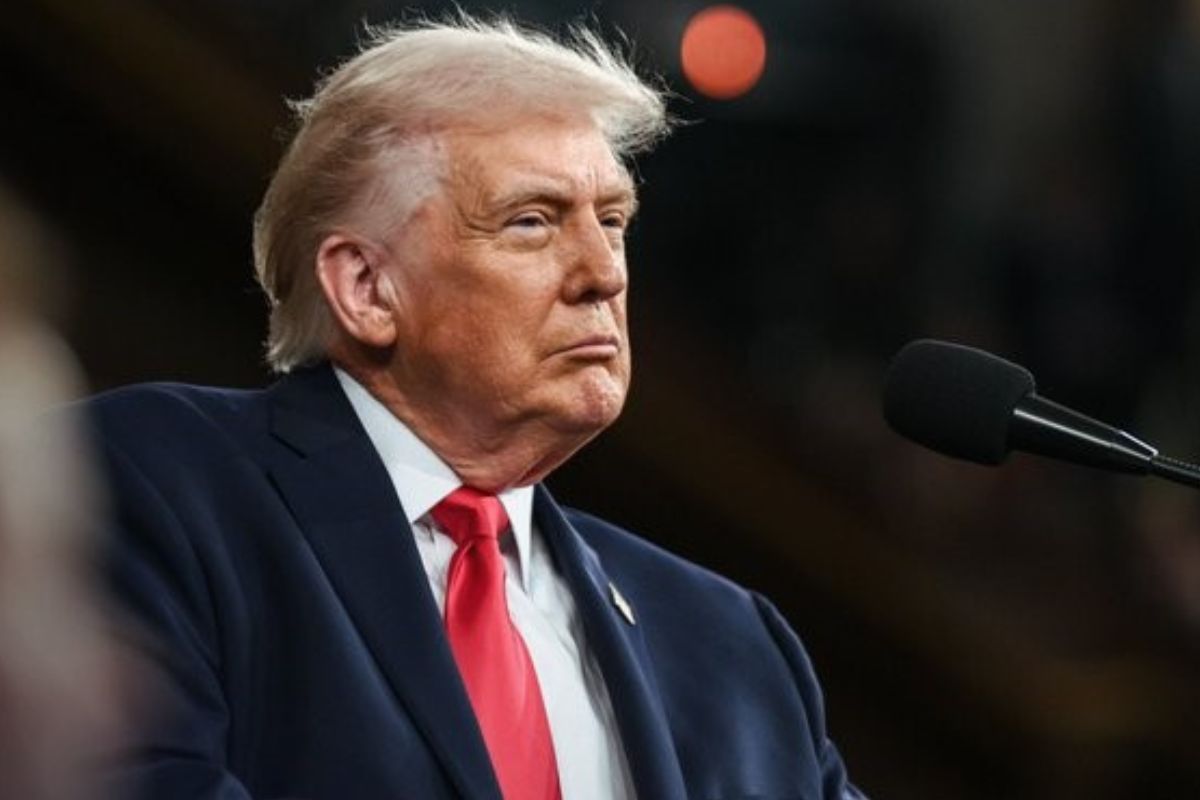
Donald Trump just turned 80, blew out his candles, and told the press corps that a grand, sweeping deal with Iran was ready for ink. Tehran immediately shot back with a curt "No."
The mainstream media swallowed the bait whole. They ran the standard play-by-play: the unpredictable, legacy-obsessed American leader chasing a historic photo-op versus the stubborn, ideological Islamic Republic holding the line. It makes for great cable news drama.
It is also completely wrong.
The lazy consensus treats this back-and-forth as a genuine diplomatic negotiation on the verge of either breakthrough or collapse. It views the friction as a sign of broken mechanics. In reality, the friction is the product. Neither Washington nor Tehran actually wants a comprehensive signature on a piece of paper. The status quo of perpetual, managed tension is far too valuable to both regimes.
The Illusion of the Signature
The fundamental flaw in modern geopolitical analysis is the belief that treaties represent stability. They do not. Treaties in the Middle East represent temporary pauses for breathers while both sides re-arm.
When a leader stands at a podium at 80 years old and claims a deal is imminent, it is not diplomacy; it is domestic marketing. Trump needs the optics of the "ultimate dealmaker" to solidify his political base and cement a legacy. Conversely, the Iranian leadership needs a visible, aggressive American antagonist to justify its internal security crackdowns, economic mismanagement, and ballooning defense budgets.
If Iran signs a comprehensive deal, the regime loses its primary scapegoat for its cratering currency and domestic unrest. If the US signs a permanent deal, it loses its primary justification for its massive military footprint in the Persian Gulf and its lucrative arms sales to regional allies.
The theater requires both actors to stay on stage. If they actually shake hands and walk off, the play ends. And neither side can afford to let the curtain fall.
Deconstructing the Sanctions Fallacy
Let us dismantle the core economic premise of this conflict: the idea that US sanctions are designed to force Iran to the negotiating table until they capitulate.
I have spent years analyzing the flow of illicit capital and sanctioned goods through the Middle East. Sanctions do not stop trade; they merely change the middlemen and increase the risk premium.
Standard Trade Route: Producer -> Direct Shipping -> Consumer (Low Margin)
Sanctioned Route:     Producer -> Front Company A -> Banking Hub B -> Ghost Fleet -> Consumer (High Margin)
The black market economy generated by US sanctions has created a billionaire class within Iran’s Islamic Revolutionary Guard Corps (IRGC). They control the smuggling routes, the front companies in Dubai and Istanbul, and the black-market currency exchanges.
The Contra-Intuitive Truth: The very elites in Iran who scream "Death to America" are the ones getting rich off American sanctions.
If the US lifts sanctions tomorrow as part of a grand deal, the IRGC’s monopoly on the Iranian economy evaporates. Free-market competition would flood the country, ruining their state-sanctioned smuggling cartels. Therefore, Iran's elite will always find a reason to reject a formal deal. They do not want the sanctions lifted; they want the status quo maintained because it guarantees their wealth and power.
The Proxy War Capital Incentive
The mainstream press constantly asks: How do we stop Iran's proxy network?
This question is built on a false premise. The proxy network—consisting of groups in Lebanon, Yemen, and Iraq—is not a tool to be traded away for sanctions relief. It is Iran's primary defense infrastructure.
Imagine a scenario where a corporate conglomerate decides to dissolve its entire legal and security apparatus in exchange for a promise that its competitors will treat it nicely. It would never happen. Yet, Western diplomats honestly expect Tehran to dismantle its regional deterrence network in exchange for a signature from an American president who might be voted out of office a few years later.
From a purely tactical standpoint, Iran’s proxy strategy is incredibly cost-effective. They use asymmetric warfare to project power across thousands of miles on a shoestring budget.
- Cost of a US carrier strike group deployment: Billions of dollars.
- Cost of a localized drone swarm used by a proxy: A few thousand dollars.
The math is heavily skewed in Tehran's favor. No rational actor would trade away that kind of leverage for a paper treaty that can be torn up by the next administration. The Joint Comprehensive Plan of Action (JCPOA) proved to Iran that American commitments have an expiration date tied to the US election cycle. Expecting them to fall for the same trick twice is peak diplomatic naivety.
The Real Power Broker is Not in Washington or Tehran
While the media fixates on Trump’s birthdays and the fiery rhetoric from Iranian state TV, the real beneficiary of this perpetual deadlock sits in Beijing.
China has zero incentive to see a US-Iran peace deal. Right now, China enjoys a buyer's monopoly on discounted Iranian crude oil. Because Iran is locked out of Western markets, they are forced to sell their oil to independent Chinese refineries (known as "teapots") at a massive steep discount, settled in Yuan.
If Iran settles its differences with the West, Iranian oil floods the global market at standard Brent pricing. Western oil majors would swoop in with superior extraction technology, and China loses its cheap, exclusive energy pipeline. Beijing will continue to provide just enough economic and diplomatic cover to Tehran to keep them afloat, but never enough to let them escape the Western pressure cooker entirely.
The US-Iran conflict is no longer a bilateral issue. It is a cog in a much larger, multi-polar machine designed to keep American resources bogged down in the Middle East while China expands its influence elsewhere.
Dismantling the Expert Consensus
Go to any Washington think-tank panel, and you will hear the same three tired arguments. Let us eviscerate them one by one.
1. "Iran is on the brink of economic collapse."
This has been the headline since 1979. It misunderstands the resilience of a resistance economy. Iran has spent nearly half a century building parallel financial systems, relying on barter trade, local manufacturing, and regional integration. They can survive at this subsistence level indefinitely. Hoping for an imminent internal collapse is a strategy based on wishful thinking, not data.
2. "A strongman leader can force a breakthrough."
The idea that a single dominant political personality can override decades of institutional hostility is a Hollywood delusion. The deep state in Washington and the clerical-military apparatus in Tehran are both massive, slow-moving bureaucracies. They are built to resist sudden shifts. A president can tweet or make a birthday speech, but the underlying structural incentives of both nations remain completely unchanged.
3. "The region wants stability."
The regional defense sectors thrive on this instability. Arms manufacturers in the West and state-owned defense firms in Russia and China rely on the Persian Gulf remaining a powder keg. Instability drives defense budgets. It justifies intelligence sharing, weapon sales, and geopolitical posturing. Peace is a terrible business model for the military-industrial complexes on both sides of the globe.
The Operational Reality
Stop looking at what these leaders say. Look at what they do.
The US will continue to pass cyclical sanctions packages that look tough on paper but contain enough enforcement loopholes to keep global oil markets stable. Iran will continue to advance its uranium enrichment levels just enough to maintain leverage, but never quite enough to cross the red line that triggers an outright invasion.
It is a carefully choreographed dance. Both sides know exactly where the boundaries are. Occasionally, an actor steps on a toe, a proxy strike goes too far, or a drone gets shot down, forcing a brief period of escalation. But notice how quickly both sides de-escalate afterward. Neither wants a real war, and neither wants a real peace.
The theater is the objective. The public rejections, the birthday announcements, the tough-talking press releases—it is all noise designed to distract from the reality that the tension serves the ruling classes of both nations perfectly. The deal was never going to be signed today, it will not be signed tomorrow, and the world's power structures prefer it exactly that way.