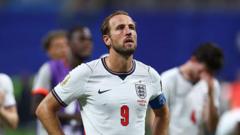
The soccer establishment wants you to believe that Day Seven of the 2026 World Cup is a historic triumph. They are selling you a narrative of unprecedented scale, an inclusive festival of global football featuring 48 teams spanning an entire continent. They want you looking at the sprawling TV schedules, the multi-city logistics, and the sheer volume of matches as proof of progress.
It is a lie.
What we are witnessing on Day Seven is not the pinnacle of elite sport. It is the dilution of excellence. By expanding the tournament to 48 teams, FIFA has not elevated the global game; they have turned a once-sacred, high-stakes tournament into a bloated, bloated group-stage slog where mediocrity is actively rewarded. If you are watching today’s slate of games thinking this is the best the sport has to offer, you are looking at the wrong metrics.
The Mathematical Absurdity of the 48-Team Format
Let's look at the mechanics of what is actually happening on the pitch right now. The move from 32 to 48 teams necessitated a restructuring that defies sporting logic. We are dealing with 12 groups of four teams.
The immediate casualty of this setup is tension.
In the old 32-team format, the group stage was a pressure cooker. One mistake, one bad refereeing decision, or one off-night, and a powerhouse nation was booking flights home. Every single minute of all three group games mattered intensely.
Now? The top two teams from each group advance, alongside the eight best third-place finishers.
The Reality Check: A team can now draw two games, lose one, finish with two points, and still advance to the knockout rounds.
We are watching matchday tracking where teams are actively playing for a low-scoring draw because the mathematical threshold for survival has been lowered to subterranean levels. I have spent two decades analyzing tournament structures and tracking tactical trends. When you reward teams for not losing rather than winning, you create negative, risk-averse, unwatchable football. Day Seven is a testament to this tactical stagnation.
The Myth of "Cinderella" and the Reality of Blowouts
The lazy consensus among broadcasters is that expansion helps the smaller nations. They claim it provides invaluable exposure and creates "Cinderella stories."
This is romantic nonsense.
When you dig into historical data from expanded continental tournaments—look no further than the expansion of the Euros to 24 teams—the gap between the elite and the fringe qualifiers does not shrink. It widens, or worse, it produces ultra-defensive blocks that ruin the spectacle.
What Actually Happens to the Tactical Balance
- Low-Block Suffocation: Lower-tier nations realize they cannot compete technically with Argentina, France, or the European elite. Their only rational tactical response is to park 10 players behind the ball, refuse to press, and pray for a 0-0 draw.
- Physical Exhaustion: Expanded schedules mean more travel across three massive countries (USA, Canada, Mexico). The squads without deep benches are completely depleted by the time they hit their final group match, leading to lopsided, uncompetitive walkovers in prime-time slots.
- Diluted Star Power: The world’s best players are already playing 60 to 70 matches a year for their clubs. Forcing them into an extended tournament structure means the quality of play drops drastically due to fatigue. You aren't getting the best version of Kylian Mbappé or Vinícius Júnior; you are getting a exhausted, injury-prone version.
We are being forced to watch matches that belong in a secondary qualifying round, packaged as the main event of the biggest tournament on earth.
Dismantling the "People Also Ask" Propaganda
The media narrative around Day Seven usually revolves around a few flawed assumptions. Let's correct them directly.
"Doesn't more games mean more revenue for global football development?"
This is the ultimate corporate shield. Yes, it generates billions more in broadcast rights and ticket sales. But where does that money actually go? Historically, the trickledown effect to grassroots football in developing nations is a fraction of the total take. The vast majority is swallowed by administrative overhead, massive stadium infrastructure costs, and corporate pockets. Do not mistake capital extraction for sport development.
"Aren't fans happier with more football to watch?"
Only if you value quantity over quality. If I offer you a three-course meal at a Michelin-star restaurant versus a 10-pound bucket of cheap fast food, you don't praise the bucket for its volume. True football fans want high-intensity, high-consequence matches. Day Seven of a bloated tournament offers fatigue and administrative box-ticking.
The Commercial Trap
We must talk about why this actually happened. It wasn't done for the fans, and it certainly wasn't done for the players. It was driven by political survival within FIFA’s voting blocks. By promising more slots to various continental confederations, leadership secures votes to stay in power.
The cost of this political maneuvering is paid by the fans who fork out thousands of dollars for tickets to watch a powerhouse nation cruise through half-gear training sessions against opponents who are just happy to be there.
There is an inherent downside to criticizing this setup. The contrarian view acknowledges that yes, more countries get to experience the anthem on the world stage. That moment matters to those specific populations. But as a collective, global sporting event, the prestige of the tournament is being actively dismantled. When qualifying becomes a formality for almost every major nation, the entire cycle loses its luster.
Stop buying into the manufactured hype of Day Seven. Stop pretending that a match between two deeply flawed, third-place hopefuls is elite sport just because it has the World Cup logo plastered on the graphics. The group stage used to be an elimination tournament; now it's just a prolonged, agonizing commercial break before the real tournament starts in the Round of 32.
If you want to save international football, you don't make the table bigger. You make the invite harder to get.