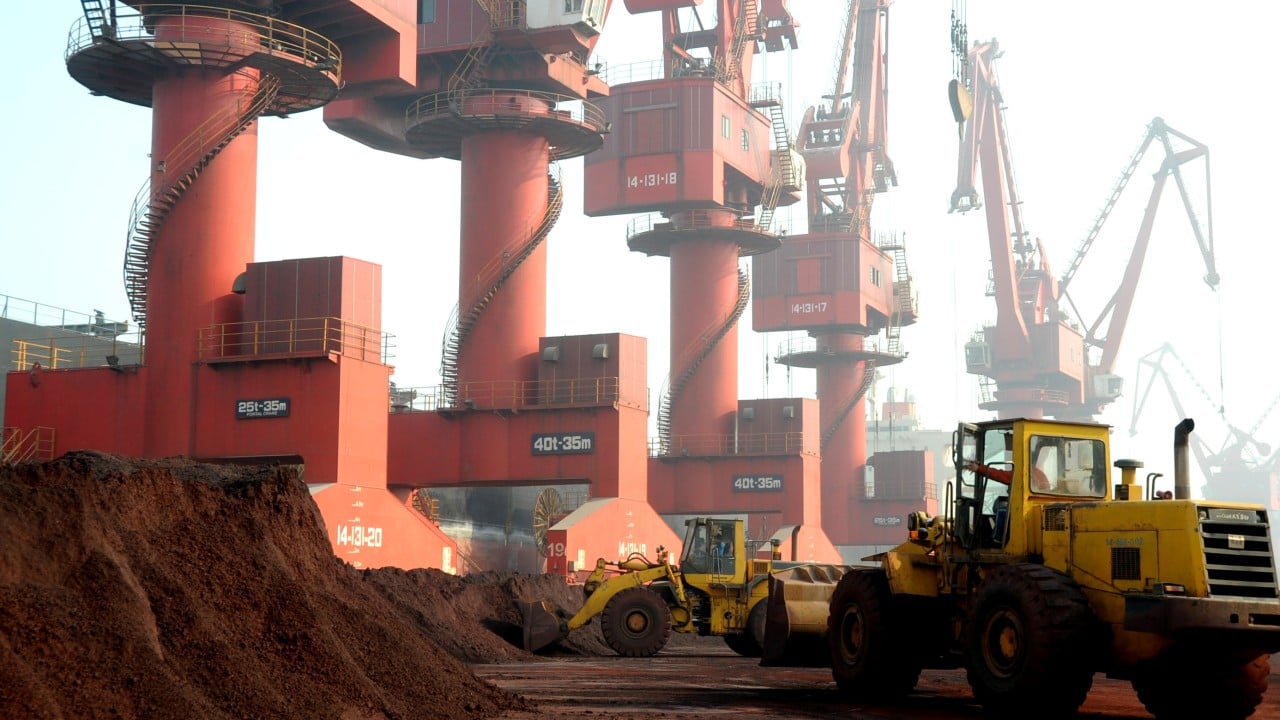
The financial press is gripped by a collective panic attack over permanent magnets. For years, the narrative has been carved into stone: China controls the global supply of rare earth elements, Beijing chokes the export valves, and Japan’s high-tech industrial base suffocates under the pressure. Every minor dip or partial recovery in Chinese export data is treated as a geopolitical earthquake.
It is a neat, terrifying story. It is also entirely wrong. Expanding on this idea, you can find more in: The Real Reason the West is Losing the Global Science Race.
The lazy consensus confuses raw export volume with strategic dominance. Analysts look at a spreadsheet showing fluctuating shipments of Chinese neodymium-iron-boron (NdFeB) magnets to Osaka or Tokyo and declare a crisis. They miss the macro-level reality. Japan is not a helpless victim of a Chinese embargo. Japan engineered the modern rare earth market specifically to survive this exact scenario, and Tokyo’s industrial titans are currently running circles around Beijing’s state-backed monopolies.
The real threat to the magnet industry is not a supply shortage. It is the widespread inability of Western and Asian analysts to distinguish between low-grade commodity dominance and high-value IP control. Observers at The Verge have provided expertise on this trend.
The Value Is in the IP, Not the Dirt
Let's dismantle the foundational myth of the rare earth crisis: the idea that mining the material equates to controlling the technology.
China does mine and process the lion’s share of the world’s heavy rare earths. No one disputes the geology. But pulling dysprosium or terbium out of the ground in Jiangxi province does not give a bureaucrat in Beijing the automatic power to build an electric vehicle drivetrain or a precision missile guidance system.
The heavy lifting happens at the atomic level, governed by patents held overwhelmingly by Japanese companies—chief among them, Hitachi Metals (now Proterial).
Imagine a scenario where a manufacturer possesses a mountain of raw neodymium but lacks the precise metallurgical recipes to prevent that neodymium from oxidizing and demagnetizing at high temperatures. That manufacturer owns expensive dirt, nothing more.
For three decades, Hitachi Metals has maintained a veritable chokehold on the essential patents for sintered NdFeB magnets. Want to manufacture a high-performance permanent magnet that doesn't disintegrate inside an EV motor spinning at 15,000 RPM? You either pay a license fee to Japan, or you risk getting tied up in international patent litigation that will freeze your supply chain indefinitely.
I have watched corporate legal teams blow millions of dollars trying to design around Japanese magnet patents. They fail. The physics do not lie, and the patent courts do not care about geopolitical narratives. China’s "recovery" or "squeeze" in export volumes is an artificial metric. They are exporting what Japan allows them to export under licensing agreements, or they are dumping low-grade magnets into cheap consumer electronics where the margins are razor-thin.
The Coercion Paradox: How Beijing Weaponized Its Own Loss
The media loves to point back to the 2010 fishing trawler incident as the moment China "proved" it could break Japan by halting rare earth exports. That narrative has been parroted so frequently it has achieved the status of undisputed fact.
In reality, that 2010 embargo was the worst strategic blunder Beijing ever committed. It triggered a textbook example of market-driven decoupling that permanently eroded China's leverage.
Before 2010, Japan was content to buy cheap, subsidized raw materials from China, absorbing the environmental externalities of dirty processing while keeping the high-end manufacturing at home. When China cut the supply, they broke the illusion of stability.
Japan’s response was swift, ruthless, and highly effective:
- Diversification of Capital: Japan’s state-backed JOGMEC (Japan Organization for Metals and Energy Security) poured hundreds of millions of dollars into Australia’s Lynas Rare Earths.
- The Lynas Lifeline: That wasn't a charity case; it was a cold, calculated move to guarantee a non-Chinese supply of light rare earths. Today, Lynas processes materials in Malaysia and the United States, breaking the monopoly.
- Thrift Engineering: Japanese automakers like Toyota, Nissan, and Honda tasked their R&D departments with a single mission: eliminate or drastically reduce the use of heavy rare earths (dypsprosium and terbium) in their motors.
The result? The development of grain boundary diffusion (GBD) technology. By precisely spraying minute amounts of dysprosium only onto the boundaries of the magnet grains rather than mixing it throughout the entire alloy, Japanese engineers slashed heavy rare earth requirements by up to 90% in high-performance applications.
By trying to squeeze Japan, China forced its best customer to learn how to live without its product.
The "People Also Ask" Delusion: Dismantling the Premise
If you look at what the market is asking, the anxiety is misplaced. The wrong questions are being answered with bad data.
"Can the world replace Chinese rare earth magnets?"
This question assumes we need to replace them one-for-one. We don't. The goal isn't to replicate China's massive, environmentally devastating mining footprint in Europe or North America. The goal is to optimize the efficiency of the material we do have.
Through recycling initiatives, magnet-to-magnet reprocessing, and alternative motor topologies—like synchronous reluctance motors (SynRM) that use no permanent magnets at all—the demand curve is being fundamentally reshaped. BMW and Audi have already deployed externally excited synchronous motors that completely bypass the rare earth bottleneck.
"Why are magnet prices so volatile if there is no shortage?"
The volatility is a feature of Chinese state planning, not market mechanics. Beijing routinely consolidates its state-owned enterprises (like the creation of China Rare Earth Group) to manipulate quotas and artificially manipulate prices.
When prices spike, the press screams "squeeze." When prices crash, they scream "dumping." It is theater. High-tier industrial buyers in Japan do not buy their critical components on the spot market; they operate via long-term, index-linked contracts that insulate them from these manufactured spikes.
The True Cost of the Counter-Strategy
Let's be clear about the downsides of this contrarian view. Rejecting the panic narrative does not mean the path forward is easy or cheap.
The Western obsession with building localized "mine-to-magnet" supply chains is currently floundering because it ignores the brutal economic reality of chemical separation. Building a mine is easy. Building a refinery that can separate neodymium from praseodymium without producing millions of gallons of toxic acid waste is exceptionally difficult, capital-intensive, and politically toxic in democratic nations.
If Western companies think they can simply copy Japan’s playbook by throwing money at a mine and waiting for the problem to solve itself, they are mistaken. Japan succeeded because it married state capital (JOGMEC) with elite material science (Hitachi/Proterial) and committed, long-term industrial off-takers (Toyota).
If you lack that tripartite alignment, you are just burning cash in a hole in the ground.
Stop Watching the Shipments, Watch the Patents
The next time you read an article bemoaning the fact that China’s magnet exports to Japan have "only partly recovered," look deeper.
Ask yourself: What grade of magnets are we talking about? Are they the N52-grade, high-coercivity blocks destined for the main traction motor of a next-generation hybrid vehicle? Or are they the low-spec commodities used in acoustic speakers and electric bicycle hubs?
The data almost always reveals that the high-value, mission-critical components are being handled through secure, diversified channels, while the commodity scrap moves back and forth across the East China Sea based on short-term price fluctuations.
China’s apparent dominance in the rare earth sector is a classic Potemkin village. It looks imposing from a distance, built on a foundation of massive volume and low regulatory standards. But step closer, examine the intellectual property framework, the alternative motor architectures, and the deep-tier supply chain alliances forged by Tokyo over the last decade, and the truth becomes obvious.
Japan didn't get squeezed. Japan let China hold the bag on the low-margin, high-pollution segment of the industry while retaining control over the intellectual infrastructure that actually makes the world move.
Stop panicking over the volume of the dirt. Start paying attention to who owns the recipe.