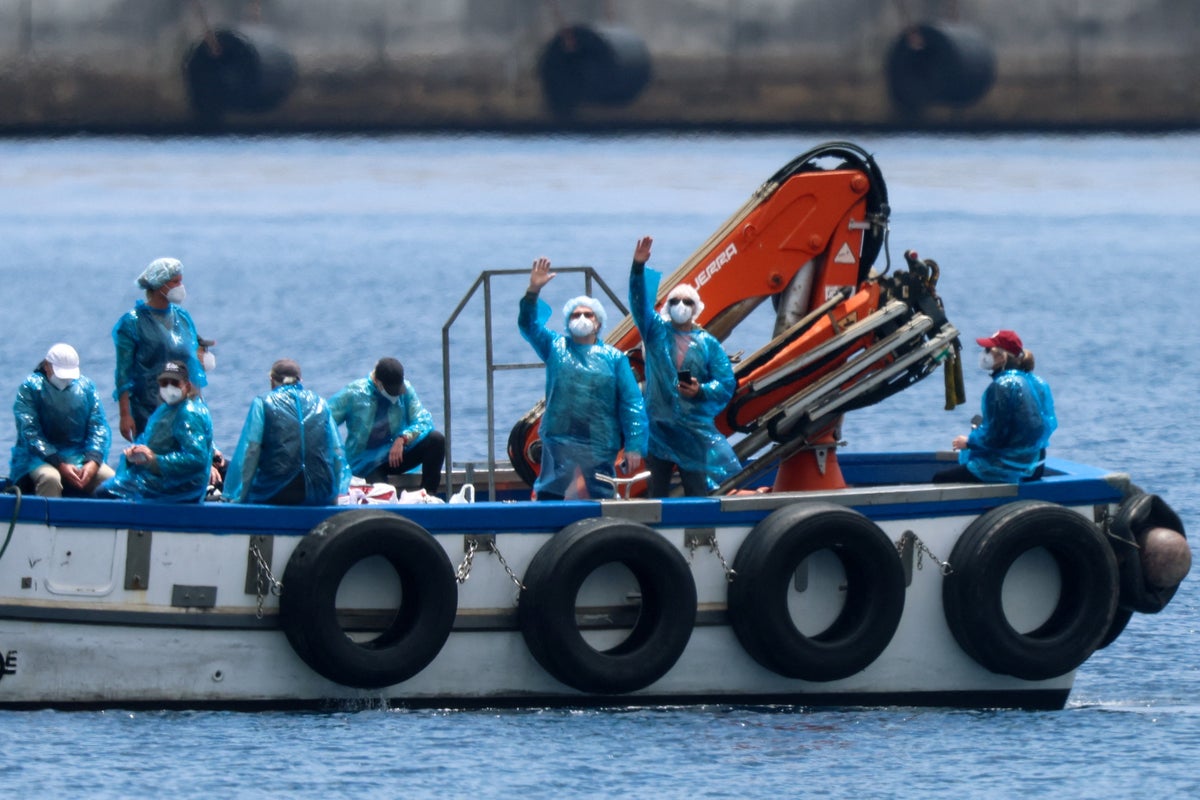
The images of passengers finally stepping off the MV Hondius look less like a luxury vacation wrap-up and more like a tactical extraction. You’ve likely seen the shots by now. Masked travelers, heavy parkas, and the palpable sense of relief as they distance themselves from a vessel that became a floating quarantine zone. This isn’t your typical "norovirus on a cruise" story. We’re talking about Hantavirus, a rare and aggressive respiratory threat that turned an Antarctic expedition into a public health crisis.
If you’re planning a bucket-list trip to the polar regions, this situation should change how you look at travel insurance and expedition safety. The MV Hondius, operated by Oceanwide Expeditions, wasn't just delayed. It was paralyzed. When news broke that multiple people on board showed symptoms of Hantavirus—a virus typically spread by rodents—the Chilean authorities didn't mess around. They locked it down.
The Reality of the MV Hondius Evacuation
Waiting for a flight home is usually the boring part of a trip. For these passengers, it was the climax of a week spent in limbo. The evacuation process in Punta Arenas was surgical. Authorities coordinated chartered flights to get people out while minimizing contact with the local population. It’s a logistical feat that costs millions.
Most people think of Hantavirus as a "cabin in the woods" problem. You breathe in dust contaminated by rodent droppings, and suddenly your lungs are filling with fluid. Seeing it manifest on a high-end polar vessel is jarring. It raises a massive question. How does a virus linked to land-based rodents end up on a ship designed for ice-breaking?
The working theory usually points to the supply chain. Food crates, equipment, or even passenger luggage coming from areas with high rodent activity can hitch a ride. Once that virus is in a confined space with a shared ventilation system, the cruise ship becomes a pressure cooker.
What the Headlines Missed About Hantavirus Risks
The news reports focus on the "pity" factor—the ruined vacations and the "nightmare" of being stuck. They don't talk about the biological reality. Hantavirus Pulmonary Syndrome (HPS) has a mortality rate of around 38%. That is terrifyingly high. This isn't a 24-hour stomach bug. It's a life-threatening emergency that requires ICU-level care, something a cruise ship infirmary simply cannot provide.
Expedition cruising is booming. Everyone wants to see the penguins before the ice melts. But these ships go to the most remote places on Earth. If you get sick on the way to South Georgia or the Antarctic Peninsula, you are days away from a real hospital. The MV Hondius situation proves that even the best-laid plans can’t account for a microscopic stowaway.
I've seen travelers brush off health waivers all the time. They think their physical fitness is enough. It's not. Hantavirus doesn't care if you can hike five miles. It cares about your respiratory lining. The passengers being flown home now are the lucky ones. They are getting out before the full incubation period might reveal more cases.
Why This Matters for Your Next Trip
If you think this is a freak one-off, think again. As we push further into remote ecosystems, the "spillover" effect of zoonotic diseases increases. Ships are getting bigger, and the supply chains getting them to the ends of the Earth are getting more complex.
You need to be smarter than the average tourist. Here is what you should actually do before booking a polar expedition.
Check the Vessel History
Don't just look at the cabin photos. Look at the ship's sanitation records. The CDC in the US maintains a Vessel Sanitation Program (VSP) database. While the MV Hondius operates mostly in international waters outside CDC jurisdiction, many expedition ships still undergo these rigorous checks. If a ship has a history of pest issues or poor drainage, stay away.
Demand Supply Chain Transparency
Ask the cruise line how they vet their suppliers. Do they use rodent-proof containers for their dry goods? Do they have a protocol for inspecting cargo before it's brought on board in South American ports? If the sales agent can't answer, they aren't taking it seriously enough.
Upgrade Your Insurance
Standard travel insurance is garbage for this. You need a policy that specifically covers "Primary Medical Evacuation" and "Search and Rescue." Getting airlifted from a ship in the Southern Ocean can cost $100,000 or more. If the ship is quarantined, your policy should also cover "Trip Interruption" due to government-ordered lockdowns. Most basic plans won't pay out for a quarantine unless you are the one who is actually sick.
The Long Road Home for the Passengers
The flights home aren't the end of the story. Public health officials will likely be monitoring these individuals for weeks. Hantavirus has a long tail. Symptoms can take up to eight weeks to appear after exposure.
The images of passengers boarding those planes represent a massive sigh of relief, but also a warning. The travel industry is fragile. One mouse in a crate of kale in a port in Ushuaia can derail a multi-million dollar voyage and put hundreds of lives at risk.
Stop thinking of "adventure travel" as just a fancy term for a long flight. It's a foray into environments where we don't have the home-field advantage. The MV Hondius crew did what they could, but once the virus is on board, the ship is no longer a hotel. It's a bio-hazard.
Take your health screenings seriously. If you see signs of rodents on a ship—droppings, chewed wires, or "grease marks" along baseboards—report it immediately. Don't worry about being "that guy." Being "that guy" is better than being the guy in an oxygen tent.
Pack high-quality N95 masks. They aren't just for COVID. If you're in a space that feels dusty or poorly ventilated, wear one. It’s a simple barrier that can prevent the inhalation of viral particles. Most importantly, keep your hands clean. It sounds basic because it works.
The MV Hondius will eventually be disinfected and return to service. The passengers will get their refunds or credits. But the memory of being trapped on a "stricken" ship will linger. Use this as a wake-up call to vet your travel providers with the same intensity you use to pick your destination.