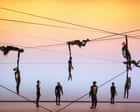
When a group of musicians with learning difficulties stepped onto a legendary New York stage, they weren't just putting on a show. They were finishing a promise made years ago to a British Member of Parliament who believed in their raw, unfiltered talent long before anyone else in the industry bothered to listen.
Most people look at disability arts through a lens of charity or low expectations. That is a massive mistake. When you strip away the patronizing applause often reserved for community theater, what remains is pure, unadulterated creativity. This specific group proved that artistic brilliance doesn't require standard neurotypical pathways. They tackled arrangements that would terrify seasoned session musicians, and they did it with a theatrical urgency that traditional Broadway productions lost decades ago. For an alternative perspective, read: this related article.
The Backstory That Changes Everything
Every great performance has an anchor, and this one started in the halls of the UK Parliament. A dedicated MP—someone known more for championing grassroots community projects than for rubbing elbows with theatrical elite—discovered this remarkable ensemble during a local showcase. He didn't just clap and walk away. He saw a vision of these performers lighting up the Great White Way.
Politicians make empty promises all the time. This one was different. He championed their cause, opened doors in administrative boardrooms, and dreamed out loud about getting them across the Atlantic. Tragically, he passed away before seeing the curtain rise. Related analysis on this trend has been published by The Hollywood Reporter.
When someone believes in your potential that fiercely, quitting isn't an option. The group took his dream, strapped it to their backs, and turned grief into the loudest, most joyful noise New York has heard in years. They didn't just honor his memory; they weaponized it against every single person who ever told them that complex musical direction was out of their reach.
Why Traditional Music Education Fails Exceptional Artists
We build rigid walls around the arts. If you can't read standard sheet music in a specific way, or if you process rhythm differently due to a learning disability, the conservatory doors slam shut in your face.
This music group threw the rulebook into the garbage. They rely on alternative communication methods, color-coded notation, sheer muscle memory, and an intense, almost telepathic listening bond between members. Watch them play for five minutes and you'll realize that standard education methods are often just lazy shortcuts for teachers who refuse to adapt.
- They memorize sprawling arrangements that bypass standard written notation.
- They listen to each other with a hyper-awareness most professional bands lost to click tracks and in-ear monitors.
- They inject genuine emotional weight into every single note, reminding audiences why live performance exists in the first place.
When you remove ego and strict academic gatekeeping from music, magic happens. These performers communicate on a frequency that cuts straight through the cynicism of commercial entertainment. You aren't watching a diversity quota. You're watching master musicianship born from entirely different cognitive foundations.
Bringing Broadway to Its Feet
Getting booked in New York is brutal. Keeping an audience engaged on Broadway is an entirely different beast. Ticket buyers want spectacle, polish, and safety. What they got instead was a masterclass in vulnerability and raw power.
The transition from local community halls to an iconic Broadway theater required immense logistical coordination. Travel logistics, sensory accommodations, and complex stage blocking could have easily derailed a less disciplined crew. Instead, their production team built an environment where the artists could thrive without burning out.
On opening night, the air in the theater was thick with skepticism from industry insiders who showed up out of polite obligation. Within the first two minutes of the opening number, that skepticism evaporated. The sheer joy radiating from the stage infected the balcony. By the final encore, the standing ovation wasn't polite. It was roaring, foot-stomping, and genuinely earned.
What the Industry Refuses to Learn
We love heartwarming human interest stories in the media. We consume them, shed a quick tear, and then change the channel back to business as usual. That approach insults what this group achieved.
This wasn't a heartwarming therapeutic exercise. It was a commercial and artistic triumph that exposed how risk-averse the modern entertainment industry has become. Major labels and theater producers spend millions manufacturing sterile pop acts and safe jukebox musicals, terrified of anything outside the algorithmic mean. Meanwhile, artists with learning difficulties are out here inventing fresh performance vocabularies because they never learned how to follow conventional constraints.
If you want to stay relevant in creative fields, stop looking at demographics as boxes to check. Look at them as untapped reservoirs of original thought. The groups and companies that embrace unconventional talent pools will consistently out-innovate the ones clinging to old-school industry gatekeeping.
Support inclusive arts organizations in your local community. Buy tickets to shows that step outside the mainstream comfort zone. Stop treating accessibility as an afterthought or a compliance checklist item, and start treating it as your primary source of creative fuel.