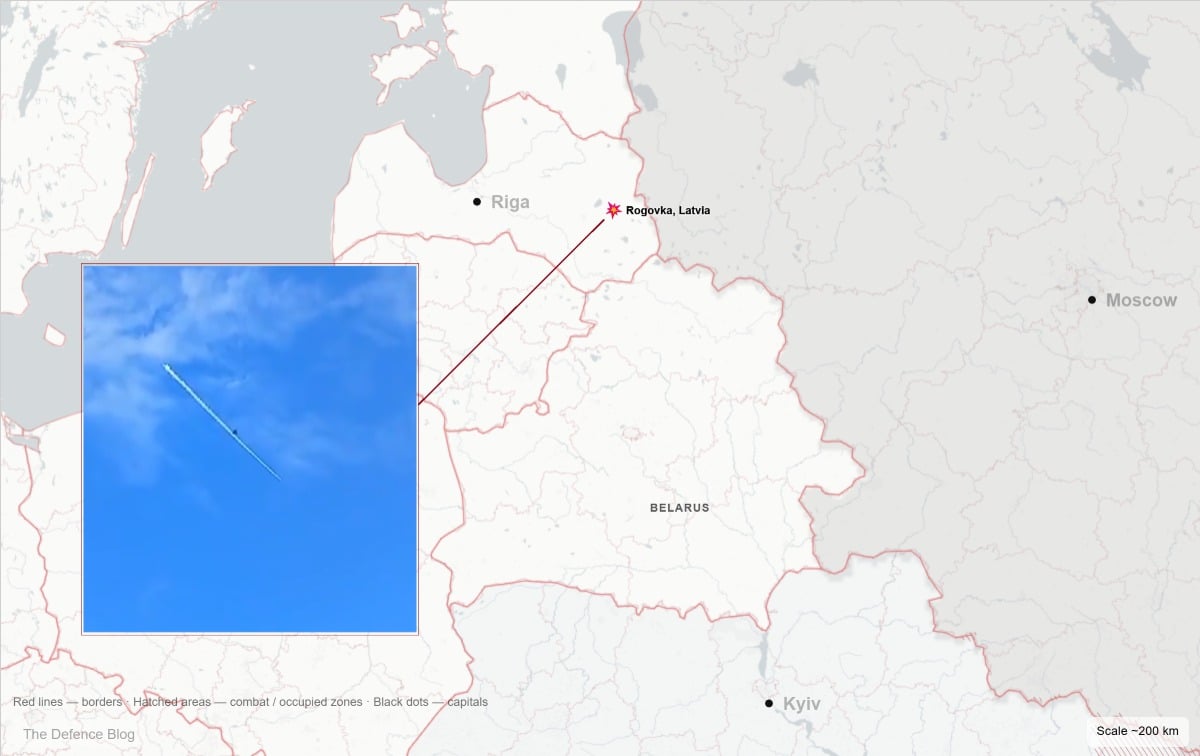
A €70 million French Rafale fighter jet just scrambled from an airbase in the Baltics, burned thousands of liters of fuel, and fired a missile costing several hundred thousand euros to down a Russian-designed reconnaissance drone that probably cost less than a used Honda Civic.
The defense establishment is cheering. The headlines are screaming about NATO solidarity and air policing efficacy.
They are celebrating a systemic failure.
We are watching Western militaries weaponize economic bankruptcy. If the goal of modern attrition warfare is to make your adversary spend exponentially more to defend an asset than it costs you to threaten it, then the Kremlin is winning this exchange without firing a shot. Celebrating this intercept as a triumph of modern air power is like bragging that you successfully killed a mosquito on your windshield by driving your Ferrari into a brick wall.
The Asymmetry Math That Kills
Let us look at the ledger. Air forces do not like talking about the ledger because it exposes the structural vulnerability of Western defense procurement.
A standard interception mission under NATO’s Baltic Air Policing umbrella involves two aircraft, a massive logistical footprint, and high-end munitions. If the Rafale utilized a MICA or Meteor air-to-air missile, the cost of the kinetic effect alone ranges from $300,000 to over $1 million. Add the hourly flight cost of a twin-engine fighter—easily ticking past $15,000 an hour when factoring in maintenance depletion—and you have a million-dollar sortie.
The target? Often a Shahed-variant, an Orlan-10, or a crude commercial derivative. These systems rely on off-the-shelf lawnmower engines, cheap fiberglass hulls, and consumer-grade GPS components. They cost anywhere from $20,000 to $40,000.
$$Cost\ Ratio = \frac{Cost\ of\ Interceptor\ +\ Munition}{Cost\ of\ Target} \approx \frac{$1,020,000}{$20,000} = 51:1$$
A fifty-to-one economic disadvantage is not a sustainable defense strategy. It is a mathematical countdown to depletion.
I have spent years analyzing defense supply chains and procurement cycles. The hard reality is that Western defense industrial bases cannot replace high-end missiles at the speed they are being consumed. It takes months, sometimes years, to manufacture a single radar-guided air-to-air missile due to specialized semiconductor shortages and solid-rocket motor production bottlenecks. A drone factory in an industrial suburb can churn out dozens of airframes a day.
When we use a Rafale to shoot down a drone over Latvia, we are trading a finite, irreplaceable asset to eliminate a piece of disposable industrial trash.
The Flawed Premise of Air Policing
The public regularly asks: "If a rogue drone enters NATO airspace, shouldn't the alliance use its best jets to protect citizens?"
The premise itself is broken. It assumes that a fourth-plus generation fighter aircraft is the correct tool for low-slow-small (LSS) aerial threats. It is not. It is structurally the worst tool available.
Modern fighter radar systems are optimized to detect high-velocity, metallic targets with significant radar cross-sections flying at medium-to-high altitudes. When you force a pilot to hunt a slow-moving plastic drone hugging the tree line, you are forcing a billion-dollar system to operate outside its optimal envelope. The pilot must slow down to dangerous margins, risk bird strikes or ground fire, and struggle to maintain a radar lock on an object that has less reflective surface area than a goose.
Furthermore, deploying manned assets introduces human risk into an arena where the adversary risks only silicon and fiberglass. If an engine fails during a low-altitude drone intercept over a populated Baltic area, or if a pilot misjudges the closure rate and collides with the target, the loss of life and the loss of a frontline airframe represents a catastrophic strategic defeat.
Ground Based Reality Check
The solution is not to stop defending the skies over Latvia, Lithuania, or Estonia. The solution is to stop using airborne prestige assets to do the job of ground-based, low-cost attritable systems.
We must shift the burden of short-range air defense away from the air wings.
- Kinetic Gun Systems: Deploying automated, radar-directed anti-aircraft guns like the German Gepard or modern variants using programmable air-burst ammunition (like AHEAD). A 35mm shell costs a few thousand dollars; it shreds a drone instantly.
- Directed Energy: Investing heavily in high-power microwave (HPM) and laser systems that reduce the cost-per-shot to the price of the electricity used to generate the beam.
- Electronic Warfare Jamming: Forcing drones out of the sky by severing their command links or spoofing their GNSS signals before they even cross the border, rather than waiting to blast them out of the air with kinetic explosives.
The downside to this shift? It lacks glamour. It does not look impressive in a NATO press release. A video of a truck-mounted radar jamming a drone does not stir national pride the way footage of a delta-wing French fighter jet roaring into the sky does.
But glamour does not win long-term conflicts. Logistics does.
Stop Treating Every Incursion Like World War III
The defense apparatus suffers from an obsession with absolute denial. Every radar blip must be destroyed with maximum prejudice. This predictable, rigid doctrine makes Western air forces incredibly easy to manipulate.
If a peer adversary knows that launching a handful of cheap decoys will force NATO to scramble fighters, burn flight hours, expose radar frequencies, and deplete missile stocks, they will keep doing it. They are running a stress-test on our logistics under the guise of minor provocations.
We need to learn the art of calculated non-engagement. If a drone’s trajectory indicates it is heading toward empty marshland or unpopulated forestry in eastern Latvia, scrambling a jet to destroy it before it lands harmlessly in the mud is an act of strategic vanity.
We are playing a twentieth-century game of air superiority against a twenty-first-century swarm economy. If we do not adjust the math, the sky will remain clear, but the arsenals will be empty.