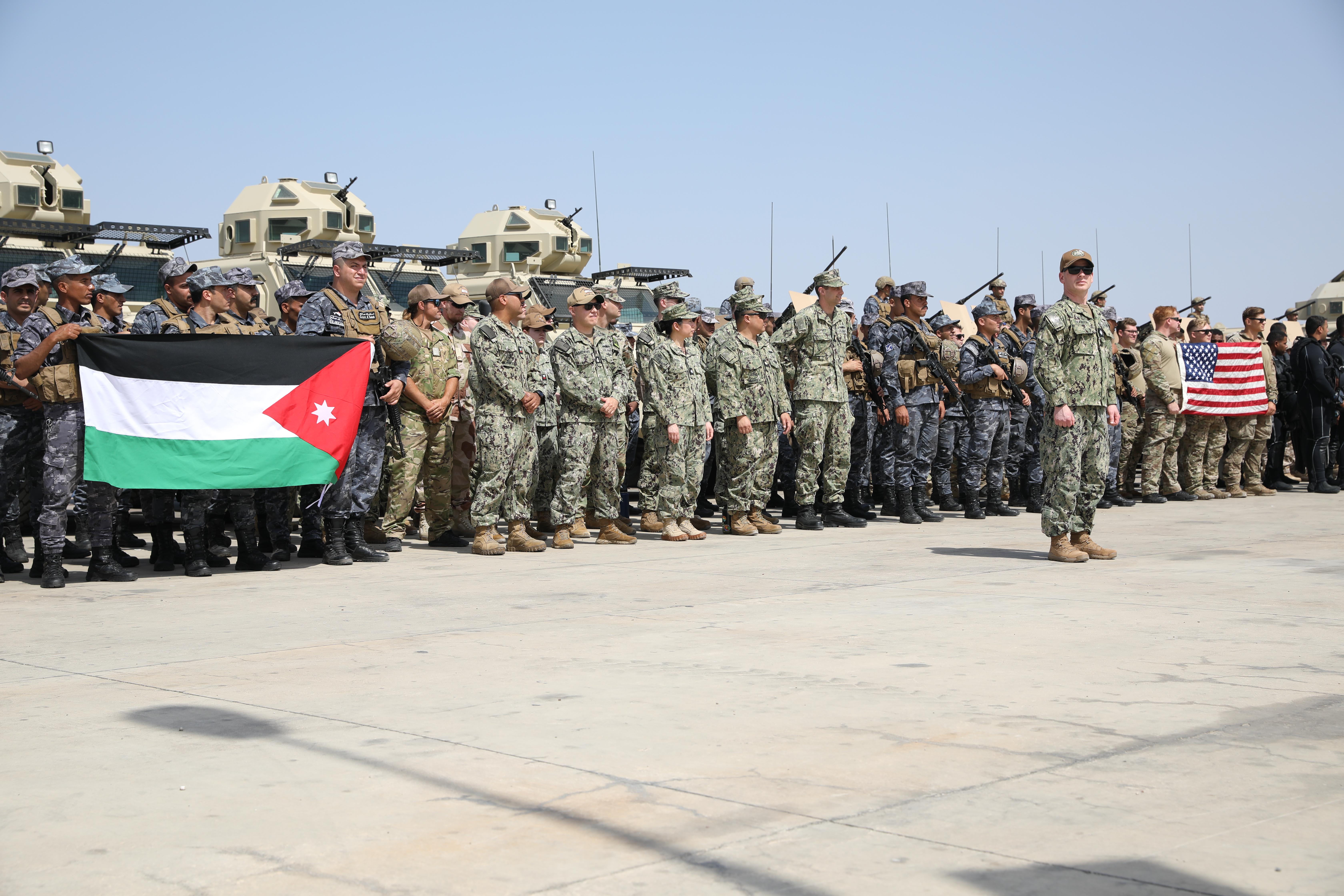
For over two decades, Exercise Eager Lion was the gold standard of Middle Eastern military cooperation. Held biennially in the Hashemite Kingdom of Jordan, it forced American planners, special operations units, and regional commanders to deal with blistering heat, dust-choked airspace, and the logistical nightmare of projecting power across actual operational theaters. It was gritty. It was authentic.
Then came the 2026 iteration. U.S. Central Command decided to ship Jordanian Armed Forces personnel all the way to Fort Carson, Colorado, marking the first time the United States hosted the exercise on domestic soil.
Defense publications celebrated this move as a stroke of diplomatic genius. They called it "reciprocal hosting" and an evolution of total-force integration. They pointed to the 22-year-old State Partnership Program between Jordan and the Colorado National Guard as justification for flying allied troops halfway around the globe to play command-post defense games in the Rocky Mountains.
They are completely missing the point.
When you relocate a critical regional combat readiness exercise from the actual theater of operations to a comfortable domestic base, you trade operational reality for bureaucratic comfort. I have watched defense budgets absorb millions of dollars for cross-continental staging exercises that prioritize diplomatic optics over raw combat friction.
The Geography of Friction
Military exercises are only as valuable as the inconveniences they simulate. Jordan is an indispensable linchpin in the CENTCOM area of responsibility precisely because of its geography. It sits at the literal intersection of regional volatility, sharing borders where tactical decisions carry immediate, high-stakes consequences.
When Eager Lion operates out of Jordanian training centers, units wrestle with actual Middle Eastern infrastructure limitations, regional communication bandwidth realities, and environmental stressors that cannot be replicated in a Colorado Springs conference room.
Shifting the exercise to Fort Carson sanitizes the experience. Imagine a scenario where a cyber defense cell or a joint command post needs to coordinate logistics under degraded local power grids and stifling desert heat, only to be told the exercise is happening inside a climate-controlled regional training institute in Colorado with high-speed fiber internet and local coffee shops down the block.
The contrast is absurd. Interoperability is not tested by giving foreign officers a scenic tour of the Rockies; it is tested when systems break down in the dust and staffs have to improvise solutions without domestic safety nets.
The State Partnership Trap
The justification for this domestic pivot always circles back to the National Guard's State Partnership Program. No one doubts the value of the 22-year bond between Colorado and Jordan. Personal relationships matter. Trust built over decades between Jordanian commanders and National Guard leadership is a strategic asset.
However, stretching a bilateral Middle Eastern partnership exercise into a domestic exchange program dilutes its core mandate. CENTCOM's primary directive is theater deterrence and warfighting readiness in the Middle East, not domestic community-building for state guard units. By bringing roughly 40 Jordanian personnel to Colorado to join a modest 165 U.S. participants, the exercise shrank in operational scope while expanding in administrative self-congratulation.
When a multi-national combat exercise scales down to a micro-sized command post exercise (CPX) focused heavily on cyber defense and slide-deck briefings, it stops being a theater-level rehearsal and starts becoming a diplomatic reward trip.
Real Readiness Cannot Be Imported
The modern defense establishment loves metrics that look good on annual reports. "First U.S.-hosted iteration" sounds great in a press release. It checks the diversity-of-venue box. It lets headquarters staff claim innovative leaps in "reciprocal hosting dynamics."
Real military effectiveness is inherently uncomfortable. If the United States and its key regional allies want to maintain a credible deterrent against hybrid threats, asymmetric warfare, and complex regional escalation, they need to sweat together where the stakes are real. Bringing allied forces to the comfort of domestic U.S. bases teaches troops how to manage domestic garrison life, not how to win in contested spaces.
Stop sugarcoating administrative convenience as strategic innovation. If Eager Lion matters, keep it where the lions actually have to hunt.